A daily record.
Featuring photos of wild birds and nature, mainly from Okinawa Main Island and Ishigaki Island

Taiga Bean Goose Arrives; Out-of-season Sharp-tailed Sandpiper and Others

Nov. 27, 2025
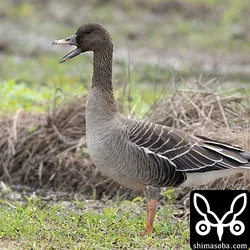
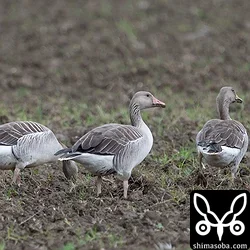
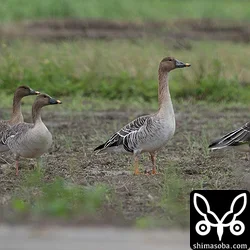
A Taiga Bean Goose that had been reported a little while back was resting in the paddies. Waders present included Pied Avocets, Black-winged Stilts, Long-toed Stints, Wood Sandpipers, Common Redshanks, Common Greenshanks, Marsh Sandpipers and Common Snipe. An out-of-season Sharp-tailed Sandpiper was also there on its own. Temminck's Stints have been numerous this season — I confirmed several birds.

Bean Geese had been seen in multiple individuals, but on this day there was only one.
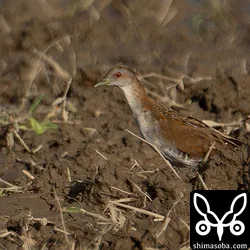
Baillon's Crake, Oriental Stork, Pied Avocet, Black-faced Spoonbill, juvenile Crested Serpent Eagle and more

Nov. 26, 2024

While watching the Oriental Stork, a Black Bittern flew into view, so I searched for where it had landed — and a Baillon's Crake appeared. ^^; It was a wary individual that ducked straight into the grass at the slightest disturbance. The habitat looks good, so it might stick around.

The Oriental Stork was a ringed individual. ID number "J0701", apparently hatched on 31 March this year in Obama City, Fukui Prefecture. It had also been observed in Minamisatsuma City, Kagoshima Prefecture, a week earlier. It stayed on Ishigaki for several days before crossing to Iriomote.

Two Pied Avocets are still present. Whether they are part of the flock of eleven that arrived on 6 November is unknown.

Encounters with juvenile Crested Serpent Eagles have been increasing. On this day I found the previously recorded "No. 7" and a new individual. With the second-crop rice harvest now underway, it is becoming a good season to watch Crested Serpent Eagles. This season's sugarcane harvest is scheduled to start around 6 December.

First Gadwall and Eastern White Wagtail of the season confirmed.

Adult White-browed Crake. It seemed quite wary.

Collared Kingfisher's long stay — Caspian Tern, Red Collared Dove, Chinese Pond Heron

Nov. 24, 2024

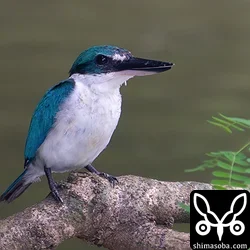
The Collared Kingfisher on Ishigaki has been staying a long time. Its daily routine is settled, and it really feels like it will see the new year in. Caspian Terns and Black-headed Gulls are also visiting the beach where the Collared Kingfisher is found.

In nearby rice paddies, the first Taiga Bean Geese of the season were confirmed — a flock of six. Chinese Pond Herons, Red Collared Doves and Common Starlings are also present. It is all right on the doorstep, so there is plenty to enjoy there during the times when the Collared Kingfisher is not showing.

A Collared Kingfisher resting at its high-tide roost. Shot from behind cover because of the close distance.

Garganey — herald of spring — and a lone Taiga Bean Goose

March 26, 2024

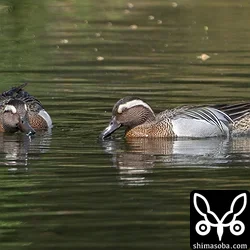
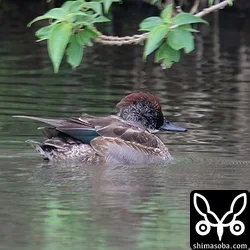
When it comes to spring ducks on Ishigaki, Garganey is the one. Two males were resting on a small settling pond. A Taiga Bean Goose arrived on its own — presumably a northbound bird. There were reports of nearly 100 geese passing over the island; this individual may be a straggler from that flock.

The overwintering Tufted Ducks are coming into breeding plumage. One female Northern Pintail — for some reason just the one — is moving around with a flock of Eastern Spot-billed Ducks. She seems to have missed her window to migrate.

Two male Garganey. Their beautiful breeding plumage gives a real sense of spring.

Geese and Ducks All Present

Jan. 25, 2024

The wintering ducks of Ishigaki Island are all assembled. Six Greylag Geese, Taiga Bean Geese, and Greater Bean Geese have arrived; in the rice paddies the most numerous ducks are Eastern Spot-billed Ducks, Northern Shovelers, and Eurasian Wigeons, while a large flock of Tufted Ducks is on the reservoir. Mallards, Eurasian Teals, Northern Pintails, Gadwalls, and Falcated Ducks are also present. This season I am seeing Mallard × Eastern Spot-billed Duck hybrids frequently.

Update, 3 March 2024

The six Greylag Geese that were on Ishigaki Island until around the end of January were on Kume Island as of late February. I hear a Smew is also there; since the Greylag Geese on Ishigaki sometimes used the same reservoir as a Smew, that bird too may have moved from Ishigaki.

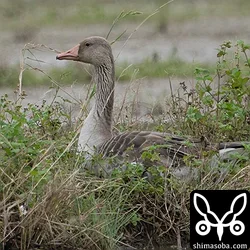
The Grey-lag Geese have been here since last year — a long stay. All five are present.

Five Greylag Geese, Taiga Bean Goose, and Tundra Bean Goose

Jan. 6, 2024

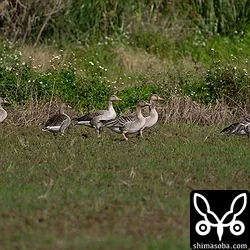
Five Greylag Geese currently staying. They are together with Tundra Bean Geese and Taiga Bean Geese. A group of five Greylag Geese — I hadn't seen that since two years ago in northern Okinawa Island.

Five Greylag Geese with a Tundra Bean Goose (right) and a Bean Goose (third from right). The Bean Goose is of the small type, so possibly the tundra form. All adults. The individual thought to be a Lesser White-fronted Goose appears to have separated from the flock.

Taiga Bean Goose subspecies and Greater Bean Goose

Dec. 23, 2023

Two small Taiga Bean Geese together with Greater Bean Geese. They appear to be one of the smaller subspecies, but identification is difficult.

A small settling pond has Mandarin Duck, Tufted Duck, Eurasian Wigeon and others staying over. There was also an unidentified duck — I couldn't picture either parent for a hybrid, so domestic fowl may be mixed in.

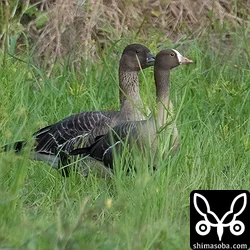
An individual thought to be a Tundra Bean Goose, a smaller Bean Goose, and a Lesser White-fronted Goose.

First Common Hoopoe and Dusky Thrush of the season, Lesser White-fronted Goose, Common Starling and more

Nov. 20, 2023

A Common Hoopoe has arrived on Ishigaki. Numbers are lower than in spring, but several have been confirmed this season too.

The first Dusky Thrush of the season also confirmed. I heard a Pale Thrush calling but could not see it. Daurian Redstarts and Amur Stonechats are increasing.

Lesser White-fronted Goose, Taiga Bean Goose, and Greater White-fronted Goose are still present. Common Starling, White-cheeked Starling, White-shouldered Starling, Asian Glossy Starling, and Japanese Waxwing are also lingering and dropping in.

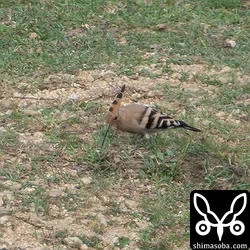
A Eurasian Hoopoe in the distance.

Greylag Goose, Ruddy Shelduck, Tundra Swan and others

Dec. 14, 2022

The Greylag Goose, Ruddy Shelduck, and Tundra Swan are settling in for a long winter stay. Duck numbers are also increasing. Quite a few have turned up at the dam, but without a scope they're just too far away…

A Grey-lag Goose with no wariness at all, settled into wintering mode alongside a Bean Goose.

Third Ruddy Shelduck of the season, long-staying Greylag Goose, summer-plumage Siberian Sand Plover (video)

Nov. 25, 2022

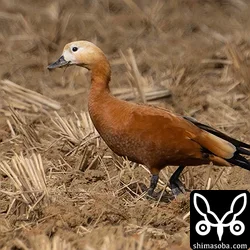
Following the previous two adults, a juvenile Ruddy Shelduck has now arrived. The adults were extremely wary, but this juvenile showed almost no wariness — perhaps a sign of its youth — and was easy to observe.

The Greylag Goose has been staying a long time; it looks like it may well winter over. Taiga Bean Goose, Greater White-fronted Goose, Lesser White-fronted Goose, and Common Crane are also still present.

On the coast, small numbers of Siberian Sand Plovers, Kentish Plovers, Pacific Golden Plovers, Ruddy Turnstones, Common Greenshanks, and Dunlins are staying on. In the paddies, Spotted Redshanks, Black-winged Stilts, Wood Sandpipers, Long-toed Stints, Sharp-tailed Sandpipers, and Common Snipe are conspicuous. Whiskered Terns — both adults and juveniles — are also still present.

This season, the starling family is represented by several species but numbers are low.

Dusky Thrushes, Pale Thrushes, Brown-headed Thrushes, and Eyebrowed Thrushes have started arriving.

The third Ruddy Shelduck of the season was a juvenile — in the process of moulting from juvenile plumage into first breeding plumage.

Little Curlew appears; Lesser White-fronted Goose still present

Oct. 23, 2022

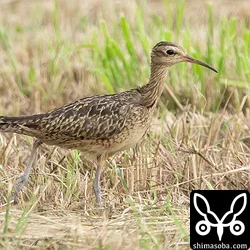
Found a Little Curlew while travelling for work. I always keep a 600 mm lens in the company car for moments like this. The Little Curlew was foraging in a pasture among a flock of Pacific Golden Plovers. Two Oriental Pratincoles were nearby as well.

In a separate paddy field, a Lesser White-fronted Goose, a Taiga Bean Goose, and a Greater White-fronted Goose are still present. The first Northern Pintail of the season has also arrived.

Adult Little Whimbrel in late breeding plumage.

Pheasant-tailed Jacana — day 6; Lesser White-fronted Goose — day 10

Oct. 18, 2022

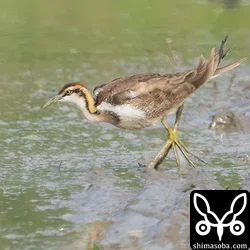
The Pheasant-tailed Jacana found on 12 October is still present, six days on. A tractor came through to work the field but the bird seemed largely unbothered and kept foraging.

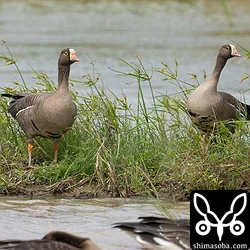
The two Lesser White-fronted Geese are also still here — today is day ten. They continue to associate with the Taiga Bean Goose as before. Twelve Greater White-fronted Geese also arrived and briefly joined the group, but they eventually parted ways and are keeping to themselves.

Juvenile Pheasant-tailed Jacana. It showed no fear of the tractor and was snatching prey turned up by the fieldwork.

Two Lesser White-fronted Geese and One Taiga Bean Goose Arrive (video)

Oct. 9, 2022

With a strong north wind blowing, two Lesser White-fronted Geese and one Taiga Bean Goose arrived. Lesser White-fronted Goose is quite rare on Ishigaki-jima, but following last year, this is the second consecutive year they have appeared.

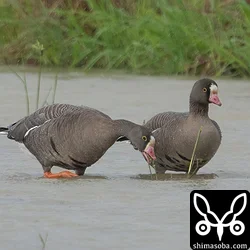
Two Lesser White-fronted Geese arrived together. They looked tired, perhaps having just come in from migration.

ヨシガモとマガン25、ヒシクイ1+1

Jan. 13, 2022

今季2羽目のヨシガモを確認。 昨年の11月7日に飛来した25羽のマガン は1羽も脱落することなく滞在中。ヒシクイ1羽も加わって26羽の大所帯になりました。警戒心もそれほどなく観察しやすいです。別の場所には単独のヒシクイも滞在中。こちらは警戒心強め。

A male Falcated Duck in mid-moult from juvenile to first-breeding plumage. Looking pretty ragged. ^^;

アカツクシガモ飛来 メジロガモ滞在中(動画あり)

Dec. 7, 2021

美しいアカツクシガモが飛来しました。警戒心のゆるい個体でゆっくり見ることができました。メジロガモも元気に滞在。今季、飛来の多いヒシクイですが、1羽でいる個体がいました。

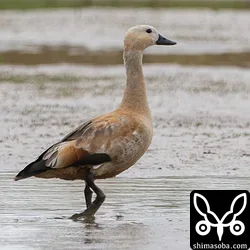
An adult female Ruddy Shelduck dropped into a paddy field after harvesting.

カリガネ、ヒシクイ、オオヒシクイ、マガン飛来

Nov. 13, 2021

日を追うごとに寒くなる石垣島ですが、ガンの仲間も増えてきました。石垣島や沖縄では非常に珍しいカリガネもやってきました。ほかにはヒシクイが5羽、オオヒシクイが1羽、マガンが25羽の群れと別の場所に2羽滞在中。

先日の大陸から八重山にかけて吹き付けた強い北西の風に乗ってやってきたのかもしれません。

Lesser White-fronted Goose (front) and Tundra Bean Goose.

越冬中のチョウセンチョウゲンボウ、ヒシクイ、オオヒシクイ、マガンの群れなど

Dec. 27, 2020

先日のチョウセンチョウゲンボウの写真 があまりにもひどかったので撮り直してきました。警戒心もなく観察しやすい個体です。チョウセンチョウゲンボウは完全に越冬モードなので来春までは見られそうです。

ヒシクイ、オオヒシクイ、マガンの群れは9羽まで増えました。最初は 10月にマガン1羽11月にヒシクイ4羽 、いつの間にかオオヒシクイが3羽合流してしばらく8羽でいたのですが、つい数日前にさらにヒシクイが1羽追加され、現在は9羽の群れで越冬中。石垣島でこの数は初記録と思われます。西表島では過去にコハクチョウ9羽の記録があります。

サシバは沖縄本島に比べると少ないですが、それでも安定して越冬個体が見られます。

ツグミも日に日に数を増やしています。ことしはハチジョウツグミは少ないですが、石垣島では年によってはツグミが少なく、ハチジョウツグミだらけのこともあります。

ことし生まれのリュウキュウヨシゴイは換羽が進んでいました。

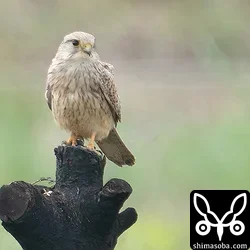
Female juvenile Amur Falcon.

ヒシクイ2羽再発見

Nov. 17, 2019

カンムリワシに煽られて姿を消していたヒシクイ2羽 を別の田んぼで再発見しました。刈り取りが終わった田んぼの端っこでじっとしていた。ちなみに一緒にいたサカツラガンも他の田んぼへ移動しました。いろいろストレスがあったからなー。

The Tundra Bean Geese moved to a different paddy. The Swan Geese that had been with them also moved to a different paddy.

秋の珍事 4羽に増えたサカツラガンに2羽のヒシクイ追加

Nov. 16, 2019

11月11日に石垣島に3羽飛来したサカツラガン でしたが、5日目にしていなくなり、別の田んぼで1羽だけ確認されていました。しかし、今朝になってみると元の田んぼに1羽増えて4羽となったサカツラガンにヒシクイ2羽が追加されていました。オオヒシクイと聞いていましたが、これはヒシクイですね。^^; 夜のうちに合流して戻ってきたのかな?

サカツラガン、ヒシクイともに全て成鳥のようです。

遠巻きにしばらく観察しているとなぜかヒシクイ2羽が飛び立ちました。写真にも写っていますが、カンムリワシに驚いたようでそのまま東の空へ消えてしまいました。

サカツラガンもつられて1羽が飛んだのですが、数日滞在の残り3羽はカンムリワシは襲わないと知ってかしらずか飛ばずで結局4羽全てが残りました。

The two on the left are Tundra Beans Geese and the four on the right are Swan Geese.