A daily record.
Featuring photos of wild birds and nature, mainly from Okinawa Main Island and Ishigaki Island

Autumn Migration in Full Swing

Sept. 1, 2026

September has arrived, and autumn migration on Ishigaki Island is now in full swing. Eastern Yellow Wagtail numbers jumped overnight, and flocks ranging from small to large can be seen in farmland all over the island.

Among the waders, juveniles have started arriving on the heels of the adults. Flocks in fresh juvenile plumage are coming in.

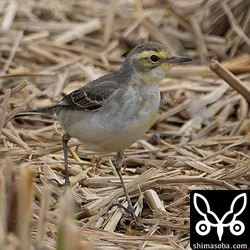
An adult Eastern Yellow Wagtail of the white-supercilium type, transitioning into winter plumage.

Migrant waders increasing

Aug. 19, 2026

Migrant waders are building up and the paddies on Ishigaki are getting lively.

Juveniles now make up more than half of the Long-toed Stints present, and I confirmed the first juvenile Wood Sandpiper of the season. I had already found juvenile Common Redshank about two weeks ago, but this was my first time photographing one this season.

Common Greenshank, Marsh Sandpiper, Black-winged Stilt, Pacific Golden Plover, and Black-faced Spoonbill have also been showing up one after another.

First juvenile Wood Sandpiper of the season. Only one individual confirmed, but numbers will keep climbing from here.

Pin-tailed Snipe appear!! Wader migration in full swing

Aug. 11, 2026

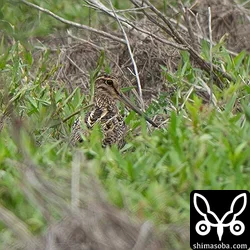
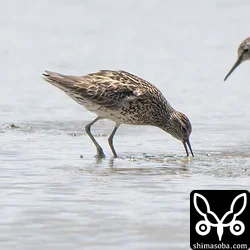
I found three Pin-tailed Snipe — the first of the season!! The three were together, so they may well have come through last night.

Besides snipe, the paddies now hold Common Redshank, Common Greenshank, Marsh Sandpiper, Black-winged Stilt, Long-toed Stint, Wood Sandpiper, and Whiskered Tern. Migration is well and truly under way.

For moult notation, from this season I will be adopting the WRP System (Wolfe–Ryder–Pyle System).

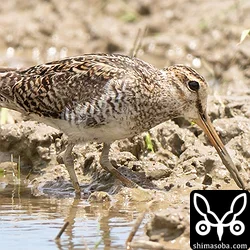
Finally got confirmation. Pin-tailed Snipe, adult. DCA (Definitive Alternate plumage).

Chinese Pond Heron, Cinnamon Bittern, Ruddy Kingfisher and others

May 19, 2026

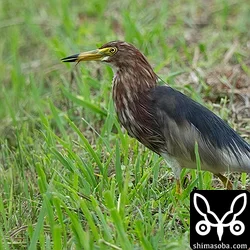
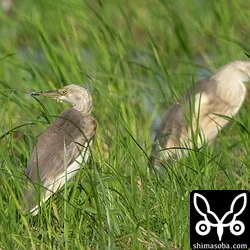
A few Chinese Pond Herons are staying. Plumage varies widely, from individuals still mostly in winter dress to those that have almost fully switched to breeding plumage. A Cinnamon Bittern was nearby as well — it is probably breeding in the vicinity.

White-winged Terns were still present but numbers seemed to have dropped. Black-tailed Godwit, Sharp-tailed Sandpiper, Common Redshank, and Common Greenshank are also staying.

A Chinese Pond Heron almost fully into breeding plumage. This individual was a bit wary.

Spring migration picks up pace

March 11, 2026

Spring migration on Ishigaki Island has been building gradually since February, and by March it has grown noticeably more active. The variety of waders is increasing first of all. Brown Shrikes and White-cheeked Starlings that spent the winter on the island are beginning to move north.

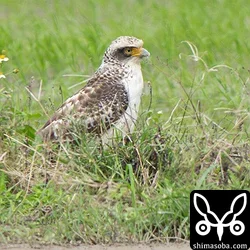
Some individual Crested Serpent Eagle juveniles are well along in their moult.

A juvenile Crested Serpent Eagle. It is within the territory of an adult pair and gets chased off every time it is spotted, yet it stubbornly stays put.

Short-eared Owls Wintering

Jan. 16, 2026

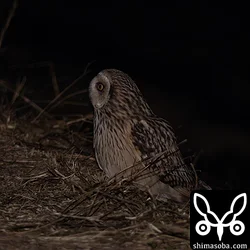
Short-eared Owls have been wintering here again this season, as they did from around the end of last year. Surprisingly large numbers have turned up. A Long-eared Owl was also reported, but only for a single day — unfortunately I was not able to see it myself.

Out in the paddies during the day there are also wintering waders and plovers. Past mid-January I get the sense that they are slowly starting to move. I expect the main movement to begin around late February.

There was a Short-eared Owl staring intently at a thicket where mice were lurking. It seemed there was another one in the same area.

Greater White-fronted Goose and Tundra Swan Arrive; More Pied Avocets

Dec. 12, 2025

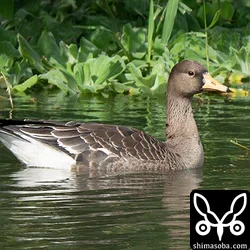
A Greater White-fronted Goose has been present for several days now, but for some reason the guide is apparently calling it a Greylag Goose. To me it is clearly a juvenile Greater White-fronted Goose… ^^; A juvenile Tundra Swan has also arrived on its own. On Iriomote, two Tundra Swans and a Siberian Crane are staying as well.

Multiple Pied Avocets have turned up across the island. That day I tallied six birds in total — a group of four and singles at two separate locations. In the paddies, Northern Lapwings, Pacific Golden Plovers, Kentish Plovers, Little Ringed Plovers, Common Greenshanks, Common Redshanks, Wood Sandpipers, Dunlins, Common Sandpipers, Green Sandpipers and Black-winged Stilts are all wintering.

This season I had already confirmed the subspecies leucopsis and ocularis White Wagtails, but this day I was finally able to see the subspecies alba White Wagtail. That is pretty much how it goes every year.

A juvenile Greater White-fronted Goose. Why does it get misidentified as a Greylag Goose?

Wintering Pin-tailed Snipe!! (video)

Nov. 20, 2025

This breaks the latest date record for Pin-tailed Snipe on Ishigaki Island by a full month!!

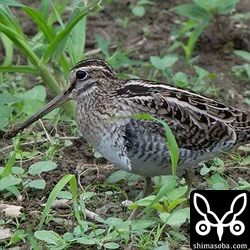
I found it among a small flock of Common Snipe. It was not a typical Pin-tailed Snipe individual, and at first I wavered between that and Swinhoe's Snipe, but after watching for a while I became certain it was Pin-tailed. I stuck it out for about an hour and managed to get photos of the tail feathers as documentary evidence.

It is an exceptionally Swinhoe's-like individual, which makes it all the more interesting. This is definitely a Pin-tailed Snipe I won't forget in a hurry. ^^

The previous late record for Pin-tailed Snipe on Ishigaki was an adult on 18 October, so this is a substantial update to the record. ^^

Incidentally, the earliest record is a juvenile in late February. That individual may well have been wintering, though.

Pin-tailed Snipe, first-winter plumage.

Black-headed Bunting, Forest Wagtail, Arctic Warbler, White-shouldered Starling and others

Nov. 3, 2025

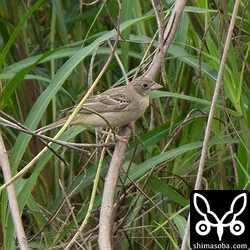
A Black-headed Bunting turned up after a long absence. It was very likely the same individual I briefly glimpsed in the same paddy field about a week ago. It was mixed in with a flock of several hundred Eurasian Tree Sparrows.

A Forest Wagtail appeared on the usual forest road — the sixth individual this season. Arriving this late in the year, there is a good chance it will winter here. Last year one wintered at the same spot. Once they settle into wintering mode, though, they tend to stay deep inside the forest and become harder to observe.

Arctic Warblers have been showing up since early October. Birds fresh in from migration are often in small flocks, but now they have spread across the island and each is holding a small territory. Many individuals will stay through to spring. Come April, they form flocks again in preparation for the northward journey, and some begin to sing.

Brambling have also appeared. They joined up with Eurasian Tree Sparrow flocks and were feeding on second-crop rice grain in the paddies.

White-shouldered Starlings — a few birds — were mixed into a flock of several tens of White-cheeked Starlings, along with around 20 Common Starlings. The wintering White-shouldered Starling population on the island is sizeable in its own right, and flocks of several tens are regularly seen in parks and the like.

At this time of year, snipe are mostly Common Snipe, but among a flock of ten-odd I found just two Swinhoe's Snipe. I expect them to disappear once the second-crop rice harvest gets under way. Other waders lingering in the paddies include Common Redshank, Common Greenshank, Marsh Sandpiper, Black-winged Stilt, Wood Sandpiper, Green Sandpiper, Common Sandpiper, and Long-toed Stint.

Ducks are increasing too — I recorded my first Mallard of the season on Ishigaki. Mallard used to be quite scarce on Ishigaki and Okinawa, but the numbers being seen seem to grow a little more each year.

A Black-headed Bunting standing out prominently among a flock of Eurasian Tree Sparrows. It was constantly harassing them….
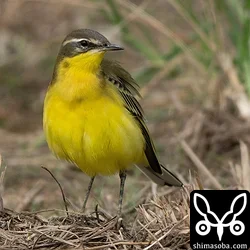
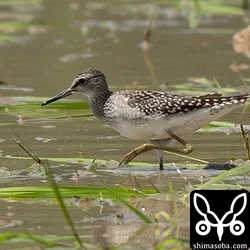
First Sharp-tailed Sandpiper of the season, and a Black-winged Kite hunting

Aug. 14, 2025

I recorded my first Sharp-tailed Sandpiper of the season — about three birds arrived together. The autumn shorebird passage is now getting properly underway, with Wood Sandpiper, Common Redshank, Long-toed Stint, Red-necked Stint, Black-winged Stilt, Common Greenshank, and Little Ringed Plover passing through the paddies day by day.

While watching the waders, a sudden tension ran through the paddy. Looking up, a juvenile Black-winged Kite appeared to hunt. It plunged into the grass and came out gripping a White-breasted Waterhen chick. The prey seemed heavy and the bird was struggling to carry it off.

The first Pectoral Sandpiper of the season turned out to be an adult.

Javan Pond Heron numbers up, juvenile waders arriving

Aug. 11, 2025

Javan Pond Heron have increased, with 4 birds confirmed at 3 sites. They seem to be turning up steadily on Okinawa Island too, and have become a fixture of this time of year. I recorded the first juveniles of the season for Black-winged Stilt, Long-toed Stint, Wood Sandpiper, and Marsh Sandpiper. Both the variety and numbers of juveniles are growing day by day.

Two Javan Pond Herons. Not particularly wary — easy to observe.

Shorebird Migration Under Way — Gull-billed Tern Arrives

July 19, 2025

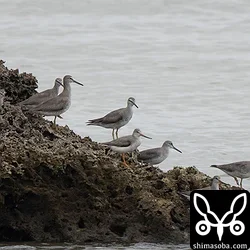
The wader migration has started on Ishigaki Island. Along the coast, Grey-tailed Tattlers, Terek Sandpipers, Eurasian Whimbrels, and Greater Sand Plovers have appeared, while the paddyfields have received Common Greenshanks, Black-winged Stilts, Wood Sandpipers, Long-toed Stints, and Little Ringed Plovers. Numbers and species will keep building from here. With any luck, the snipe we have all been waiting for will show up in late August.

As the tide came close to high, Grey-tailed Tattlers and Terek Sandpipers gathered on the coastal rocks.

Asian Dowitcher, Pectoral Sandpiper, Little Stint, Broad-billed Sandpiper, Curlew Sandpiper and More (video)

April 29, 2025

With shorebirds on the increase, I spent the entire day searching for waders. The result: starting with Asian Dowitcher, I recorded Pectoral Sandpiper, Little Stint, Broad-billed Sandpiper, Curlew Sandpiper, Pin-tailed Snipe, Greater Sand Plover, and more — 21 species of waders in total. Seeing this many species in a single day is one of the great pleasures of this time of year. ^^

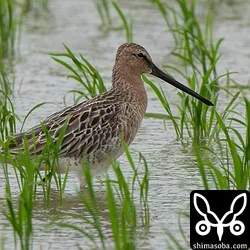
A Bar-tailed Godwit in summer plumage that suddenly dropped in alongside Black-winged Stilts and Black-tailed Godwits near the end of a shorebird search. Looking sharp in that summer plumage.

Black-winged Kite Breeding Underway, Pacific Swifts Arrive

March 31, 2025

The Black-winged Kites that have been breeding continuously for several years in a woodland near my home appear to be starting their first breeding attempt of the year. Black-winged Kites on Ishigaki breed roughly twice a year, and the timing seems fairly irregular, though warmer periods likely bring higher success rates. Black-winged Kites can now be found everywhere on the island, from the towns in the south to Hirakubo in the north.

Pacific Swifts have arrived at the rice paddies. Around five birds were wheeling through the air together with Barn Swallows. I also recorded my first Sharp-tailed Sandpiper of the season, and Common Redshanks that are hard to separate from overwintering birds but appear to be on passage. Black-winged Stilts are also gradually increasing.

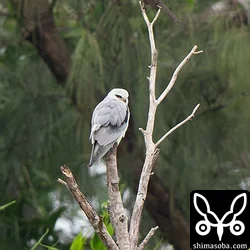
A Black-winged Kite perched on a prominent dead branch, occasionally calling back and forth with another individual perched nearby.

Citrine Wagtail, Common Shelduck, Black-tailed Godwit and more

Dec. 13, 2024

Two Citrine Wagtails were mixed in with a large flock of Eastern Yellow Wagtails feeding in a harvested rice paddy. The difference in character makes them stand out clearly even to the naked eye.

In flooded paddies, Black-tailed Godwits, Eurasian Whimbrels, Common Redshanks, Green Sandpipers, Common Shelducks and Eurasian Coots are wintering. Eurasian Coot numbers have been increasing. They have become a main prey item for the Upland Buzzard and Peregrine Falcon.

Citrine Wagtail, first-winter.

First Mandarin Duck of the Season

Oct. 17, 2024

The first Mandarin Duck of the season has arrived. It was a male in eclipse plumage.

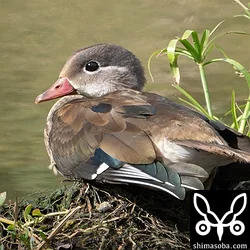
Male Mandarin Duck. It's in eclipse plumage, so it doesn't look very Mandarin-like.

White-winged Tern, Garganey, Arctic Warbler, Ruff Arrive

Oct. 5, 2024

Autumn is well and truly here — White-winged Terns, Garganey, Ruffs and Arctic Warblers are all building up steadily and the paddies are getting lively. Snipe numbers have also jumped sharply: 40 Common Snipe against 2 Swinhoe's Snipe. I couldn't find any Pin-tailed Snipe.

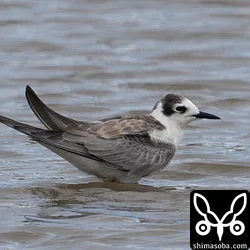
White-winged Tern, juvenile. The third bird this season.

Snipe Numbers Dropping

Sept. 19, 2024

The snipe that built up from late August are thinning out now. At peak times there were nearly 40 in a single paddy field; now there are just a handful. I managed to find one Pin-tailed Snipe. Common Snipe hadn't increased much, but I'd expect the majority to be Common Snipe once October comes.

Pin-tailed Snipe, juvenile. Swinhoe's Snipe, juvenile, in the background.