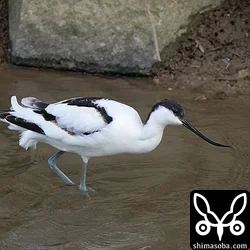
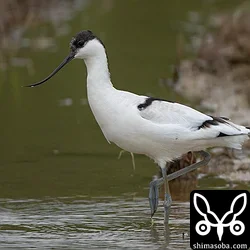
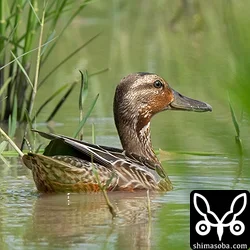
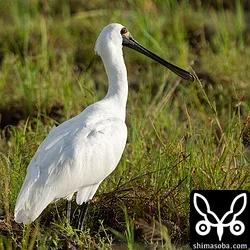
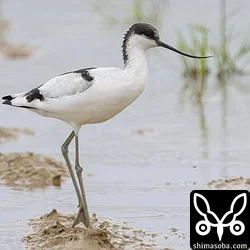
Two Pied Avocets have been present for several days. A flock of Black-faced Spoonbills and Eurasian Spoonbills, Bar-tailed Godwit, and Garganey have been staying a long time. Wintering Eurasian Teal and Northern Shoveler are also steadily building up.
Two Pied Avocets with zero wariness are staying in the area.
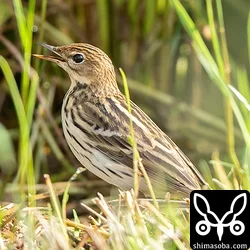
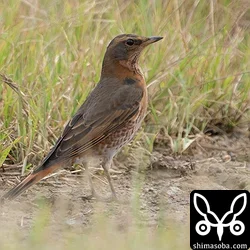
Pechora Pipits have arrived again this season, in small numbers. Last year I found two among a flock of Red-throated Pipits. This time I noticed them by their calls overhead, and after a flock of five dropped into the paddy I searched and found two individuals. ^^
While looking for the Pechora Pipits, a Brown-cheeked Rail also appeared. It was a brief encounter — the bird was very wary — but a welcome one.
Ducks are growing in number and variety; I had my first Northern Shoveler of the season on this day. By the time the ducks arrive, both Pin-tailed Snipe and Swinhoe's Snipe have already moved on, leaving large numbers of Common Snipe behind.
The Javan Pond Heron that arrived in late July was still present. At peak there were three, but now only one remains. It should stay until around February, being in wintering mode.
Elsewhere, I noted Masked Bunting and Yellow Bittern. A Pied Avocet apparently made its way into the grounds of a facility where a friend of mine works.
Paddyfield Pipit seen again this season.
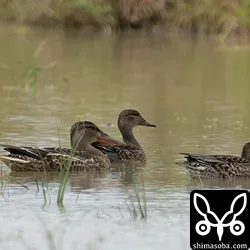
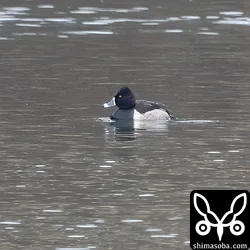
Ducks have started arriving on Ishigaki-jima. Eurasian Teal and Garganey — the first of the season — are increasing. The first Tufted Duck of the season was also in a drainage ditch on farmland.
In the rice paddies, the snipe are now down to Common Snipe only. Black-winged Stilt, Common Greenshank, Marsh Sandpiper, Long-toed Stint, Wood Sandpiper, Green Sandpiper, and Common Sandpiper are all still present. Eastern Yellow Wagtails are turning up here and there but numbers aren't building much. Could the heat be slowing their movement?
Whiskered Terns have been lingering along the river near my house.
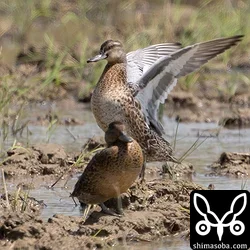
Garganey, juvenile male. Fairly approachable.
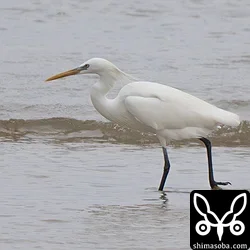
A second Chinese Egret for the season flew in to the river mouth. Three Black-faced Spoonbills are also staying nearby. I counted five Cinnamon Bitterns, which are active at the start of their breeding season. In the rice paddies there were Eurasian Teal and Northern Shoveler that had been left behind by the northward migration.
The second Chinese Egret of the season. It was showing its familiar behaviour of chasing fish at the water's edge.
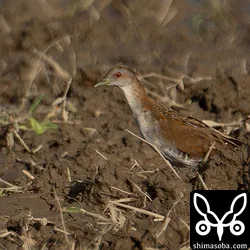
While watching the Oriental Stork, a Black Bittern flew into view, so I searched for where it had landed — and a Baillon's Crake appeared. ^^; It was a wary individual that ducked straight into the grass at the slightest disturbance. The habitat looks good, so it might stick around.
The Oriental Stork was a ringed individual. ID number "J0701", apparently hatched on 31 March this year in Obama City, Fukui Prefecture. It had also been observed in Minamisatsuma City, Kagoshima Prefecture, a week earlier. It stayed on Ishigaki for several days before crossing to Iriomote.
Two Pied Avocets are still present. Whether they are part of the flock of eleven that arrived on 6 November is unknown.
Encounters with juvenile Crested Serpent Eagles have been increasing. On this day I found the previously recorded "No. 7" and a new individual. With the second-crop rice harvest now underway, it is becoming a good season to watch Crested Serpent Eagles. This season's sugarcane harvest is scheduled to start around 6 December.
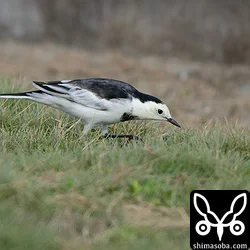
First Gadwall and Eastern White Wagtail of the season confirmed.
Adult White-browed Crake. It seemed quite wary.
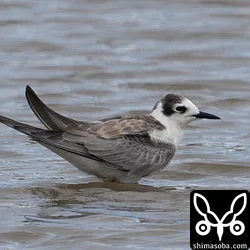
Autumn is well and truly here — White-winged Terns, Garganey, Ruffs and Arctic Warblers are all building up steadily and the paddies are getting lively. Snipe numbers have also jumped sharply: 40 Common Snipe against 2 Swinhoe's Snipe. I couldn't find any Pin-tailed Snipe.
White-winged Tern, juvenile. The third bird this season.
The wintering ducks of Ishigaki Island are all assembled. Six Greylag Geese, Taiga Bean Geese, and Greater Bean Geese have arrived; in the rice paddies the most numerous ducks are Eastern Spot-billed Ducks, Northern Shovelers, and Eurasian Wigeons, while a large flock of Tufted Ducks is on the reservoir. Mallards, Eurasian Teals, Northern Pintails, Gadwalls, and Falcated Ducks are also present. This season I am seeing Mallard × Eastern Spot-billed Duck hybrids frequently.
Update, 3 March 2024
The six Greylag Geese that were on Ishigaki Island until around the end of January were on Kume Island as of late February. I hear a Smew is also there; since the Greylag Geese on Ishigaki sometimes used the same reservoir as a Smew, that bird too may have moved from Ishigaki.
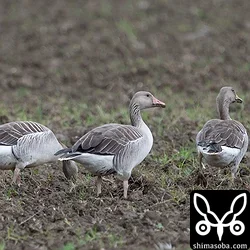
The Grey-lag Geese have been here since last year — a long stay. All five are present.
Four Red Collared Doves at two sites; Arctic Warblers in thickets here and there; Yellow Bittern again doing well as it did last year, seen frequently. The starling flock, in order of abundance: White-shouldered Starling, White-cheeked Starling, Common Starling, Common Myna. Until a few days ago Red-billed Starling and Rosy Starling were with them, but the group seems to have split up. Six Asian Glossy Starlings are mixed in as well.
Geese and ducks are gradually increasing. In addition to the more numerous Eurasian Teal, Northern Shoveler, and Eurasian Wigeon, Falcated Duck, Ferruginous Duck, Garganey, Greater White-fronted Goose, and Lesser White-fronted Goose have also been recorded.
Eurasian Coot, first noted at the end of October, keeps increasing. Wader numbers in the paddies are declining — Black-winged Stilt, Temminck's Stint, Common Snipe, Common Greenshank, Marsh Sandpiper, Common Redshank, Green Sandpiper, and Common Sandpiper.
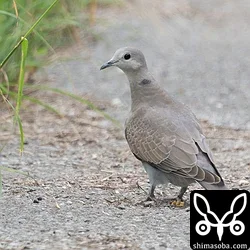
First confirmed juvenile Cream-coloured Dove.
Confirmed the first Common Kestrel and Eurasian Teal of the season. Autumn is deepening steadily. The Javan Pond Heron has been staying on for an extended period — there were briefly two in the same paddy, but on this day only one.
Could this be a second breeding attempt for Greater Painted-snipe? Parent birds with small chicks are turning up in paddies here and there.
Marsh Sandpiper, Common Greenshank, Common Redshank, Wood Sandpiper, Long-toed Stint, Red-necked Stint, Green Sandpiper, Black-winged Stilt and three snipe species are all still present, numbers fluctuating.
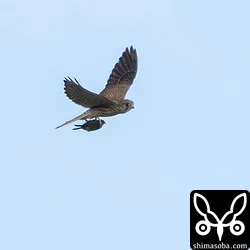
A juvenile male Common Kestrel with a captured Eastern Yellow Wagtail.
At year-end, having coughed up blood to get all my copy filed before the end of the year, I squeezed in a short final birdwatch for 2022.
Entering December, Dusky Thrushes, Brown-headed Thrushes, and Pale Thrushes had increased sharply. Most of the Dusky Thrushes were Naumann's Thrushes, and the variation in plumage tones makes comparing them a pleasure in itself. Brown-headed and Pale Thrushes have also relaxed since shortly after arrival and are easier to observe.
Manchurian Bush Warblers and Dusky Warblers were calling from patches of scrub here and there, though slightly fewer than last year.
Daurian Redstart, Amur Stonechat, Red-throated Pipit, and Eastern Yellow Wagtail are also wintering.
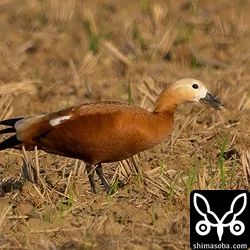
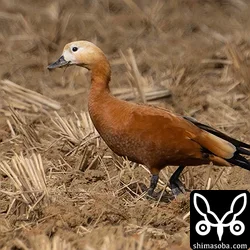
In addition to the three Ruddy Shelduck already present, four Common Shelduck also arrived. Tundra Swans, Common Cranes, and Eurasian Spoonbills continue to stay on.
Among the ducks, Northern Shoveler were the most numerous, followed by Eurasian Wigeon, Eurasian Teal, and Tufted Duck. Ferruginous Duck has not been confirmed this season.
Large numbers of Common Snipe are wintering; among roughly 200 counted across multiple paddies, there was one Swinhoe's Snipe.
Crested Serpent Eagles — both immatures and adults — have become easier to see. Road casualties will increase from here on, so care is needed when driving on Ishigaki Island and Iriomote Island.
The most vividly coloured Naumann's Thrush of the day. An adult.
Temperatures have dropped and ducks are increasing. First Northern Shovelers and Eurasian Wigeons of the season confirmed. Northern Shovelers also arrived in July, but this will be the first as proper migrants.
The peak of wader migration has passed, but the paddies still hold Temminck's Stints, Red-necked Stints, Long-toed Stints, Swinhoe's Snipes, Common Snipes, Wood Sandpipers, Common Greenshanks and others.
First Northern Shoveler of the season. Juvenile male.
12月5日から3日間滞在した後、行方不明になっていたアカツクシガモ がもどってきました。どこへ行っていたのでしょうね?
沈砂池にはメジロガモのオスとメスが逗留中。両方とも幼鳥です。
八重山はカモは少なめなのですが、それでもオナガガモやハシビロガモ、ヒドリガモ、コガモ、オカヨシガモなどが観察できます。カイツブリは石垣島で繁殖していのですが、冬になると越冬個体がやってきて一気に増えます。
ヨシゴイ、タシギ、ノビタキも観察できました。
The adult female Ruddy Shelduck back again in the same paddy field.