A daily record.
Featuring photos of wild birds and nature, mainly from Okinawa Main Island and Ishigaki Island

Autumn Migration in Full Swing

Sept. 1, 2026

September has arrived, and autumn migration on Ishigaki Island is now in full swing. Eastern Yellow Wagtail numbers jumped overnight, and flocks ranging from small to large can be seen in farmland all over the island.

Among the waders, juveniles have started arriving on the heels of the adults. Flocks in fresh juvenile plumage are coming in.

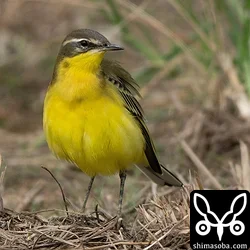
An adult Eastern Yellow Wagtail of the white-supercilium type, transitioning into winter plumage.

Glossy Ibis: Day 5

July 17, 2026

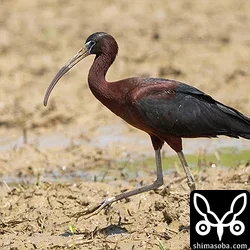
The Glossy Ibis that arrived on Ishigaki Island with Typhoon No. 9 is now in its fifth day of stay. It has become less wary and easier to observe.

Wood Sandpipers and Little Ringed Plovers on autumn migration have increased rapidly in the rice paddies. Little Terns that apparently bred on the island came to bathe, bringing their recently fledged chicks.

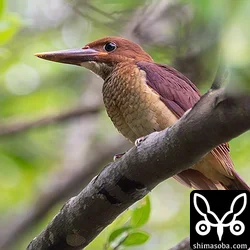
The Ruddy Kingfisher along the forest road has finished raising its young and is taking it easy.

By the fifth day of its stay, wariness had faded. It stopped flushing even when tractors and kei trucks passed by.

Ruddy Kingfisher, Ashy Drongo, Ruddy Shelduck, Oriental Pratincole and more (video)

April 7, 2026

Ruddy Kingfisher numbers have been building up. The first call of the season came a little earlier than usual, but I had been away from the island on a family trip at the end of March, so I only just managed to get photographs. These days a bird is calling loudly around the house from early morning — at around 6 a.m. the Ruddy Kingfisher wakes me up.

The Ashy Drongo has been wintering at the same spot since around New Year, a stay of roughly four months now. That is quite a long wintering record for Ishigaki Island.

A single Ruddy Shelduck turned up in the rice paddies. Last winter one appeared briefly at the dam but I could not get a proper look, so this was my first good view in a long time. It really is a beautiful bird.

Other spring migrants are arriving one after another: Oriental Pratincole, Common Snipe, Common Greenshank, Black-winged Stilt, Pied Avocet and more.

The Ryukyu Ruddy Kingfisher arrived about a week earlier than usual this season — calls were already audible around 23 March. Numbers picked up toward the end of March. My first photos weren't until 6 April, a little later than usual, partly because I was away from the island on a trip.
Common Hoopoe, Pied Avocet and more (video)

March 22, 2026

There was a Common Hoopoe — about the tenth of this season. A Pied Avocet also showed up, along with a flock of around 60 Pacific Golden Plovers and some Oriental Pratincoles.

A Eurasian Hoopoe showing no wariness at all. This season it was all relaxed birds.

First confirmed record!! Pin-tailed Snipe wintering!! (video)

Jan. 27, 2026

I have been able to document Pin-tailed Snipe wintering on Ishigaki Island as a definite record. This is the individual confirmed last November. Construction started nearby and I was too busy with work over the year-end and New Year period to get out and check, but it was wintering at the same spot.

Pin-tailed Snipe had been observed here as late as late February 2024, but a solid wintering record had remained elusive. Having confirmed this bird from November through to late January, it now stands as a firm wintering record. I can only hope this individual stays on through to the spring Pin-tailed Snipe season in April.

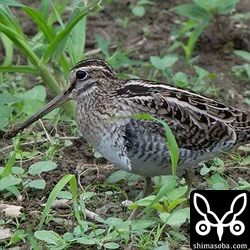
This Pin-tailed Snipe left a strong impression, so I've been able to identify it individually. You can tell at a glance. ^^ First-winter plumage.

Taiga Bean Goose Arrives; Out-of-season Sharp-tailed Sandpiper and Others

Nov. 27, 2025

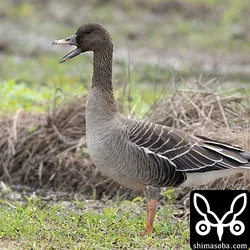
A Taiga Bean Goose that had been reported a little while back was resting in the paddies. Waders present included Pied Avocets, Black-winged Stilts, Long-toed Stints, Wood Sandpipers, Common Redshanks, Common Greenshanks, Marsh Sandpipers and Common Snipe. An out-of-season Sharp-tailed Sandpiper was also there on its own. Temminck's Stints have been numerous this season — I confirmed several birds.

Bean Geese had been seen in multiple individuals, but on this day there was only one.

Wintering Pin-tailed Snipe!! (video)

Nov. 20, 2025

This breaks the latest date record for Pin-tailed Snipe on Ishigaki Island by a full month!!

I found it among a small flock of Common Snipe. It was not a typical Pin-tailed Snipe individual, and at first I wavered between that and Swinhoe's Snipe, but after watching for a while I became certain it was Pin-tailed. I stuck it out for about an hour and managed to get photos of the tail feathers as documentary evidence.

It is an exceptionally Swinhoe's-like individual, which makes it all the more interesting. This is definitely a Pin-tailed Snipe I won't forget in a hurry. ^^

The previous late record for Pin-tailed Snipe on Ishigaki was an adult on 18 October, so this is a substantial update to the record. ^^

Incidentally, the earliest record is a juvenile in late February. That individual may well have been wintering, though.

Pin-tailed Snipe, first-winter plumage.

Common Ringed Plover appears!!

Sept. 4, 2025

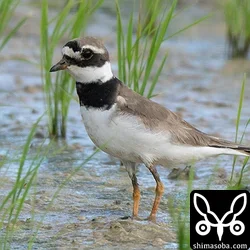
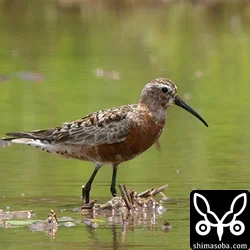
A Common Ringed Plover — a rare bird on Ishigaki Island — has turned up. It's only the second time I've seen one on the island. It was associating with a flock of Little Ringed Plovers. A juvenile Curlew Sandpiper, the first of the season, also arrived. I had noted it a few days earlier, but today I managed to get photographs.

The rice fields have a true migration-season feel, with Common Greenshank, Marsh Sandpiper, Wood Sandpiper, Long-toed Stint, Black-winged Stilt, and Red-necked Stint all coming and going.

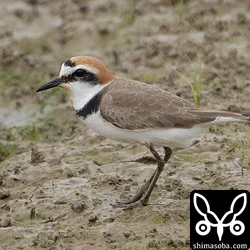
The Kentish Plover was in transition from breeding to non-breeding plumage.

Long-awaited Latham's Snipe at the away Snipe Camp!! (video)

Aug. 7, 2025

I visited Aichi Prefecture for an away Snipe Camp. Taking the shinkansen from Nagoya Station, I arrived in Toyohashi. On the first day, two powerful local helpers supported me, and I was finally able to observe the long-awaited Latham's Snipe — both adults and juveniles!!

On the second day I headed alone to Aisai City to search for Latham's Snipe. The lotus fields were thick with leaves and looked hard to work, so I covered the nearby paddy areas instead. Of four birds found, one could be observed well. On the third day I returned to the same spot and photographed one bird.

Wood Sandpiper, Greater Painted-snipe, and Little Ringed Plover were also present, though their numbers were overwhelmingly fewer than on Ishigaki Island.

I am now a little better prepared for the one-in-a-million chance of encountering Latham's Snipe on Ishigaki Island. ^^

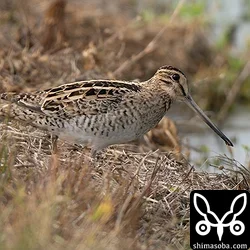
An adult Latham's Snipe. I had a good, fairly close look at it.

Curlew Sandpiper, Dunlin, Long-toed Stint and Whiskered Tern arrive

July 30, 2025

On Ishigaki Island, the autumn wader passage is growing more active by the day, with both species and numbers on the rise.

In the paddies I recorded the first Curlew Sandpiper, Dunlin, and Long-toed Stint of the season. Little Ringed Plover juveniles have also arrived. Wood Sandpiper can be seen in flocks of several dozen birds across various paddy areas around the island. Common Greenshank are also passing through in good numbers. Four Whiskered Tern — the first of the season — had arrived as well.

The first Curlew Sandpiper of the season.

Shorebird Migration Under Way — Gull-billed Tern Arrives

July 19, 2025

The wader migration has started on Ishigaki Island. Along the coast, Grey-tailed Tattlers, Terek Sandpipers, Eurasian Whimbrels, and Greater Sand Plovers have appeared, while the paddyfields have received Common Greenshanks, Black-winged Stilts, Wood Sandpipers, Long-toed Stints, and Little Ringed Plovers. Numbers and species will keep building from here. With any luck, the snipe we have all been waiting for will show up in late August.

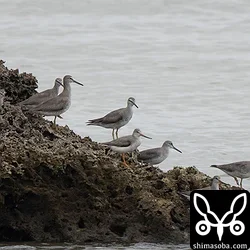
As the tide came close to high, Grey-tailed Tattlers and Terek Sandpipers gathered on the coastal rocks.

Chinese Blackbird Arrives

March 13, 2025

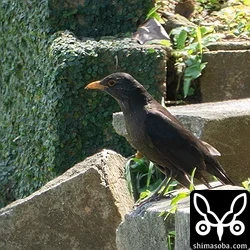
The Chinese Blackbird, harbinger of spring on Ishigaki, has arrived. I heard its call nearby as well, so it seems multiple birds are staying. Brown-headed Thrush, Pale Thrush, and Dusky Thrush migration also appears to be approaching its peak — small flocks can be found in patches of grassland in coastal settlements and similar spots.

I heard a Hooded Crane was staying in the north of the island, so I went to have a look. It seemed to favour a field prepared for sugarcane planting, with a pineapple plantation as a backdrop.

Cinnamon Bittern and Purple Heron are also full of vitality with the feel of spring in the air.

A Common Blackbird turned up in a good patch of habitat. Looks like it may stay a while.

White's Thrush, Pied Avocet, and others

Jan. 22, 2025

White's Thrush has been turning up frequently this season. They're quite wary, so this was the first individual I managed to photograph. Pale Thrush and Brown-headed Thrush are also present on Ishigaki Island at the moment, but Dusky Thrush has been almost nowhere to be seen.

The Pied Avocet has been staying a long time. Temminck's Stint, Little Ringed Plover, Long-toed Stint, and Wood Sandpiper have all increased slightly in number. Spring migration may be getting underway soon.

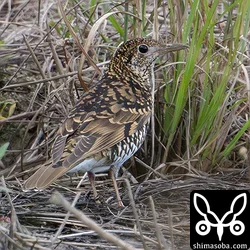
A White's Thrush in the rice fields. It is noticeably larger than Pale and Brown Thrushes, and the bold patterning adds to its presence.

First Mandarin Duck of the Season

Oct. 17, 2024

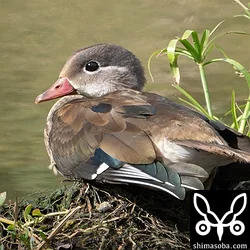
The first Mandarin Duck of the season has arrived. It was a male in eclipse plumage.

Male Mandarin Duck. It's in eclipse plumage, so it doesn't look very Mandarin-like.

Greater Painted-snipe, Red-necked Stint, Sharp-tailed Sandpiper, Oriental Pratincole and others

Aug. 18, 2024

First juveniles of the season confirmed for Wood Sandpiper and Common Sandpiper. Red-necked Stint and Sharp-tailed Sandpiper also first records of the season. The Greater Painted-snipe chicks are still moving with the adults but have grown large enough that they are barely distinguishable from them.

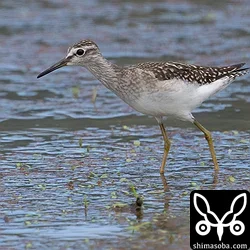
First Wood Sandpiper juveniles of the season. It seems they arrived all at once.

Waders increase after the typhoon passes

July 28, 2024

Typhoon No. 3 passed through without causing major damage, but even after it reached the western side of Taiwan the wind continued to make itself felt in the Yaeyamas.

In the rice paddies, wader numbers increased considerably — Wood Sandpipers were present in flocks of several dozen wherever I went. Common Greenshank, Common Sandpiper, Green Sandpiper, Red-necked Stint, and Long-toed Stint were all up in numbers too, making for a lively scene.

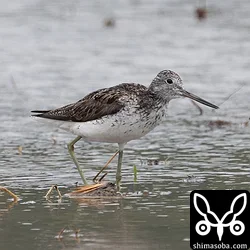
A Common Greenshank still largely in summer plumage.

Northern Boobook fledging, Ruddy Kingfisher, Cinnamon Bittern, Chinese Pond Heron, Black-naped Tern chick-rearing and more

July 14, 2024

The Northern Boobooks have fledged. Pair formation was later than usual this year, so fledging was delayed too. I wonder whether one of the pair has changed.

Ruddy Kingfisher fledging is finished everywhere now, and the adults are catching their breath. The fledglings are still within their parents' territories but are catching prey on their own.

Cinnamon Bittern chick-rearing is also over, and juveniles are appearing in rice paddies here and there. Juvenile Purple Herons that have become independent are also starting to show up in the paddies. Chinese Pond Herons and Black-faced Spoonbills are arriving on autumn passage.

Waders are beginning to move through little by little. As autumn migration gets into full swing, numbers and species will keep increasing.

Terns are in the thick of chick-rearing. Black-naped Tern chicks that are roughly one to two weeks post-hatch are starting to be seen.

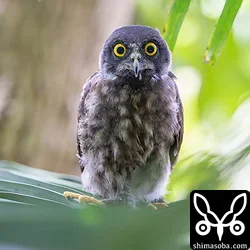
The last fledgling of the season for the Brown Hawk-Owl. There were still some remaining in the nest.

Ruddy Kingfisher, Malayan Night Heron, Cinnamon Bittern, Oriental Pratincole — juveniles fledging one after another

July 9, 2024

The Ruddy Kingfishers that were breeding near my home had fledged before I noticed. I confirmed three fledglings that can now fly.

Malayan Night Herons have also fledged. I confirmed two juveniles that have been out of the nest for some time. Three or so Cinnamon Bittern juveniles were in a flooded paddy. The adults' calls were audible too.

Oriental Pratincoles apparently bred at a quarry on private land — there were around 30 birds in total, adults and juveniles together. Two Little Ringed Plover juveniles as well. There is a possibility they bred on Ishigaki Island.

The Ruddy Kingfisher just a stone's throw from home fledged around three chicks again, as it did last year.

Kentish Plover, Whiskered Tern, Eurasian Spoonbill and Others

April 2, 2024

A Kentish Plover turned up that looks slightly different from the birds that breed on Ishigaki. I haven't paid much serious attention to Kentish Plovers before, but this individual stood out.

First Whiskered Terns of the season confirmed — two birds quartering over the rice paddies. A juvenile Eurasian Spoonbill is also still present; it's an individual with a noticeably pale bill. Wood Sandpiper and Black-winged Stilt numbers are up, though the peak for waders in the paddies hasn't really arrived yet this season. Little Ringed Plover and Long-toed Stint are also gradually increasing.

Isabeline Shrikes are thinning out as they head to breeding grounds. The pair of overwintering Peregrine Falcons is still here. The one-eyed Crested Serpent Eagle near my home is somehow hanging on. Ishigaki Tit appears to be busy with nesting.

Male Kentish Plover in breeding plumage. Beautiful. The breeding population in Okinawa is considerably paler.