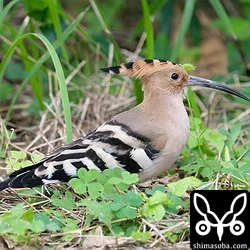
The Common Hoopoe that appeared on Christmas Eve is now on its third day. It shows no wariness and isn't being pestered by birders, so I have a feeling it will stick around.
The pair of Peregrine Falcons (former subspecies Siberian Peregrine) that wintered here last year are back again, terrorising the paddies and hunting Eurasian Coots and herons relentlessly. Eurasian Coots are well down on last year's numbers, and Eurasian Teal are completely absent. The Upland Buzzard wintering in the same area alongside the falcons may be a factor.
Common Snipe have moved in all over, including a flock of 47, but they are all Common Snipe.
A Eurasian Hoopoe with little wariness. There is a fair amount of foot traffic, but no birders come, so it is never chased off and is well into wintering mode.
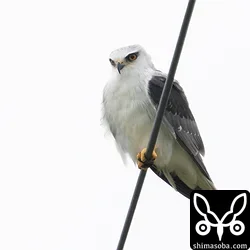
The juvenile Black-winged Kite seems to have finally become independent recently. Black-winged Kites on Ishigaki breed multiple times a year, so the population keeps growing. The Peregrine Falcon pair that wintered here last year has returned to the same spot again this year. An Upland Buzzard is also in the same area, keeping the Eurasian Coots and herons on edge. A nearby juvenile Crested Serpent Eagle looked startled as the two Peregrines chased it around.
The two Tundra Swans are still present. Around ten Northern Lapwings — all juveniles — have arrived. The rice paddies are busy with Marsh Sandpipers, Common Greenshanks, Common Redshanks, Wood Sandpipers, Northern Shovelers and Eurasian Teals. The first Tufted Duck of the season was also confirmed.
A Black-winged Kite juvenile with zero wariness. Given the location and timing, it may be the individual that was being fed in mid-air by a parent bird previously.
The raptors that winter on Ishigaki Island are now all showing up: Upland Buzzard, Saker Falcon, Eastern Marsh Harrier, Grey-faced Buzzard, Common Kestrel, Short-eared Owl, and more.
The ducks, Eurasian Coots, and small birds that serve as prey are on edge whenever a raptor appears.
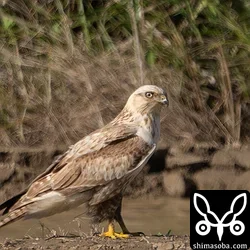
Juvenile Upland Buzzard. One appears every year, but this individual is not very wary and is easy to observe and photograph.