A daily record.
Featuring photos of wild birds and nature, mainly from Okinawa Main Island and Ishigaki Island

Greater White-fronted Goose and Tundra Swan Arrive; More Pied Avocets
Dec. 12, 2025

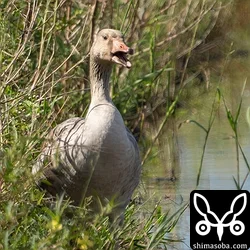
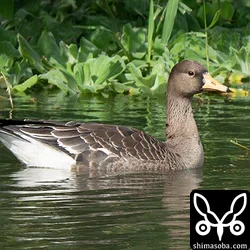
A Greater White-fronted Goose has been present for several days now, but for some reason the guide is apparently calling it a Greylag Goose. To me it is clearly a juvenile Greater White-fronted Goose… ^^; A juvenile Tundra Swan has also arrived on its own. On Iriomote, two Tundra Swans and a Siberian Crane are staying as well.

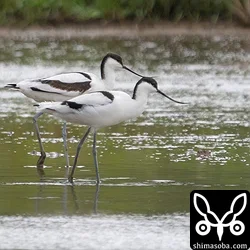
Multiple Pied Avocets have turned up across the island. That day I tallied six birds in total — a group of four and singles at two separate locations. In the paddies, Northern Lapwings, Pacific Golden Plovers, Kentish Plovers, Little Ringed Plovers, Common Greenshanks, Common Redshanks, Wood Sandpipers, Dunlins, Common Sandpipers, Green Sandpipers and Black-winged Stilts are all wintering.

This season I had already confirmed the subspecies leucopsis and ocularis White Wagtails, but this day I was finally able to see the subspecies alba White Wagtail. That is pretty much how it goes every year.

A juvenile Greater White-fronted Goose. Why does it get misidentified as a Greylag Goose?
Pied Avocet, Black-faced Spoonbill, Eurasian Spoonbill and others

Nov. 1, 2025

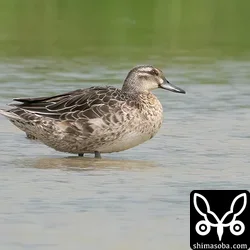
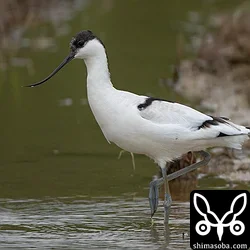
Two Pied Avocets have been present for several days. A flock of Black-faced Spoonbills and Eurasian Spoonbills, Bar-tailed Godwit, and Garganey have been staying a long time. Wintering Eurasian Teal and Northern Shoveler are also steadily building up.

Two Pied Avocets with zero wariness are staying in the area.

Construction starts — Little Terns and Kentish Plovers suffer

June 8, 2024

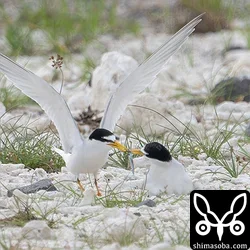
Construction has finally begun. No matter that the endangered Little Terns are incubating eggs — no consideration is given at all. Bird-deterrent tape and kites were put up only now, belatedly. There is not a shred of compassion on display. The approach does not align with the Ministry of the Environment's "Guidelines for the Conservation and Consideration of Little Tern Breeding Sites" either.

The male bringing food to the incubating female (right). It struggled to deliver the food while spooked by a raptor-shaped kite set up as a bird deterrent.

Little Tern and Kentish Plover nesting

June 7, 2024

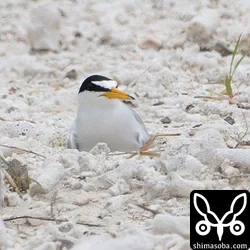
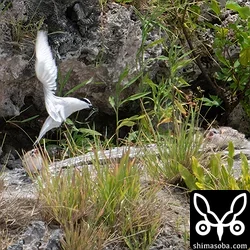
Little Terns and Kentish Plovers are breeding at a construction site where work is about to begin. Several pairs of Little Terns are incubating. Kentish Plovers range from chicks that can just barely fly to pairs still incubating.

A Little Tern on the nest.

Lesser Cuckoo, Northern Boobook, Little Tern, and others

May 29, 2024

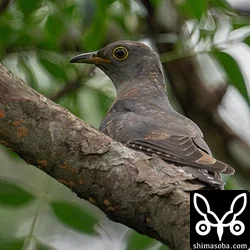
I had a close-range view of Lesser Cuckoo — an adult and a young bird, foraging in a pine grove. Around six Asian Koels were in the area too, making it a spot with a notably high concentration of cuckoos.

Despite the heavy rain, the Northern Boobook's incubation seems to be going smoothly; the male was keeping a steady watch. Year by year it has become less wary, and it shows no concern when walkers pass right in front of it.

Little Terns have arrived at the planned site of the cruise-terminal building — close to 30 birds, the same location as last year. Some individuals were already incubating. Last year the nest colony was completely wiped out by a PAC-3 deployment, so I wonder whether this season will go better. Kentish Plovers were running about — several chicks at various stages, from just-hatched to those that could manage a short flight.

White-breasted Waterhen are in full breeding mode; I often come across pairs with chicks. The breeding season is long, so for a while yet I expect to encounter families at all different stages of development.

In the paddies after the rice harvest, Purple Herons, Grey Herons, Intermediate Egrets, and Little Egrets are gathering to hunt.

A Common Cuckoo still in juvenile plumage. I was able to observe it at close range.

Wintering Waders

Jan. 30, 2024

Shorebirds are wintering along the coast and in the rice paddies. The most numerous are Greater Sand Plovers, Siberian Sand Plovers, and Ruddy Turnstones on the coast. Unusually for Ishigaki Island, a flock of Grey Plovers is also wintering.

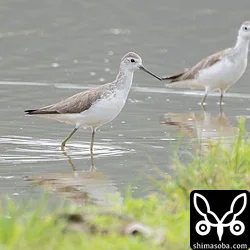
Shorebird numbers in the paddies this season are low; species present include Common Greenshank, Marsh Sandpiper, Common Snipe, Wood Sandpiper, and Green Sandpiper.

Little Stint, winter plumage.

Caspian Tern, Common Gull and others (video)

Jan. 9, 2024

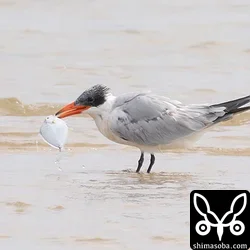
A Caspian Tern was wrestling with a large fish on the coast. The fish was deep-bodied and the tern seemed to have real trouble swallowing it. The thread-like dorsal fin visible in the footage suggests it was a Silvery Moony.

Greater Crested Terns swallow small fish on the wing, but this Monocle Bream was too large, so the bird carried it to the water's edge. Looking closely, I could see it tearing off the obstructive dorsal and pectoral fins with its bill.

Ruff, Marsh Sandpiper, Common Redshank, and more

Oct. 6, 2023

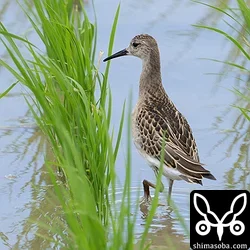
Ruff have turned up at several sites, almost all juveniles. The regulars — Red-necked Stint, Common Greenshank, Marsh Sandpiper, Common Redshank, and Long-toed Stint — are present in paddies everywhere. Dunlin have started to appear as well.

The first Pacific Golden Plovers of the season arrived in small flocks of juveniles. Around the park and cattle sheds, Chestnut-cheeked Starling, Red-billed Starling, and White-shouldered Starling are also increasing.

A juvenile Ruff.

Oriental Pratincole and Kentish Plover breeding, Little Tern breeding, first juvenile Common Redshank of the season (video)

Aug. 2, 2023

Oriental Pratincole and Kentish Plover are breeding well, with many fledged chicks on view. The Oriental Pratincoles in particular have formed a flock of nearly 60 juveniles. At the reclaimed land site, chicks from several Kentish Plover pairs have fledged and are running around energetically.

The Little Terns, which share the same site as the Kentish Plovers in a colony, had their nests flooded by heavy rain brought by the typhoon. Some eggs that had been submerged for several hours did hatch, but their prognosis looks poor.

In the rice paddies, juvenile Common Redshank arrived for the first time this season. Every year, Common Redshank is the first shorebird species to arrive as a juvenile.

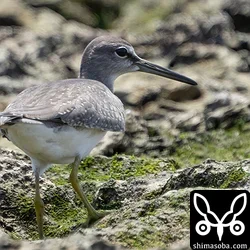
Migrating waders and plovers are gradually increasing. Wood Sandpiper, Long-toed Stint and Grey-tailed Tattler have arrived in the paddies. On the coast, Greater Sand Plover, Siberian Sand Plover and Grey-tailed Tattler numbers are building.

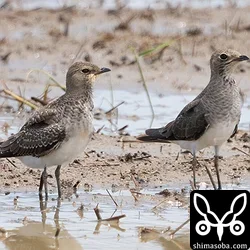
Oriental Pratincole in juvenile plumage (left) and first-winter plumage.

Last birds of 2022

Dec. 29, 2022

At year-end, having coughed up blood to get all my copy filed before the end of the year, I squeezed in a short final birdwatch for 2022.

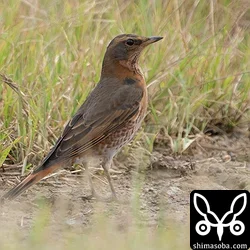
Entering December, Dusky Thrushes, Brown-headed Thrushes, and Pale Thrushes had increased sharply. Most of the Dusky Thrushes were Naumann's Thrushes, and the variation in plumage tones makes comparing them a pleasure in itself. Brown-headed and Pale Thrushes have also relaxed since shortly after arrival and are easier to observe.

Manchurian Bush Warblers and Dusky Warblers were calling from patches of scrub here and there, though slightly fewer than last year.

Daurian Redstart, Amur Stonechat, Red-throated Pipit, and Eastern Yellow Wagtail are also wintering.

In addition to the three Ruddy Shelduck already present, four Common Shelduck also arrived. Tundra Swans, Common Cranes, and Eurasian Spoonbills continue to stay on.

Among the ducks, Northern Shoveler were the most numerous, followed by Eurasian Wigeon, Eurasian Teal, and Tufted Duck. Ferruginous Duck has not been confirmed this season.

Large numbers of Common Snipe are wintering; among roughly 200 counted across multiple paddies, there was one Swinhoe's Snipe.

Crested Serpent Eagles — both immatures and adults — have become easier to see. Road casualties will increase from here on, so care is needed when driving on Ishigaki Island and Iriomote Island.

The most vividly coloured Naumann's Thrush of the day. An adult.

Two Pied Avocets, Common Crane, Eurasian Spoonbill and others

Dec. 14, 2022

Two Pied Avocets have arrived. They may be individuals already wandering around the island — four more Pied Avocets have also been confirmed elsewhere.

The Common Crane is also in wintering mode. At first it was extremely wary, but now not at all. ^^

A Eurasian Spoonbill is also staying on — a friendly individual. Wintering waders are showing up as well.

Pied Avocets foraging together. The bird in the background is in first-winter plumage; the one in the foreground is an adult in winter plumage.

Juvenile Black Stork arrives (video)

Dec. 3, 2022

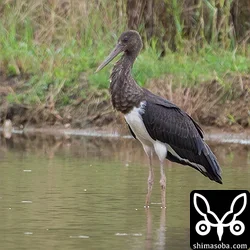
A Black Stork has arrived on Ishigaki. One came in last year too, and they turn up occasionally before that, but they are always quite wary and surprisingly difficult to photograph. This individual, however, could be observed fairly close-up and at leisure — for a Black Stork, anyway.

The Tufted Duck is my first of the season. A juvenile had already been confirmed last month, but this was my first sighting. On the coast there were Grey Plovers, Siberian Sand Plovers, Kentish Plovers, Red-necked Stints, and Sanderlings. Two Caspian Terns were flying distantly. I expect Caspian Tern numbers will increase a little more toward year's end.

Black Stork, juvenile. My wife saw one last year but I missed it. This individual was not especially wary for a Black Stork, and we were able to photograph and observe it at close range.

Third Ruddy Shelduck of the season, long-staying Greylag Goose, summer-plumage Siberian Sand Plover (video)

Nov. 25, 2022

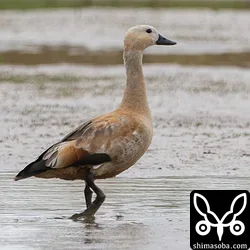
Following the previous two adults, a juvenile Ruddy Shelduck has now arrived. The adults were extremely wary, but this juvenile showed almost no wariness — perhaps a sign of its youth — and was easy to observe.

The Greylag Goose has been staying a long time; it looks like it may well winter over. Taiga Bean Goose, Greater White-fronted Goose, Lesser White-fronted Goose, and Common Crane are also still present.

On the coast, small numbers of Siberian Sand Plovers, Kentish Plovers, Pacific Golden Plovers, Ruddy Turnstones, Common Greenshanks, and Dunlins are staying on. In the paddies, Spotted Redshanks, Black-winged Stilts, Wood Sandpipers, Long-toed Stints, Sharp-tailed Sandpipers, and Common Snipe are conspicuous. Whiskered Terns — both adults and juveniles — are also still present.

This season, the starling family is represented by several species but numbers are low.

Dusky Thrushes, Pale Thrushes, Brown-headed Thrushes, and Eyebrowed Thrushes have started arriving.

The third Ruddy Shelduck of the season was a juvenile — in the process of moulting from juvenile plumage into first breeding plumage.

Greylag Goose, juvenile Crested Serpent Eagle, Caspian Tern and others

Nov. 20, 2022

The Greylag Goose that appeared about ten days ago is still here. Alongside the Greylag Goose, Ishigaki currently hosts a Lesser White-fronted Goose, a Greater White-fronted Goose, a Taiga Bean Goose, a Tundra Swan, and a Common Crane — quite an unlikely lineup for a southern island.

The juvenile Crested Serpent Eagle was the ninth individual of the season. A very active bird, it was catching prey in the rice paddies and mown grasslands.

Caspian Terns have also been coming in over the past few days. They usually stay for a while each year but rarely winter over. On the coast, Siberian Sand Plovers, Kentish Plovers, Little Ringed Plovers, Pacific Golden Plovers, Grey-tailed Tattlers, Common Greenshanks, and Ruddy Turnstones are present in fluctuating numbers.

I had already seen a flock of five Greylag Geese at the end of last year on Okinawa Island, but this was my first encounter with the species on Ishigaki Island.

エリグロアジサシ子育て中、シロチドリ幼鳥

July 16, 2022

台風襲来もなく、エリグロアジサシの繁殖はどこも順調に進んでいます。陸地から一番近い営巣地に行ってみると2羽のヒナが育っていました。半分人工物でできた岩礁で、ヒナたちが隠れる場所もあることから巣立ちまで順調に推移しそうです。

河口にはシロチドリの幼鳥が2羽いました。島内での繁殖個体だと思われます。年々、シロチドリの繁殖地が少なくなっているような気がしますが今季も確認することができました。

When a Black-naped Tern parent returned carrying a small fish, two chicks came flying out from behind the rocks with their mouths open.

ジャワアカガシラサギ、メジロガモ、オオメダイチドリほか

March 12, 2022

仕事中にヤツガシラがいると連絡をもらい、時間を見つけて行きましたが、すでに移動した後か見つからず。副産物としてジャワアカガシラサギを発見しました。

沈砂池のメジロガモは、ほかのカモがほとんど消えたのにまだ滞在中。

海岸では春の渡りのシギやチドリが入れ替わり飛来します。この日はオオメダイチドリが特に多かったです。ほかには、シロチドリが数十羽にキョウジョシギ十数羽、ダイゼンが数羽、アオアシシギ、トウネン、ムナグロ、イソシギなど。

田んぼでは越冬組と渡り組のタシギが混在しています。セイタカシギやアカアシシギ、タカブシギなども増えてきました。

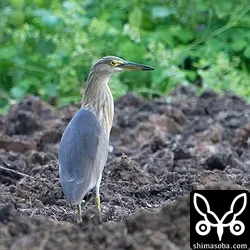
A Javan Pond Heron in a field. It appears to be changing into breeding plumage.

3週間ぶりの鳥見

Feb. 16, 2022

いろいろ忙しくて鳥を見に行けない日が続き、約3週間ぶりのバードウオッチングへ。といっても短時間のうちに海岸を2カ所ほど回っただけでした。

海岸はシギやチドリでずいぶんにぎやかになっていました。春の渡りが始まったようです。

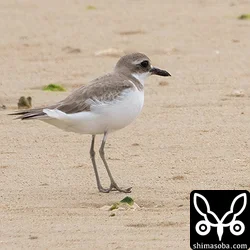
Greater Sand Plover, winter plumage.

石垣島にヒメクイナ登場!!(動画あり)

Dec. 7, 2021

何度か確認していてもなかなか写真に撮れないヒメクイナの写真がやっと撮れました。

石垣島では少ないツルシギは今季初確認。オジロトウネン、ヒバリシギ、オオハシシギ、メダイチドリ、シロチドリなどは元気に滞在中。

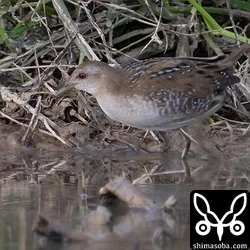
Little Crake, juvenile.

近所で鳥見 カモ類が増えてきた

Oct. 15, 2021

職場と自宅周辺で少しだけ鳥見。

今季初のハシビロガモとオナガガモは前日、初認していましたが写真は撮れずでしたが、この日、ハシビロガモだけは写真の記録が残せました。シマアジは5羽の群れがやってきました。

海岸ではムナグロやダイゼン、キアシシギ、トウネン、メダイチドリなどが滞在中。

サトウキビ畑には警戒心の弱いカタグロトビがいました。石垣島のカタグロトビはずいぶん増えて、田んぼやサトウキビ畑、牧草地に行けばたいてい見られます。

Garganey, adult. Sex unknown.

田んぼと海岸のシギ、チドリ

Sept. 1, 2021

田んぼと海岸を巡回。キアシシギとキョウジョシギ、セイタカシギ、イソシギで幼鳥を初確認しました。本土からはトウネン、ソリハシシギなどの幼鳥飛来情報ありますが、石垣島ではまだ未確認ですね。

田んぼはシギ、チドリの数、種類とも多くなっていますが、海岸はそれほどでもありません。越冬組が到着すればもう少し賑やかになると思われます。

複数羽いたハリオシギは残すところ1羽のみとなりました。チュウジシギはたくさんいます。タシギはまもなく到着するものと思われます。

The first Grey-tailed Tattler juvenile of the season.