A daily record.
Featuring photos of wild birds and nature, mainly from Okinawa Main Island and Ishigaki Island

Third visit to Yonaguni this month

March 18, 2026

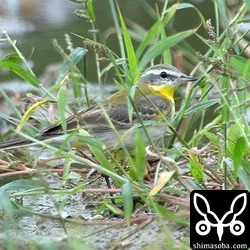
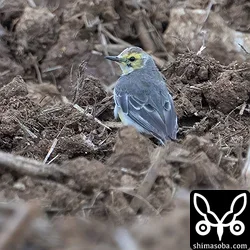
I made my third trip to Yonaguni Island this month. Small passerines were the main attraction: White Wagtail, Eastern Yellow Wagtail, Little Bunting, Daurian Redstart, and Brown Shrike among others.

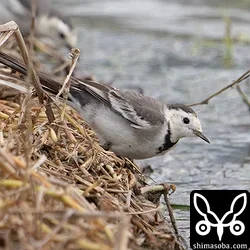
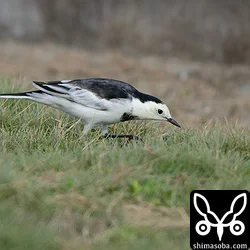
There was a mixed flock of three subspecies of White Wagtail. This is a male leucopsis.

Birdwatching on Yonaguni Island

March 4, 2026

I squeezed in some birdwatching alongside a work trip to Yonaguni Island. Strong winds and occasional rain kept migrant numbers low.

Even so, there was a spring feel to it: Common Hoopoe, a flock of several dozen male White Wagtails, a group of around 30 Red-throated Pipits, and large flocks of Eastern Yellow Wagtail.

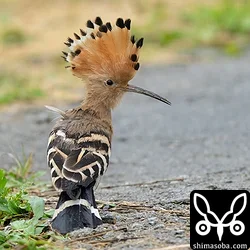
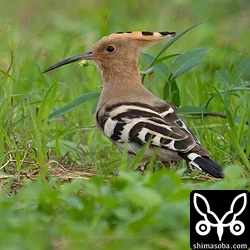
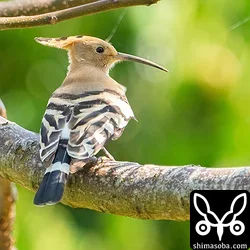
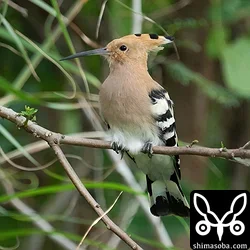
A Eurasian Hoopoe near the northern coast. It was foraging in light rain.

Third Common Hoopoe of the season found (video)

Feb. 21, 2026

The third Common Hoopoe of the season has arrived, following last week's bird. This individual showed no wariness at all — when a car passed nearby it flew off only a short distance. Reports of arrivals have also come in from other islands, and it looks like this is a good year for Common Hoopoe.

Temperatures are rising and spring migration is beginning. A mixed flock of Taiwan Wagtail, White Wagtail, and White Wagtail arrived in the rice paddies.

Among the waders, wintering birds — Common Snipe, Common Redshank, and Wood Sandpiper — have been joined by northbound migrants, making things a little livelier.

Resident birds — Crested Serpent Eagle, Purple Heron, and Cinnamon Bittern — were all active in the run-up to the breeding season.

Discovered what is the third Eurasian Hoopoe of the season on Ishigaki Island.

Pin-tailed Snipe Still Present

Nov. 22, 2025

The Pin-tailed Snipe I found the other day was still there, wintering alongside several Common Snipe.

It spent most of the day in the grass.

Wintering Pin-tailed Snipe!! (video)

Nov. 20, 2025

This breaks the latest date record for Pin-tailed Snipe on Ishigaki Island by a full month!!

I found it among a small flock of Common Snipe. It was not a typical Pin-tailed Snipe individual, and at first I wavered between that and Swinhoe's Snipe, but after watching for a while I became certain it was Pin-tailed. I stuck it out for about an hour and managed to get photos of the tail feathers as documentary evidence.

It is an exceptionally Swinhoe's-like individual, which makes it all the more interesting. This is definitely a Pin-tailed Snipe I won't forget in a hurry. ^^

The previous late record for Pin-tailed Snipe on Ishigaki was an adult on 18 October, so this is a substantial update to the record. ^^

Incidentally, the earliest record is a juvenile in late February. That individual may well have been wintering, though.

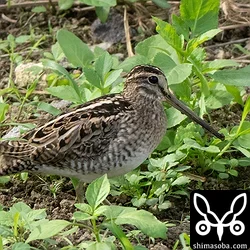
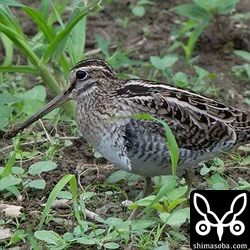
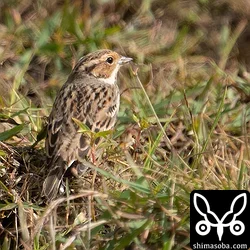
Pin-tailed Snipe, first-winter plumage.

Collared Kingfisher, Black-winged Kite, White Wagtail, and others

Feb. 12, 2025

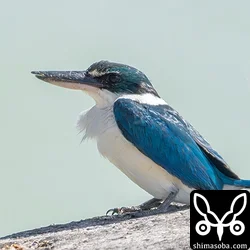
A friend was visiting Ishigaki Island, so I checked on the Collared Kingfisher. It was doing well at its usual stretch of coastline. There are some guys drinking there in the middle of the day, but the bird doesn't seem to mind much. It flushes when pedestrians approach, but quickly returns to its regular perch on the tetrapod or the windbreak branches.

I spotted the Black-winged Kite on the way back from the municipal office — it was perched on a phone line eating a mouse. The town birds have lost a lot of their wariness toward people and are easy to observe.

A Collared Kingfisher on a tetrapod. Perching on spots like this is probably why its tail feathers are so heavily worn.

First Mandarin Duck of the Season

Oct. 17, 2024

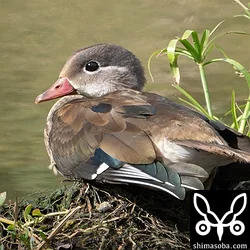
The first Mandarin Duck of the season has arrived. It was a male in eclipse plumage.

Male Mandarin Duck. It's in eclipse plumage, so it doesn't look very Mandarin-like.

Ten Garganey Arrive; First White Wagtail of the Season

Oct. 12, 2024

A flock of ten Garganey arrived, a mix of adults and juveniles.

First White Wagtail (leucopsis) of the season. On Ishigaki-jima the leucopsis type typically arrives first, followed by alba and ocularis at around the same time. Eastern Yellow Wagtail numbers keep fluctuating. The wintering birds should build up a bit more yet.

Whiskered Tern passage birds are increasing. From around late October the proportion of juveniles starts to rise. Black-winged Stilts can be seen in groups of around 20 birds at various locations, presumably on the move.

Male Garganey. All in eclipse.

Common Hoopoes every day, Chinese Blackbird still present, White Wagtails of the leucopsis subspecies everywhere

March 9, 2024

The Common Hoopoes on Ishigaki are rivalling the banner year of 2015 in numbers. In 2019, when I was posted to Okinawa main island, an exceptionally large influx of Common Hoopoes arrived as well. This year too, I'm guaranteed to encounter Common Hoopoes somewhere every single day. Every bird is remarkably tame and easy to watch. On this day they were confirmed across the southern, western and northern parts of Ishigaki.

Two Chinese Blackbirds are still present. These individuals are also quite unwary, making for relaxed photography. ^^ I've now found their feeding spot, so they should be even easier to see from here on.

I recorded Black-winged Kite in the northern part of Ishigaki for the first time. Breeding behaviour was first confirmed on the island in 2016, fledglings left the nest in 2017, and in the roughly seven years since, the species has spread across the entire island. There's a real possibility it could expand further to Miyako-jima and Okinawa main island in the future.

White Wagtails of the leucopsis subspecies are present in flocks of up to 50, and almost every White Wagtail I see anywhere on the island is of this subspecies — finding a nominate-type bird is the harder task. Good numbers of returning Red-throated Pipits are also arriving. Little Ringed Plovers are foraging alongside them.

I didn't bother photographing them, but White-shouldered Starling, Red-billed Starling, Common Starling and Eastern Yellow Wagtail are also around.

Five groups of birding acquaintances from the mainland are visiting the island this month — if things continue like this, they're in for a great trip. ^^

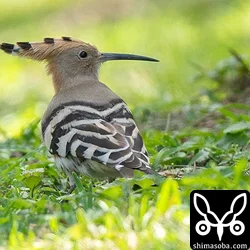
A Eurasian Hoopoe spotted in the grass. As usual, it was feeding on cockroaches.
Common Hoopoe and Chinese Blackbird arrive; Crested Serpent Eagle active

March 5, 2024

I was up in the northern part of Ishigaki for work, so I took the chance to do a bit of birding. I had a feeling Common Hoopoe and Chinese Blackbird might have arrived, so I made a short detour — and found them straight away. Two Common Hoopoes at two sites, and one Chinese Blackbird. Common Hoopoes are being seen in good numbers on Okinawa main island, Miyako-jima and Iriomote as well; this could be a bumper year.

Also present were Arctic Warbler, Kamchatka Leaf Warbler, Daurian Redstart and Mugimaki Flycatcher. White Wagtail numbers are up, but almost all of them are the leucopsis subspecies — the largest flock was close to 30 birds. In a typical year the leucopsis birds arrive first, followed by the nominate subspecies a while later.

In the paddies, Crested Serpent Eagle — both juvenile and adult — and Malayan Night Heron are being encountered frequently.

Four Spotted Redshanks dropped out of the sky into a rice field. They came in from the direction of the sea, so they may be the birds that were recorded on Iriomote a few days ago.

Eurasian Hoopoe resting on a branch. It ended up settling in and staying put just like that.

Hen Harrier, Pheasant-tailed Jacana, Garganey, first Greater White-fronted Goose of the season, and more

Oct. 25, 2023

The Grey-headed Swamphen staying on Ishigaki has had a Hen Harrier turning up at its paddy field for the past few days, causing havoc. Several friends have come to Ishigaki to see the Swamphen, but it has become wary and is showing poorly, so they are having a hard time.

A Pheasant-tailed Jacana is also in residence and going about its business peacefully. I had noted Garganey several times over the past two weeks or so, but this time I finally managed to get it on camera.

I also recorded my first Greater White-fronted Goose and White-faced Wagtail of the season.

The paddies are lively, with Ruff, Dunlin, Common Greenshank, Marsh Sandpiper, Long-toed Stint, Red-necked Stint, Common Snipe, and Black-winged Stilt, as well as Eastern Red-rumped Swallow, Amur Stonechat, Eastern Yellow Wagtail, Grey Wagtail, Red-throated Pipit, and Little Bunting.

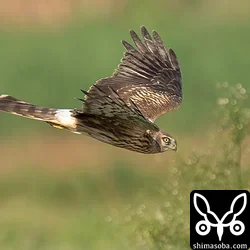
A completely unwariness Hen Harrier juvenile. It was an extremely aggressive hunter, and the upper surface of its flight feathers was stained with mud.

Naumann's Thrush, Olive-backed Pipit, Eastern Yellow Wagtail and others

Feb. 28, 2023

While driving through farmland I spotted an orange-coloured bird. Through binoculars it turned out to be a strikingly bright Naumann's Thrush. Eight Olive-backed Pipits came into the garden — a flock that has been wintering in the village. They have grown considerably more accustomed to people over the course of the winter.

White Wagtails and Eastern Yellow Wagtails, apparently moving through, can be seen on a day-by-day basis.

Oriental Greenfinch, scarce on Ishigaki Island, is staying on and feeding in unharvested rice.

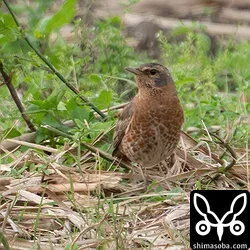
A strikingly vivid Naumann's Thrush. It was conspicuous enough to catch the eye even at a distance.

Western Yellow Wagtail or Russian Yellow Wagtail!!

Jan. 24, 2023

Within a mixed flock of around 100 White Wagtails, Eastern Yellow Wagtails, and Red-throated Pipits, I found one individual that stood out from the rest.

Aside from being at a different stage of moult compared with the surrounding (Blyth's) Eastern Yellow Wagtails, the bird's bright blue-grey head, broad and long supercilium, white below the eye, and white throat suggest it could be Western Yellow Wagtail ( Motacilla flava beema ) or Russian Yellow Wagtail ( Motacilla flava flava ).

Incidentally, some taxonomic treatments regard Western Yellow Wagtail as a species separate from Eastern Yellow Wagtail, in which case Russian Yellow Wagtail would be a subspecies of Western Yellow Wagtail.

However, since this individual is in first-winter plumage, moult will need to progress a bit further before anything conclusive can be said. Picking out a bird like this from within a huge wagtail flock is its own kind of fun.

Within the White Wagtail flock, alongside the White Wagtails proper, there were also Taiwanese White Wagtails and White-faced White Wagtails.

An individual that looks distinctly odd — probably a Western Yellow Wagtail or an Eastern Yellow Wagtail. That said, there are cases where first-winter Citrine Wagtails moulting into summer plumage also show white below the eye.

First birds of 2023

Jan. 12, 2023

Wishing everyone a happy new year.

The new year got off to a rough start — the entire family came down with COVID-19 right at the beginning of the holidays. We couldn't go anywhere, and I spent the time in bed until the 8th. ^^

My first birding of the year was on the 9th. Overwintering since last year: Common Crane, Ruddy Shelduck, Common Shelduck, Tundra Swan, Korean Kestrel, Grey-faced Buzzard, Eastern Marsh Harrier, Hen Harrier, thrushes, wagtails, Amur Stonechat, Chinese Pond Heron, and four species of starling.

For New Year's, you can't leave out a juvenile Crested Serpent Eagle — the bird celebrated in the Okinawan song "Washi nu Tui-bushi."

Rook visits for the first time in years

Dec. 14, 2022

Rooks used to arrive in reasonable flocks every winter, but I hadn't been able to confirm any in the past few years. This season, three have turned up. They occasionally joined up with flocks of Large-billed Crows.

Rooks with not much wariness. Three birds, all juveniles. Moulting into first-winter plumage.

キガシラセキレイ、ホオジロハクセキレイ、ムネアカタヒバリなど

March 27, 2022

農地はツメナガセキレイの大群が通過して行っています。その中にキガシラセキレイが2羽混じっていました。ほかの場所ではハクセキレイの群れの中に1羽確認されており、現在3羽のキガシラセキレイが滞在中です。

ハクセキレイの群れには、ホオジロハクセキレイやタイワンハクセキレイがそこそこの割合でいます。

First-winter plumage still makes up the majority, but breeding plumage is beginning to show on some individuals.

今季4羽目のヨシガモ、動かないタマシギなど(動画あり)

March 8, 2022

昨年の秋から今年にかけてオス3羽、メス1羽を確認したヨシガモ。シーズンで4羽も見るのは、沖縄ではかなり珍しいです。オカヨシガモのメス4羽と行動を共にしていました。

タシギは越冬組に渡り組が加わり多少賑やかになってきましたが、タシギ以外のジシギの確認はまだです。

繁殖シーズンに入っているタマシギが数日間、同じ草むらの中にいます。巣作り中なのでしょうか。

ズグルミゾゴイも繁殖シーズン到来で婚姻色が出だしています。

ハクセキレイも移動が活発で、20羽程度の群れをいくつか見ました。ホオジロハクセキレイも混じっています。

ツグミも増えたり減ったりで入れ替わりが激しい模様。春の渡りが始まっているようです。

水の張られた田んぼにはセイタカシギやアマサギ、アオサギが飛来していました。こちらも春の渡りの最中だと思われます。

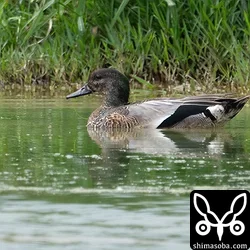
A male Falcated Duck. Mid-moult from juvenile to first breeding plumage.

ヤツガシラ、ズグロミゾゴイ、ホオジロハクセキレイなど

Jan. 7, 2022

昨年12月から断続的に現れているヤツガシラ。今年に入っても順調に複数羽が飛来しています。ヤツガシラは春、秋ともに飛来数の変動が大きいですが、秋は特に極端です。今年は多いですね。

田んぼにはホオジロハクセキレイやツメナガセキレイ、タヒバリ、ムネアカタヒバリ、コホオアカなど。キマユホオジロ、ミヤマホオジロもいましたが、撮影できませんでした。 キマユホオジロは昨年12月中旬に撮影 していますが、その時も苦労しました。^^;

A Eurasian Hoopoe resting on a branch. It was completely relaxed and stayed like that for a long time.

コホオアカ、ツメナガセキレイ、ホオジロハクセキレイなど(動画あり)

Dec. 27, 2021

久しぶりにコホオアカを撮影。エンベリが少ない沖縄では確実に毎年、観察できるのですが、草にもぐりがちで撮影する機会は少ない…。

ツメナガセキレイは群れが島内を移動しながら越冬しています。その群れの中にハクセキレイやキセキレイ、タヒバリなどが入っています。