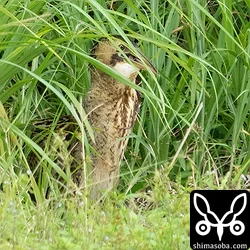
The rice fields are lively with migrants, though the spring shorebird passage feels like it may be winding down. In good weather, birds seem to be turning over every two or three days.
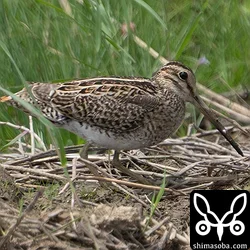
Pin-tailed Snipe, Swinhoe's Snipe, Little Stint, and Broad-billed Sandpiper — all popular birds — are still present.
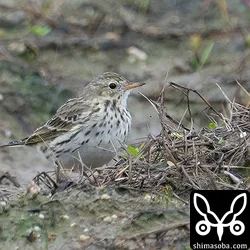
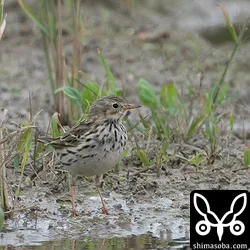
A Pin-tailed Snipe foraging along a paddy bund, mixed in with several Swinhoe's Snipe.
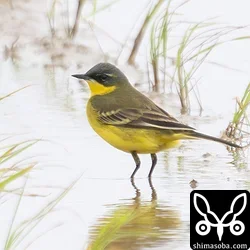
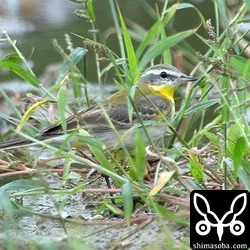
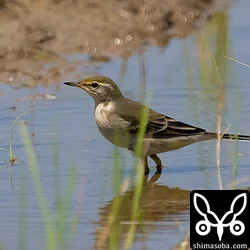
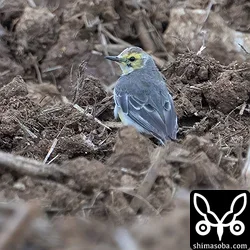
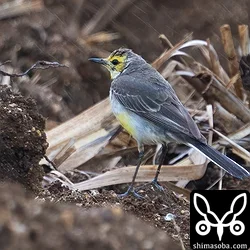
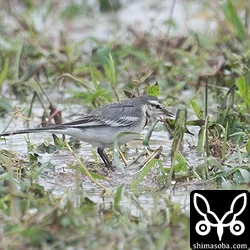
While watching shorebirds in the rice fields, a flock of about twenty Eastern Yellow Wagtails dropped in from above. I looked at the first three that landed in front of me and there they were — a Siberian Wagtail, a White-browed Wagtail, and an Eastern Yellow Wagtail (Yellow-browed type) lined up side by side in a row. What a sudden miracle!!
The second Siberian Wagtail of the season. Last month's bird was in winter plumage, but this one was in breeding plumage.
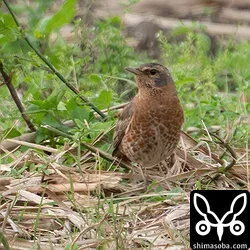
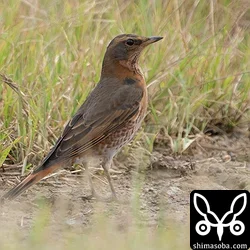
While driving through farmland I spotted an orange-coloured bird. Through binoculars it turned out to be a strikingly bright Naumann's Thrush. Eight Olive-backed Pipits came into the garden — a flock that has been wintering in the village. They have grown considerably more accustomed to people over the course of the winter.
White Wagtails and Eastern Yellow Wagtails, apparently moving through, can be seen on a day-by-day basis.
Oriental Greenfinch, scarce on Ishigaki Island, is staying on and feeding in unharvested rice.
A strikingly vivid Naumann's Thrush. It was conspicuous enough to catch the eye even at a distance.
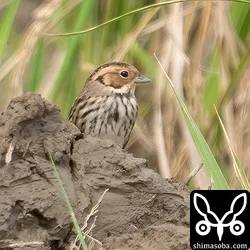
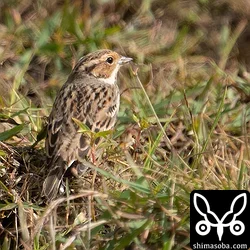
Little Buntings are wintering here, but they bury themselves in the grass and are hard to photograph. Their call notes can be heard everywhere.
Red-throated Pipits also tend to stay hidden, but this flock came out into open ground and was easy to observe. The birds were in various stages of moult, which made for a good mix.
Wagtails included White Wagtail, Taiwanese White Wagtail, Eastern Yellow Wagtail and Grey Wagtail all together.
A fair number of Little Buntings are wintering in the rice paddies on the island, but they're difficult to photograph.
Within a mixed flock of around 100 White Wagtails, Eastern Yellow Wagtails, and Red-throated Pipits, I found one individual that stood out from the rest.
Aside from being at a different stage of moult compared with the surrounding (Blyth's) Eastern Yellow Wagtails, the bird's bright blue-grey head, broad and long supercilium, white below the eye, and white throat suggest it could be Western Yellow Wagtail ( Motacilla flava beema ) or Russian Yellow Wagtail ( Motacilla flava flava ).
Incidentally, some taxonomic treatments regard Western Yellow Wagtail as a species separate from Eastern Yellow Wagtail, in which case Russian Yellow Wagtail would be a subspecies of Western Yellow Wagtail.
However, since this individual is in first-winter plumage, moult will need to progress a bit further before anything conclusive can be said. Picking out a bird like this from within a huge wagtail flock is its own kind of fun.
Within the White Wagtail flock, alongside the White Wagtails proper, there were also Taiwanese White Wagtails and White-faced White Wagtails.
An individual that looks distinctly odd — probably a Western Yellow Wagtail or an Eastern Yellow Wagtail. That said, there are cases where first-winter Citrine Wagtails moulting into summer plumage also show white below the eye.
At year-end, having coughed up blood to get all my copy filed before the end of the year, I squeezed in a short final birdwatch for 2022.
Entering December, Dusky Thrushes, Brown-headed Thrushes, and Pale Thrushes had increased sharply. Most of the Dusky Thrushes were Naumann's Thrushes, and the variation in plumage tones makes comparing them a pleasure in itself. Brown-headed and Pale Thrushes have also relaxed since shortly after arrival and are easier to observe.
Manchurian Bush Warblers and Dusky Warblers were calling from patches of scrub here and there, though slightly fewer than last year.
Daurian Redstart, Amur Stonechat, Red-throated Pipit, and Eastern Yellow Wagtail are also wintering.
In addition to the three Ruddy Shelduck already present, four Common Shelduck also arrived. Tundra Swans, Common Cranes, and Eurasian Spoonbills continue to stay on.
Among the ducks, Northern Shoveler were the most numerous, followed by Eurasian Wigeon, Eurasian Teal, and Tufted Duck. Ferruginous Duck has not been confirmed this season.
Large numbers of Common Snipe are wintering; among roughly 200 counted across multiple paddies, there was one Swinhoe's Snipe.
Crested Serpent Eagles — both immatures and adults — have become easier to see. Road casualties will increase from here on, so care is needed when driving on Ishigaki Island and Iriomote Island.
The most vividly coloured Naumann's Thrush of the day. An adult.
立冬のこの日、マガンが25羽飛来しました。石垣島はもちろん沖縄でも最大の飛来数だと思われます。これまで県内でもっとも多い飛来数は 2018年の11羽 なので倍以上の数に記録更新です。ついでにオナガガモ3羽もついてきました。
今季初となるキンクロハジロを確認。単独で水路を泳いでいました。
先月、50羽ほどの群れで入ったタゲリは島内で分散してあちこちの田んぼにいます。
ツメナガセキレイとムネアカタヒバリは群れで島内を移動していて、昨日は100羽以上の群れがいたのに今日はいないなんてことがよくあります。
ほかにはオグロシギやムナグロ、リュウキュウヨシゴイ、カンムリワシ、ムラサキサギ、シマアカモズ、サシバなどレギュラーメンバーに会えました。
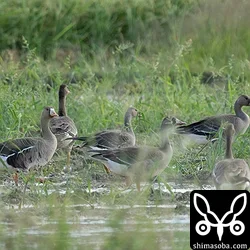
The flock of Greater White-fronted Geese totalled 25 birds, adults and juveniles combined.
イエスズメが石垣島に飛来しました!! 3年前には沖縄本島でオスのイエスズメ を本島発記録として見つけましたが、今回の個体はメスのイエスズメだったこともあり、ニュウナイスズメのメスだと思い込んでいました…。で、このイエスズメの写真を数枚撮ったところでバッテリー切れを起こすという失態…。なので動画は撮れませんでした。^^;
ツメナガセキレイ、ムネアカタヒバリの移動中の群れが石垣島をどんどん通過しています。
ハクセキレイも少しずつ増えてきました。
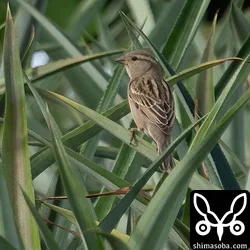
House Sparrow, female. It was in a pineapple field.
春の渡り組としては今季初のホウロクシギ1羽とシマアジ5羽とアカガシラサギ2羽が現れました。アオサギは中継組の群れが沖合の岩礁で休憩していました。
昨日、1羽だったオジロトウネンは3羽に増えていました。同じ田んぼには警戒心ゆるゆるのアカガシラサギ。
ほぼ夏羽に変わった(キマユ)ツメナガセキレイやハクセキレイ、キセキレイなども田んぼで多く見かけます。
ことし1月から滞在のコハクチョウはまだいます。渡る気あるのかないのか分かりませんが、植え付けられた水稲の苗を食害していました…。^^; 田んぼの持ち主は「かわいそうだから追い払わない」とのこと。
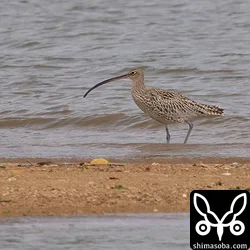
Far Eastern Curlew, first-winter plumage. Just a hint of summer plumage still showing.
新年最初のバードウオッチングで見つけたマキバタヒバリ は今日も健在でした。このまま石垣島で越冬してほしいですね。
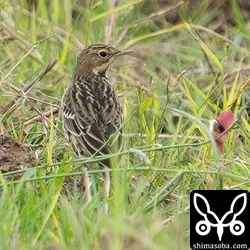
タヒバリやムネアカタヒバリの群れと一緒に行動していました。タヒバリ属3種の混群は姿をまったく消すこともあるのですが、そこは餌場に執着するタヒバリ属でしばらくすると舞い戻ってきます。
マキバタヒバリは一番、草に潜る傾向が強く、飛んでシャッフルされるたびに探し出すのが大変ですが、そこが面白いでもありますね。
The Buff-bellied Pipit was there again today. First-winter plumage, perhaps. One field guide states that the darkened claw can be used as an identification feature, but from what I saw today, individuals of both Buff-bellied Pipit and Red-throated Pipit with darkened claws are perfectly common… ^^;