A daily record.
Featuring photos of wild birds and nature, mainly from Okinawa Main Island and Ishigaki Island

Common Hoopoe and a Pair of Peregrine Falcons Staying On (video)
Dec. 27, 2024

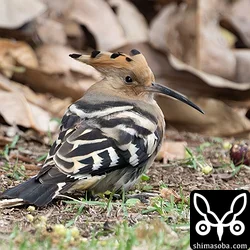
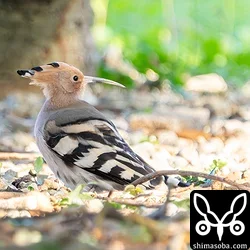
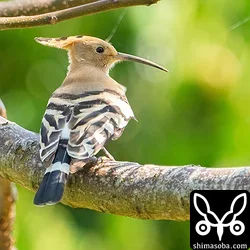
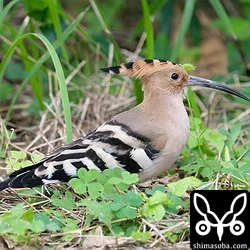
The Common Hoopoe that appeared on Christmas Eve is now on its third day. It shows no wariness and isn't being pestered by birders, so I have a feeling it will stick around.

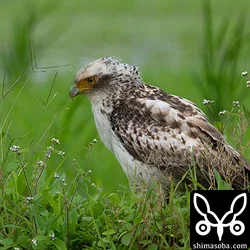
The pair of Peregrine Falcons (former subspecies Siberian Peregrine) that wintered here last year are back again, terrorising the paddies and hunting Eurasian Coots and herons relentlessly. Eurasian Coots are well down on last year's numbers, and Eurasian Teal are completely absent. The Upland Buzzard wintering in the same area alongside the falcons may be a factor.

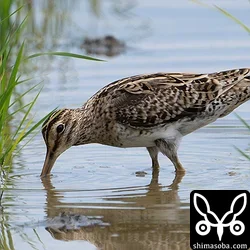
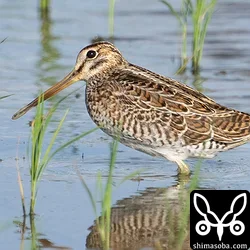
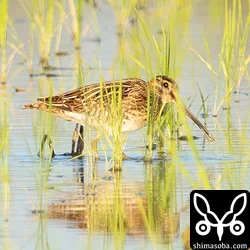
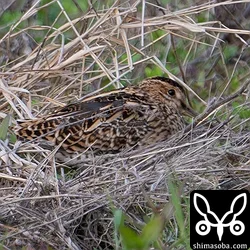
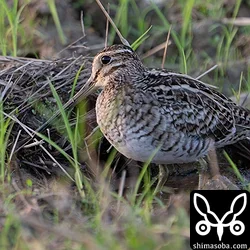
Common Snipe have moved in all over, including a flock of 47, but they are all Common Snipe.

A Eurasian Hoopoe with little wariness. There is a fair amount of foot traffic, but no birders come, so it is never chased off and is well into wintering mode.
Pied Avocet, Crested Serpent Eagle and more

Dec. 13, 2024

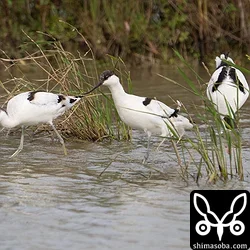
Three Pied Avocets have been staying for several days. Single birds have also been found elsewhere, so they may have dispersed from the flock of eleven that arrived in November.

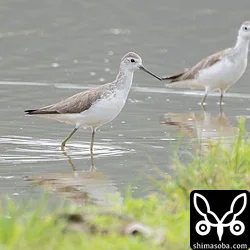
The first Black-tailed Godwit of the season has turned up. Also wintering in the paddies: Common Greenshanks, Common Sandpipers, Green Sandpipers, Dunlins, Common Snipes, Black-winged Stilts, Common Redshanks and Wood Sandpipers.

Three Pied Avocets delighting visitors to the island.

Black-faced Spoonbill, Garganey, Northern Lapwing and Others

Nov. 6, 2024

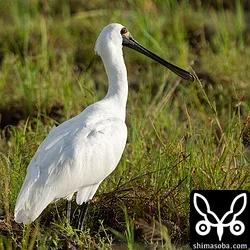
Two Black-faced Spoonbills are roaming and staying around the island. As it gradually starts to feel like autumn, Garganey, Eurasian Teal, Northern Shoveler, Eurasian Wigeon and Northern Pintail are also increasing.

Adult Black-faced Spoonbill.

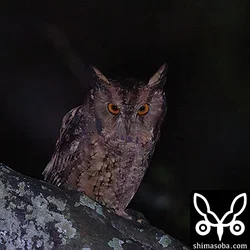
Ryukyu Scops Owl on Okinawa Main Island

Oct. 29, 2024

I went birding on the side of a work trip to Okinawa Main Island to cover the general election. The confirmed result for Okinawa District 4 came in just after 11 p.m. I quickly wrote and filed the article, returned to the hotel for a shower, then arrived in Yambaru just after 3 a.m.

It was my first night search in Yambaru in nearly three years, but hitting two reliable spots I encountered three Ryukyu Scops Owls. I had forgotten my flash, so I managed to photograph them using the rental car's headlights and a handheld torch. Before 5 a.m. I caught a short nap in the car. On the way back I stopped at Kin and Awase Tidal Flats and saw Eurasian Curlew, Far Eastern Curlew, ducks, snipe and other waders.

I visited the usual spot where Ryukyu Scops Owls breed, and sure enough one was there. I was also able to hear the well-known descending call: "Wok, wok, wok, woh."

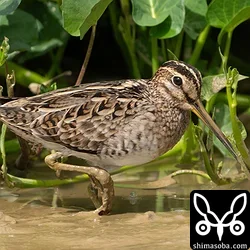
Extremely Rare Adult Pin-tailed Snipe in Winter Plumage!! Swinhoe's Snipe, Common Snipe (video)

Oct. 19, 2024

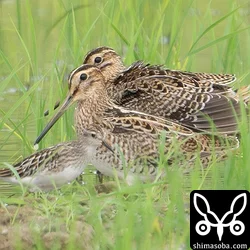
I managed to find a Pin-tailed Snipe that has moulted into winter plumage!! I picked it out from among 40 snipe together with Swinhoe's Snipe and Common Snipe. I had been searching with the belief that "there should still be Pin-tailed Snipe around," and the fact that the bird I finally found was an adult that had already finished moulting its scapulars and tertials into winter plumage made the moment even better!! A genuinely rare Pin-tailed Snipe in winter plumage.

Among the snipe still present, Swinhoe's Snipe numbered a few individuals; the rest were all Common Snipe.

Behold!! The splendid appearance of this adult Pin-tailed Snipe cloaked in winter plumage!!

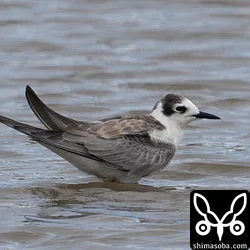
White-winged Tern, Garganey, Arctic Warbler, Ruff Arrive

Oct. 5, 2024

Autumn is well and truly here — White-winged Terns, Garganey, Ruffs and Arctic Warblers are all building up steadily and the paddies are getting lively. Snipe numbers have also jumped sharply: 40 Common Snipe against 2 Swinhoe's Snipe. I couldn't find any Pin-tailed Snipe.

White-winged Tern, juvenile. The third bird this season.

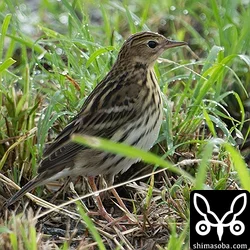
Two Pechora Pipits Show Up!!

Oct. 4, 2024

I finally got photos of the Pechora Pipits whose calls I had been picking up from the grassland for the past few days.

Red-throated Pipits have arrived in large numbers, so picking out the Pechora Pipits took some patience — but when I waited by the call, a bird popped up onto a rice-paddy berm right after the rain stopped. Finding a bird exactly as planned is a special kind of satisfaction. ^^

Chinese Sparrowhawk migration has been under way since early September, but bad weather has continued thanks to the typhoon and a lot of birds are lingering on Ishigaki-jima. At peak times three or so were perched on the power lines together. Once the weather clears they should push through all at once.

Grey-streaked Flycatchers on migration and wintering Arctic Warblers are also increasing. A large flock of around 500 Chestnut-cheeked Starlings was moving through parks in the town centre.

Buff-bellied Pipit, first-winter.

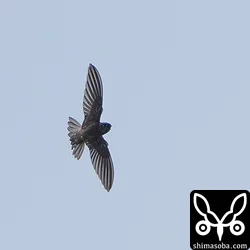
Himalayan Swiftlet Shows Up!!

Sept. 29, 2024

While I was watching Chinese Sparrowhawk migration, a Himalayan Swiftlet appeared!! Dark, slender and very sharp-looking.

Several hundred Chinese Sparrowhawks moved through. The largest single group was a few dozen birds. Migration should continue for a while, but I'm keeping an eye on the typhoon track.

I also had my first Eurasian Coots of the season and juvenile Pacific Golden Plovers. A flock of around 100 Ashy Minivets and the calls of Arctic Warblers were in the air too — it feels like autumn is deepening.

A Himalayan Swiftlet appeared. It was flying around together with swallows at high speed.

Second Wave of Snipe at Peak

Sept. 17, 2024

The second wave of snipe is peaking. That said, most birds are Swinhoe's Snipe and Pin-tailed Snipe — the Common Snipe peak is still ahead. The busier paddies hold around 30 snipe per field, mostly Swinhoe's Snipe. Next most numerous are Pin-tailed Snipe; Common Snipe seem to number only two or three.

Swinhoe's Snipe, adult.

Second Arrival of Pin-tailed Snipe

Sept. 12, 2024

The second wave of Pin-tailed Snipe — which has been on the low side this season — appears to have arrived. It feels slightly earlier than usual, so it may simply be that migration has been running late. Worth watching how things develop.

Since late August I have been visiting the same paddy field day after day to identify individual snipe, keep continuous records, and sort out tricky birds. Some individuals stay for a long time; others disappear within a day. Pin-tailed Snipe, Swinhoe's Snipe and Common Snipe alike tend to stick to almost exactly the same spot once they settle in.

New birds have joined the resident Pin-tailed Snipe, and the snipe scene in the paddies is a little livelier.

Pin-tailed Snipe (rear) and Swinhoe's Snipe. Both juveniles.

Pin-tailed Snipe, Swinhoe's Snipe, Common Snipe

Sept. 10, 2024

Almost every evening I am picking up snipe in the same paddy field. Some individuals have been staying a long time, and I can still find new arrivals. Swinhoe's Snipe continues to make up the majority, but Pin-tailed Snipe were there too. A few new Common Snipe had also come in.

A Pin-tailed Snipe juvenile appeared right in front of me.

First Common Snipe of the season

Sept. 2, 2024

I recorded my first Common Snipe of the season. The timing is about average for the year. On Ishigaki Island, all three snipe species — Common Snipe, Swinhoe's Snipe, and Pin-tailed Snipe — can be enjoyed through to around late October. ^^

First Common Snipe of the season. It was a juvenile.

Nothing but Common Snipe

March 28, 2024

I recorded Pin-tailed Snipe and Swinhoe's Snipe for the first time this season back in February, but since then I haven't been able to find either species at all — Common Snipe numbers just keep climbing. I expect both Pin-tailed and Swinhoe's Snipe to increase from mid-April, but until I actually see them I can't stop worrying….

A Common Snipe hunched down on a paddy bund. Looks exhausted.

Common Hoopoe, Malayan Night Heron, Pacific Swift, Red-throated Pipit and more (video)

March 21, 2024

The second wave of Common Hoopoes seems to be winding down. Somewhere between 40 and 50 Common Hoopoes have arrived on Ishigaki this season. While searching for them I came across several Malayan Night Herons whose nuptial colouring has deepened noticeably.

Red-throated Pipit and Siberian Pipit numbers are fluctuating wildly — flocks seem to be passing through one after another. The season's first Pacific Swift and Temminck's Stint also appeared. Little Ringed Plovers are fully in summer plumage and moving through. There was a beautiful male Common Ringed Plover in summer plumage too, but I missed the shot… ^^;

For snipe it's all Common Snipe. The Pin-tailed Snipe I found on 20 February and the Swinhoe's Snipe on 21 February remain the only records, with nothing since.

A Eurasian Hoopoe looking tired, apparently just arrived on migration.

Four Common Hoopoes, possible Naumann's × Redwing hybrid, Red-billed Starling, Arctic Warbler and more (video)

March 15, 2024

During a work break I counted four Common Hoopoes. Others were being seen elsewhere on the island — there were apparently at least seven birds present that day.

There was an odd thrush that looked like a Naumann's Thrush. The pattern on the breast and flanks wasn't quite right for Naumann's Thrush, and the bird gave an overall impression of Redwing. It seems quite likely to be a Naumann's Thrush × Redwing hybrid.

Eyebrowed Thrush, Brown-headed Thrush and Pale Thrush were all feeding on Machilus berries, but they disappeared into the branches and I couldn't get any photos.

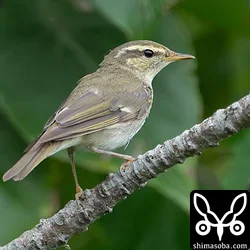
The Arctic Warblers that have been wintering on Ishigaki are thinning out as the weather warms — they appear to be moving steadily northward. The individual that had been wintering around my house has quietly vanished.

A Eurasian Hoopoe that has been staying for over a week. It's unusual for one to linger that long on spring passage.

Common Hoopoe and Chinese Blackbird arrive; Crested Serpent Eagle active

March 5, 2024

I was up in the northern part of Ishigaki for work, so I took the chance to do a bit of birding. I had a feeling Common Hoopoe and Chinese Blackbird might have arrived, so I made a short detour — and found them straight away. Two Common Hoopoes at two sites, and one Chinese Blackbird. Common Hoopoes are being seen in good numbers on Okinawa main island, Miyako-jima and Iriomote as well; this could be a bumper year.

Also present were Arctic Warbler, Kamchatka Leaf Warbler, Daurian Redstart and Mugimaki Flycatcher. White Wagtail numbers are up, but almost all of them are the leucopsis subspecies — the largest flock was close to 30 birds. In a typical year the leucopsis birds arrive first, followed by the nominate subspecies a while later.

In the paddies, Crested Serpent Eagle — both juvenile and adult — and Malayan Night Heron are being encountered frequently.

Four Spotted Redshanks dropped out of the sky into a rice field. They came in from the direction of the sea, so they may be the birds that were recorded on Iriomote a few days ago.

Eurasian Hoopoe resting on a branch. It ended up settling in and staying put just like that.

Crested Serpent Eagle juvenile, Malayan Night Heron, Pin-tailed Snipe, Northern Lapwing and more

March 1, 2024

The one Crested Serpent Eagle juvenile that's been reliably viewable was at it again today — foraging at its own pace in the rice fields, walking the bunds and catching what looked like small insects.

Malayan Night Heron adults are turning up more often. This day I had three adults and one juvenile.

The Pin-tailed Snipe is still present. The same paddy field held nearly 30 Common Snipe — presumably spring migrants passing through. New arrivals of Common Redshank, Common Greenshank and Wood Sandpiper were also noted. Migration is picking up pace.

The season's first Northern Lapwing and Grey-headed Lapwing have also arrived.

A completely fearless Crested Serpent Eagle, juvenile.

Arctic Warbler and three snipe species (video)

Feb. 24, 2024

Arctic Warbler numbers are lower than in the bumper year two years ago, but a reasonable number are still wintering here. Lately I've also been hearing Kamchatka Leaf Warbler calls — possibly birds already on the move.

For snipe, all three species have shown up earlier than usual: Pin-tailed Snipe, Swinhoe's Snipe and Common Snipe together at the same time.

An overwintering Lesser Whitethroat appeared right in front of me. I've confirmed the ID by call, but I also think I can make out the classic Lesser Whitethroat feature of P10 being shorter than the primary coverts. ^^;

Pin-tailed Snipe, Swinhoe's Snipe, Javan Pond Heron and more (video)

Feb. 22, 2024

After finding the season's first Pin-tailed Snipe the day before , I went back after work to try for shots of the tail feathers. You want the first record of the season to be done properly. While I was there I also picked up the season's first Swinhoe's Snipe — more than a month earlier than usual. Spring migration this year is behaving strangely.

Two Javan Pond Herons are continuing to winter here. Every year I hope they'll stay long enough to come into breeding plumage, but in most years they depart during February. We'll see how this season goes.

I'll be holding the "2nd Ishigaki Snipe Camp" sometime in early to mid-April. A report from the 1st is here → Day 1 , Day 2 , Extra edition .

First-winter Pin-tailed Snipe. Same individual as the previous day.

Wintering Waders

Jan. 30, 2024

Shorebirds are wintering along the coast and in the rice paddies. The most numerous are Greater Sand Plovers, Siberian Sand Plovers, and Ruddy Turnstones on the coast. Unusually for Ishigaki Island, a flock of Grey Plovers is also wintering.

Shorebird numbers in the paddies this season are low; species present include Common Greenshank, Marsh Sandpiper, Common Snipe, Wood Sandpiper, and Green Sandpiper.

Little Stint, winter plumage.