A daily record.
Featuring photos of wild birds and nature, mainly from Okinawa Main Island and Ishigaki Island

Ruddy Kingfisher, Ashy Drongo, Ruddy Shelduck, Oriental Pratincole and more (video)
April 7, 2026

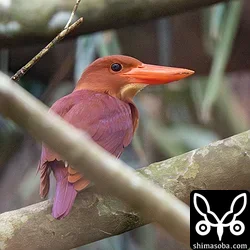
Ruddy Kingfisher numbers have been building up. The first call of the season came a little earlier than usual, but I had been away from the island on a family trip at the end of March, so I only just managed to get photographs. These days a bird is calling loudly around the house from early morning — at around 6 a.m. the Ruddy Kingfisher wakes me up.

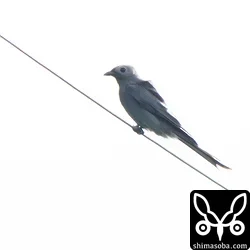
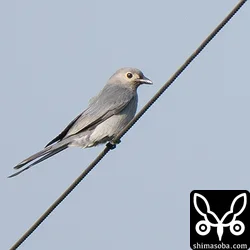
The Ashy Drongo has been wintering at the same spot since around New Year, a stay of roughly four months now. That is quite a long wintering record for Ishigaki Island.

A single Ruddy Shelduck turned up in the rice paddies. Last winter one appeared briefly at the dam but I could not get a proper look, so this was my first good view in a long time. It really is a beautiful bird.

Other spring migrants are arriving one after another: Oriental Pratincole, Common Snipe, Common Greenshank, Black-winged Stilt, Pied Avocet and more.

The Ryukyu Ruddy Kingfisher arrived about a week earlier than usual this season — calls were already audible around 23 March. Numbers picked up toward the end of March. My first photos weren't until 6 April, a little later than usual, partly because I was away from the island on a trip.
Common Hoopoe, Pied Avocet and more (video)

March 22, 2026

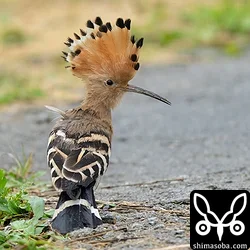
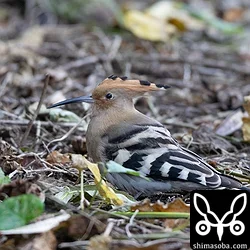
There was a Common Hoopoe — about the tenth of this season. A Pied Avocet also showed up, along with a flock of around 60 Pacific Golden Plovers and some Oriental Pratincoles.

A Eurasian Hoopoe showing no wariness at all. This season it was all relaxed birds.

Third visit to Yonaguni this month

March 18, 2026

I made my third trip to Yonaguni Island this month. Small passerines were the main attraction: White Wagtail, Eastern Yellow Wagtail, Little Bunting, Daurian Redstart, and Brown Shrike among others.

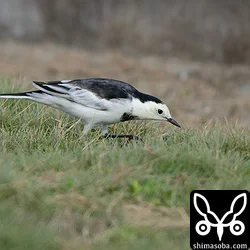
There was a mixed flock of three subspecies of White Wagtail. This is a male leucopsis.

Spring migration picks up pace

March 11, 2026

Spring migration on Ishigaki Island has been building gradually since February, and by March it has grown noticeably more active. The variety of waders is increasing first of all. Brown Shrikes and White-cheeked Starlings that spent the winter on the island are beginning to move north.

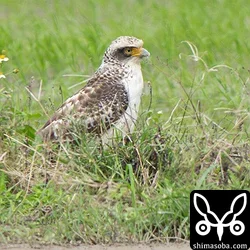
Some individual Crested Serpent Eagle juveniles are well along in their moult.

A juvenile Crested Serpent Eagle. It is within the territory of an adult pair and gets chased off every time it is spotted, yet it stubbornly stays put.

Birdwatching on Yonaguni Island

March 4, 2026

I squeezed in some birdwatching alongside a work trip to Yonaguni Island. Strong winds and occasional rain kept migrant numbers low.

Even so, there was a spring feel to it: Common Hoopoe, a flock of several dozen male White Wagtails, a group of around 30 Red-throated Pipits, and large flocks of Eastern Yellow Wagtail.

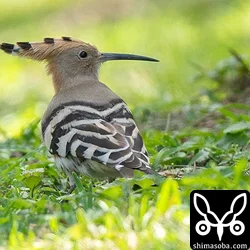
A Eurasian Hoopoe near the northern coast. It was foraging in light rain.

Third Common Hoopoe of the season found (video)

Feb. 21, 2026

The third Common Hoopoe of the season has arrived, following last week's bird. This individual showed no wariness at all — when a car passed nearby it flew off only a short distance. Reports of arrivals have also come in from other islands, and it looks like this is a good year for Common Hoopoe.

Temperatures are rising and spring migration is beginning. A mixed flock of Taiwan Wagtail, White Wagtail, and White Wagtail arrived in the rice paddies.

Among the waders, wintering birds — Common Snipe, Common Redshank, and Wood Sandpiper — have been joined by northbound migrants, making things a little livelier.

Resident birds — Crested Serpent Eagle, Purple Heron, and Cinnamon Bittern — were all active in the run-up to the breeding season.

Discovered what is the third Eurasian Hoopoe of the season on Ishigaki Island.

Common Hoopoe!! (video)

Feb. 12, 2026

The second Common Hoopoe of the season has arrived. The Common Hoopoe is one of the birds that herald spring on Ishigaki Island, though it feels as if the arrival date gets a little earlier every year.

With the warmer weather, Crested Serpent Eagle and Black-winged Kite on Ishigaki Island have been observed carrying nesting material and displaying — confirmed breeding behaviour. Wintering waders and ducks are still present.

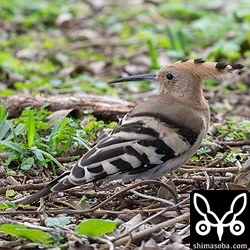
A Eurasian Hoopoe that turned up a little early. There are good years every few years, but I have a feeling this season will see a large influx of Eurasian Hoopoes on Ishigaki Island.

First confirmed record!! Pin-tailed Snipe wintering!! (video)

Jan. 27, 2026

I have been able to document Pin-tailed Snipe wintering on Ishigaki Island as a definite record. This is the individual confirmed last November. Construction started nearby and I was too busy with work over the year-end and New Year period to get out and check, but it was wintering at the same spot.

Pin-tailed Snipe had been observed here as late as late February 2024, but a solid wintering record had remained elusive. Having confirmed this bird from November through to late January, it now stands as a firm wintering record. I can only hope this individual stays on through to the spring Pin-tailed Snipe season in April.

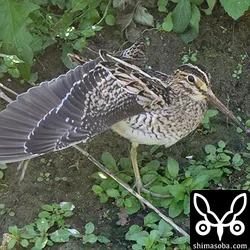
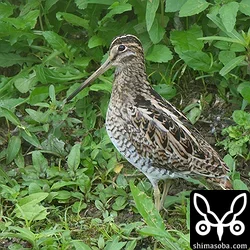
This Pin-tailed Snipe left a strong impression, so I've been able to identify it individually. You can tell at a glance. ^^ First-winter plumage.

Short-eared Owls Wintering

Jan. 16, 2026

Short-eared Owls have been wintering here again this season, as they did from around the end of last year. Surprisingly large numbers have turned up. A Long-eared Owl was also reported, but only for a single day — unfortunately I was not able to see it myself.

Out in the paddies during the day there are also wintering waders and plovers. Past mid-January I get the sense that they are slowly starting to move. I expect the main movement to begin around late February.

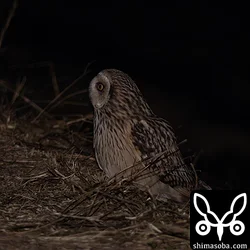
There was a Short-eared Owl staring intently at a thicket where mice were lurking. It seemed there was another one in the same area.

Ashy Drongo Settles In

Jan. 14, 2026

The Ashy Drongo from the other day appears to be in full wintering mode — when I went back to check a week later it was still in exactly the same spot.

Crested Serpent Eagles are very active on the farmland and I regularly come across pairs. Along the coast, Siberian Sand Plovers, Kentish Plovers, Ruddy Turnstones, Common Greenshanks, Grey-tailed Tattlers and Common Sandpipers are all wintering.

The White-bellied Drongo was in exactly the same spot as a week ago. It was predating something in the order Hymenoptera. I hope it stays until spring.

White-naped Crane — Only the 2nd Record for Ishigaki; Wintering Grey-faced Buzzards (video)

Jan. 13, 2026

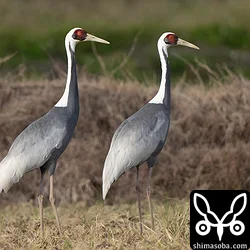
A White-naped Crane has arrived on Ishigaki for the first time in six years, since the first island record in 2020. It is a big, beautiful bird. A Siberian Crane has been wintering on Iriomote since last year — I would love to get over there to see it if the chance arises.

Crested Serpent Eagles are in the early stages of the breeding season; on fine days you can often hear a male and female calling back and forth.

Grey-faced Buzzards, Common Kestrels, Peregrine Falcons, Eastern Buzzards and Ospreys are all wintering on the island, but I have not seen an Upland Buzzard since I spotted one on Yonaguni in December last year — they seem scarce this season.

The first visit since October 2020. This time there were two adults. The Purple Heron looked no bigger than a Little Egret!!

Ashy Drongo Wintering; Eight Pied Avocets

Jan. 7, 2026

An Ashy Drongo has been wintering on Ishigaki since the new year. I watched it catch something from the Hymenoptera from a power line. Black Drongos can be seen here every year, but an Ashy Drongo on Ishigaki is an unusual sighting — particularly in winter.

A Eurasian Curlew, an unusual visitor, had also turned up at the river mouth.

A White-bellied Drongo was frequently coming out onto the power lines and making flying catches of insects in the air. It's already in wintering mode and looks set to stay a good while.

Last Birding of 2025 (video)

Dec. 31, 2025

December was hectic with repeated work trips and preparations for Omoto526, a single-unit rental guesthouse opening very soon, so I barely managed to get out birding at all.

Instead, a Crested Serpent Eagle, a Common Kestrel and Olive-backed Pipits have started turning up in our garden. A Black-winged Kite appears morning and evening.

I'd like to take things more slowly and do some proper birdwatching next year — though who knows how that will go… ^^;

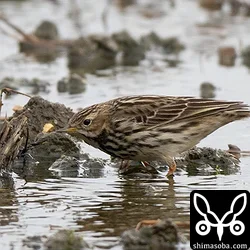
A Red-throated Pipit with a short tail. There were also several Citrine Wagtails in the same condition. Perhaps they were grabbed by the Eurasian Sparrowhawk that has been holding territory over this paddy.

Greater White-fronted Goose and Tundra Swan Arrive; More Pied Avocets

Dec. 12, 2025

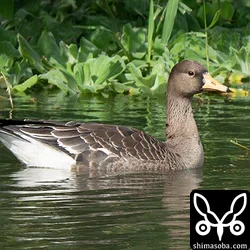
A Greater White-fronted Goose has been present for several days now, but for some reason the guide is apparently calling it a Greylag Goose. To me it is clearly a juvenile Greater White-fronted Goose… ^^; A juvenile Tundra Swan has also arrived on its own. On Iriomote, two Tundra Swans and a Siberian Crane are staying as well.

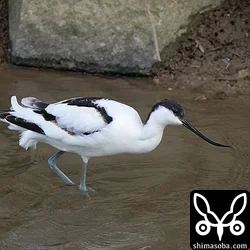
Multiple Pied Avocets have turned up across the island. That day I tallied six birds in total — a group of four and singles at two separate locations. In the paddies, Northern Lapwings, Pacific Golden Plovers, Kentish Plovers, Little Ringed Plovers, Common Greenshanks, Common Redshanks, Wood Sandpipers, Dunlins, Common Sandpipers, Green Sandpipers and Black-winged Stilts are all wintering.

This season I had already confirmed the subspecies leucopsis and ocularis White Wagtails, but this day I was finally able to see the subspecies alba White Wagtail. That is pretty much how it goes every year.

A juvenile Greater White-fronted Goose. Why does it get misidentified as a Greylag Goose?

Hen Harrier, Black-faced Spoonbill, Chinese Pond Heron, White Wagtail and Others

Dec. 3, 2025

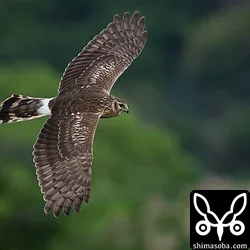
A Hen Harrier was hunting right in front of me. I could not tell what it was after, but startled Common Pheasants kept flushing repeatedly and the harrier did not seem to catch anything… ^^; My daughter, who was watching with me, was thrilled — when the Hen Harrier banked sharply she could actually hear the wind cutting through its wings. ^^

In the channels there were wintering Black-faced Spoonbills, in the paddies several Chinese Pond Herons, and we had Saunders's Gulls and Black-headed Gulls flying together — all in all a fun day of birdwatching for the kids.

A Hen Harrier quartering the rice paddies in search of prey.

Taiga Bean Goose Arrives; Out-of-season Sharp-tailed Sandpiper and Others

Nov. 27, 2025

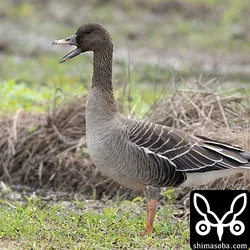
A Taiga Bean Goose that had been reported a little while back was resting in the paddies. Waders present included Pied Avocets, Black-winged Stilts, Long-toed Stints, Wood Sandpipers, Common Redshanks, Common Greenshanks, Marsh Sandpipers and Common Snipe. An out-of-season Sharp-tailed Sandpiper was also there on its own. Temminck's Stints have been numerous this season — I confirmed several birds.

Bean Geese had been seen in multiple individuals, but on this day there was only one.

Pin-tailed Snipe Still Present

Nov. 22, 2025

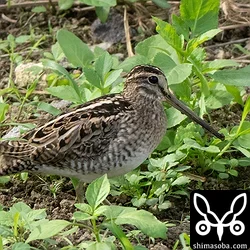
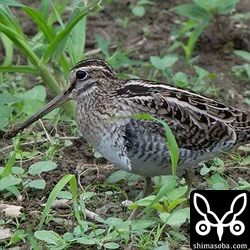
The Pin-tailed Snipe I found the other day was still there, wintering alongside several Common Snipe.

It spent most of the day in the grass.

Wintering Pin-tailed Snipe!! (video)

Nov. 20, 2025

This breaks the latest date record for Pin-tailed Snipe on Ishigaki Island by a full month!!

I found it among a small flock of Common Snipe. It was not a typical Pin-tailed Snipe individual, and at first I wavered between that and Swinhoe's Snipe, but after watching for a while I became certain it was Pin-tailed. I stuck it out for about an hour and managed to get photos of the tail feathers as documentary evidence.

It is an exceptionally Swinhoe's-like individual, which makes it all the more interesting. This is definitely a Pin-tailed Snipe I won't forget in a hurry. ^^

The previous late record for Pin-tailed Snipe on Ishigaki was an adult on 18 October, so this is a substantial update to the record. ^^

Incidentally, the earliest record is a juvenile in late February. That individual may well have been wintering, though.

Pin-tailed Snipe, first-winter plumage.