A daily record.
Featuring photos of wild birds and nature, mainly from Okinawa Main Island and Ishigaki Island

Construction starts — Little Terns and Kentish Plovers suffer

June 8, 2024

Construction has finally begun. No matter that the endangered Little Terns are incubating eggs — no consideration is given at all. Bird-deterrent tape and kites were put up only now, belatedly. There is not a shred of compassion on display. The approach does not align with the Ministry of the Environment's "Guidelines for the Conservation and Consideration of Little Tern Breeding Sites" either.

The male bringing food to the incubating female (right). It struggled to deliver the food while spooked by a raptor-shaped kite set up as a bird deterrent.

Little Tern and Kentish Plover nesting

June 7, 2024

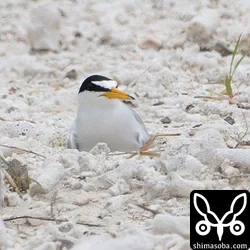
Little Terns and Kentish Plovers are breeding at a construction site where work is about to begin. Several pairs of Little Terns are incubating. Kentish Plovers range from chicks that can just barely fly to pairs still incubating.

A Little Tern on the nest.

Northern Boobook fledges, Ruddy Kingfisher excavating nest hole, scarce Terek Sandpiper (video)

June 6, 2024

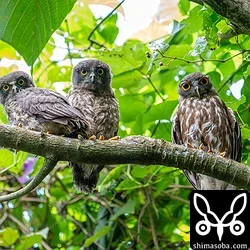
The first fledgling of the season was a Northern Boobook. Two birds successfully fledged from the same site as last year. For Northern Boobook, the timing was quite early.

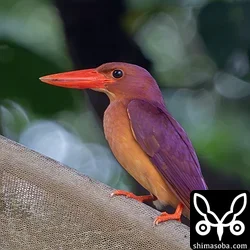
I confirmed a Ruddy Kingfisher excavating a nest hole. Individual numbers are high this season, and I have found so many nests that I have lost count. All I can do is hope each one goes well.

I also recorded Terek Sandpiper on Ishigaki Island — a species that seems to be down in numbers nationwide this year. Being late is normal for this species, but the low numbers are a concern. Nearby, a single Common Redshank was there alone. Several Grey-tailed Tattlers are staying in the area. Wandering Tattler has been recorded on Okinawa Island, so I am hopeful for Ishigaki Island too.

Brown Hawk-Owl fledgling and the mother (right).

Pheasant-tailed Jacana, Ryukyu Scops Owl, and Ruddy Kingfisher (video)

June 5, 2024

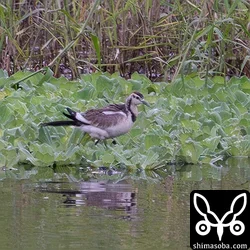
I spotted the second Pheasant-tailed Jacana of the season while out birding with my daughter. ^^ The bird was some distance away, so I showed her on the camera monitor — she was delighted: "So cute!!" The individual from a few days ago was in transition to first-summer plumage, but this one appeared to be an adult. The video has the sound of my daughter breathing through her nose. ^^;

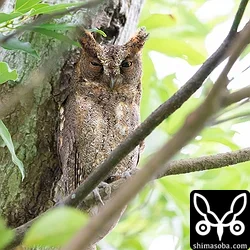
The Ryukyu Scops Owl on watch duty was perched in a lower tree than usual. I expect the chicks will fledge around the end of this month.

I found a new Ruddy Kingfisher nest — it looked as though they were still digging it out. In the video you can hear the male and female calling back and forth as they excavate the nest hole.

The second Pheasant-tailed Jacana of the season. It appeared to stay for only one day.

Red Collared Dove, Greater Crested Tern, and Ruddy Kingfisher

June 4, 2024

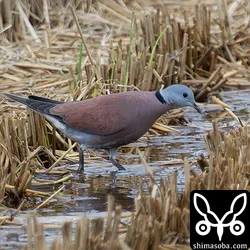
Red Collared Dove confirmed at three locations, five individuals in total — four males and one female. Greater Crested Tern numbers have grown to around 30. They will increase further, and just before they move on to the breeding grounds the count typically exceeds 100.

The Ruddy Kingfisher that had been nesting near my home had its nest tree blown down in the heavy rain. It is still early in the season, so I hope they find a good new spot.

Pink-necked Green Pigeon, male.

Pheasant-tailed Jacana and Ruddy Kingfisher (video)

June 1, 2024

The June regular, Pheasant-tailed Jacana, has arrived. Birds have also come in to the Okinawa main island at the same time, but both individuals appear to be young birds. I am looking forward to adult summer-plumage birds arriving in due course.

I photographed the Ruddy Kingfisher visible from my living room for the first time in a while. Its call is distinctive enough for individual identification. It has been coming for three years running. When crows approach it chases them off, so there is probably a nest nearby.

Within a radius of a few tens of metres from my home, around three pairs of Ruddy Kingfisher have arrived. One pair's nest was destroyed in the recent heavy rain. The season is still young, so they will likely rebuild somewhere.

A Ruddy Kingfisher that has taken a liking to the top of a plastic greenhouse. This is the Ruddy Kingfisher I can see from my living room. ^^

Black Paradise Flycatcher, Ryukyu Scops Owl, Northern Boobook, and Ryukyu Minivet

May 31, 2024

I visited a scrubby woodland I rarely go to, and a pair of Black Paradise Flycatchers were moving about. They perched on the same branch at times, suggesting pairing is already done. I expect they will breed, and I will keep watching to see how things develop.

Ryukyu Scops Owls are incubating at several sites, but the chicks still appear to be small. Meanwhile, the pair that began breeding early already has well-grown chicks, and the female is out of the nest box. Fledging should be soon.

A recently fledged Ryukyu Minivet visited our garden. It appeared to be taking insects alongside Warbling White-eyes and Cinereous Tits.

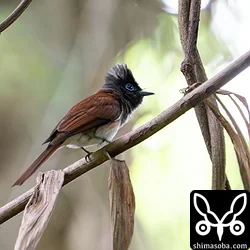
A female Japanese Paradise Flycatcher.

Lesser Cuckoo, Northern Boobook, Little Tern, and others

May 29, 2024

I had a close-range view of Lesser Cuckoo — an adult and a young bird, foraging in a pine grove. Around six Asian Koels were in the area too, making it a spot with a notably high concentration of cuckoos.

Despite the heavy rain, the Northern Boobook's incubation seems to be going smoothly; the male was keeping a steady watch. Year by year it has become less wary, and it shows no concern when walkers pass right in front of it.

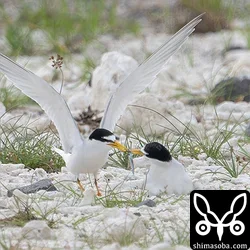
Little Terns have arrived at the planned site of the cruise-terminal building — close to 30 birds, the same location as last year. Some individuals were already incubating. Last year the nest colony was completely wiped out by a PAC-3 deployment, so I wonder whether this season will go better. Kentish Plovers were running about — several chicks at various stages, from just-hatched to those that could manage a short flight.

White-breasted Waterhen are in full breeding mode; I often come across pairs with chicks. The breeding season is long, so for a while yet I expect to encounter families at all different stages of development.

In the paddies after the rice harvest, Purple Herons, Grey Herons, Intermediate Egrets, and Little Egrets are gathering to hunt.

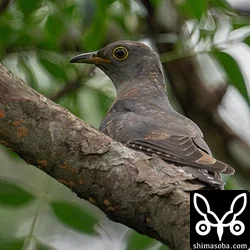
A Common Cuckoo still in juvenile plumage. I was able to observe it at close range.

Lesser Whistling Duck — an extended stay (video)

May 21, 2024

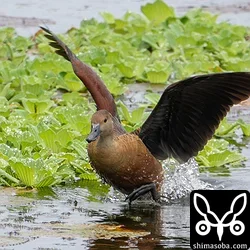
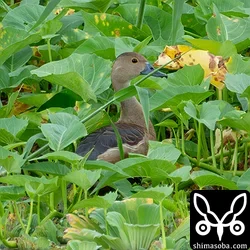
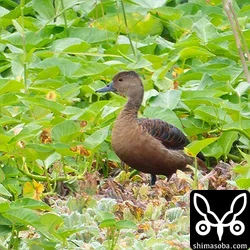
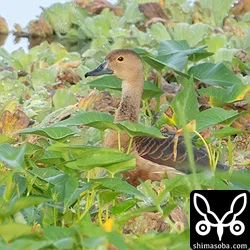
The Lesser Whistling Duck that arrived on Ishigaki Island has now been here for three weeks. On this day it was active, and I was able to watch it feeding and in flight. Lesser Whistling Duck once ranged as far north as Okinawa, and with "Ryukyu" in the Japanese name, I hope records will increase and the range will recover here.

Four groups of acquaintances came to the island to see the Lesser Whistling Duck. Everyone is enjoying Ishigaki's birds, with Asian Koel as a bonus alongside the duck. Several more groups are due to come this week with the Lesser Whistling Duck as their target. Anyone wanting to see it, book a guide with Spotter-san!!

The Cotton Pygmy Goose was active on this day.

Lesser Whistling Duck, Chinese Pond Heron, and Grey-headed Lapwing

May 20, 2024

The Lesser Whistling Duck, visible every day. On this day it was particularly wary — both in the morning and in the evening, only the top of its head and neck were visible above the vegetation…

Chinese Pond Heron had also arrived, along with Grey-headed Lapwing, a scarce visitor to Okinawa and the Yaeyamas.

A Ryukyu Duck, just its face showing.

Lesser Whistling Duck still present; Crested Serpent Eagle released

May 18, 2024

Since the Lesser Whistling Duck on Ishigaki Island was relocated, it has been seen continuously. When anglers arrive it gets spooked and moves away, hiding in the grass. There seem to be a lot of anglers at weekends.

I covered the release of a juvenile Crested Serpent Eagle that had been taken into care after being found weak. It was banded with a red leg ring engraved with the number "6" on its left leg. The person who handled its rehabilitation named it "Mirai" (Future). With staff and press looking on, it flew off strongly.

A Ryukyu Duck sitting on aquatic vegetation on the far bank.

Ryukyu Scops Owl, Ruddy Kingfisher, and Crested Serpent Eagle (video)

May 17, 2024

I confirmed incubation beginning at a fifth Ryukyu Scops Owl site. The Ruddy Kingfisher female near my home has not been seen much lately, so she may also be incubating.

The rescued Crested Serpent Eagle, Mitchan, keeps getting driven off by the territorial male in this area, but comes back undeterred and keeps searching for food. I hope she builds up her strength properly this summer, gets through the winter, and grows into a fine adult.

The Lesser Whistling Duck is still present. Its reactions to passing vehicles and crows have settled down and its daily routine has become predictable, so a long stay looks likely. If it summers over, it will be a treat for many birders.

A male Ryukyu Scops Owl keeping watch over the nest. This is the third consecutive year breeding at the same site.

Lesser Whistling Duck reappears on Ishigaki Island!! (video)

May 16, 2024

The Lesser Whistling Duck found on Ishigaki Island on 1 May has shown up again!! It has now been here for two weeks. I was able to get video as well. How long will it stay?

It turns out this Lesser Whistling Duck had been seen on Iriomote Island on 28 April, before it was photographed on Ishigaki. Apparently someone only realised what it was after it appeared in the newspaper. On top of that, a local resident says they saw two birds last year in the lower reaches of a certain river. The person is a farmer with a keen interest in wildlife, and from what they described, Lesser Whistling Duck seems very likely.

Furthermore, a blog post records that a bird — photographed unclearly — was seen on Kohama Island in late May to early June 2006.

Lesser Whistling Duck's northern breeding limit was Okinawa, but confirmed records had been absent since an observation in the Kerama Islands in 1963. A Yamashina Institute for Ornithology report noted two birds seen during a 1999 survey, but without photographs and with few details.

It sets the imagination going — could a small number be living somewhere along a river on Iriomote Island, much like the Mandarin Ducks of Yanbaru?

A Tufted Duck resting on floating weeds.

Asian Koel breeding? Black Drongo still present, Ryukyu Scops Owl incubating (video)

May 14, 2024

Hearing an Asian Koel calling, I scanned with binoculars and spotted a male singing from the top of a she-oak. It looked approachable, so I eased the car forward carefully. Even at 100 metres it showed no sign of alarm. I kept closing in. The track ended about 20 metres short, so I continued on foot, using the undergrowth as cover, and managed to get right beneath the she-oak where the Asian Koel was singing. It seemed unaware of me, and I had a close, impressive view of both the bird and its call. Asian Koel have been recorded here before, but from around 2020 the number arriving on Ishigaki Island in May has increased considerably.

After about ten minutes of observation, a female Asian Koel called from a nearby thicket — there appeared to be two individuals. The male then disappeared, seemingly drawn by the female's call, so I searched the area. A Large-billed Crow, thought to be a likely host for Asian Koel brood parasitism, also appeared to be building a nest nearby. This could be a real chance to confirm breeding!!

Black Drongo have been turning up in good numbers across Ishigaki, Okinawa Main Island and elsewhere in the Nansei Islands this season. The peak has passed, but I counted two birds on this day. I think they will be wrapping up soon.

The Ryukyu Scops Owls that breed near my home every year appear to have started incubating again this year. The chicks should fledge in early July.

A male Large Hawk-Cuckoo. I was able to observe it at quite close range for an extended period.
Ryukyu Flycatcher, Ruddy Kingfisher, Red Collared Dove and others (video)

May 12, 2024

Working my way around the rice fields, I heard a Ryukyu Flycatcher calling from the forest edge. Searching for it, I found a male in song. For some reason it also moved into the shrubs at the edge of the paddies.

Visiting Banna Park for the first time in a while, I had good encounters with several Ruddy Kingfishers. Males were conspicuous, which may mean many pairs have already moved into incubation.

I also spotted one Red Collared Dove. Perhaps tired from the crossing, it perched on a wire and occasionally closed its eyes.

In the paddies towards evening, a Ryukyu Sparrowhawk came down onto a farm track and looked around. Watching it, I could see it was targeting a Eurasian Tree Sparrow that had ducked into a thicket.

A singing male Ryukyu Narcissus Flycatcher.

Ruddy Kingfisher, Black-faced Spoonbill, Chinese Pond Heron and others

May 11, 2024

The Ruddy Kingfishers appear to be progressing well through the breeding season — I can watch them nest-building and courtship-feeding.

A Black-faced Spoonbill has been staying for several days. Chinese Pond Herons in breeding plumage are scattered across various paddies, with several individuals present.

In paddies with open water, Ruff, Sharp-tailed Sandpiper, Marsh Sandpiper and Whiskered Tern were resting.

A Ryukyu Ruddy Kingfisher near my home. It appears to be test-digging trial nest holes in several spots.

Black Drongo, Oriental Pratincole, Black-faced Spoonbill, Eurasian Spoonbill, Chinese Pond Heron and others

May 9, 2024

The Black Drongo that appeared near my home has been drifting slowly eastward and is now into its fourth day of stay. It is an unwary individual, always perched on the roadside wires. This season has been a bumper year for Black Drongo on Ishigaki Island — on peak days nearly 20 birds were recorded in a single day.

A small flock of Oriental Pratincoles had moved into the paddies. They were working the same area as the Whiskered Terns, but while the terns drifted low and picked insects off the rice plants, the pratincoles were up high, hawking incoming insects.

Black-faced Spoonbill, Eurasian Spoonbill and Chinese Pond Heron have also been dropping into the paddies one after another.

A Black Drongo near home, now on its fourth day of the stay.

Cinnamon Bitterns very active after rain (video)

May 7, 2024

When I arrived at the paddies I was caught in a heavy downpour, but once it stopped, Cinnamon Bitterns began emerging from the grass.

Activity was high after the rain, and I was able to see two males and one female in the same area. The males had started calling, and I managed to get it on video. ^^

A male Ryukyu Cinnamon Bittern appeared in a conspicuous spot once the downpour stopped. Nuptial coloration is showing.

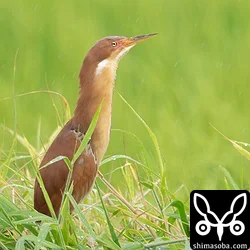
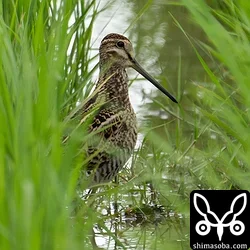
Two Pin-tailed Snipe, Greater Painted-snipe

May 2, 2024

Last spring, 29 May was the final record of Pin-tailed Snipe. This season, this sighting looks set to be the last as well.

This spring, waders in general were very scarce, with almost no encounters with Pin-tailed Snipe, Swinhoe's Snipe or Common Snipe. I am looking forward to the autumn snipe migration, which gets under way from mid-August.

And, following last year, I would like to hold the "3rd Ishigaki Island Snipe Camp" again around late August this autumn. Please do join us. You can also see reports from the 1st camp (autumn) and the 2nd camp (spring).

The rice had grown tall enough that I couldn't see the whole bird, but I found a Swinhoe's Snipe.

Two Black Drongos, Red Collared Dove, Ruddy Kingfisher and others (video)

April 28, 2024

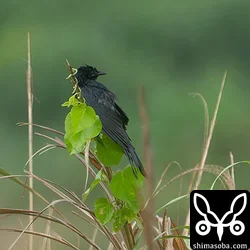
Two Black Drongos turned up at a different location from the three seen the other day. That makes six individuals this season. Birds are also appearing on Iriomote Island and Okinawa Main Island at the same time. Across the Nansei Islands, numbers seem higher than usual.

Red Collared Dove arrived as a male and female pair. After a heavy downpour, the female stopped showing, but the male was foraging on the ground.

The Ruddy Kingfisher near my home sees me so often every day that it pays me no attention at all. I also managed to get video of it singing and dancing.

A Black Drongo after a downpour. It sat motionless on a branch tip — apparently drying its feathers.