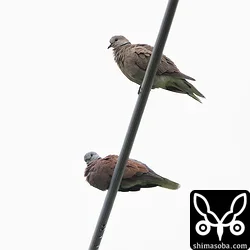
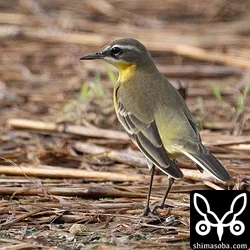
Red Collared Doves turned up at two locations, four birds in total. Grey Wagtail is also a first for the season. From here on, migrants with a distinctly autumnal feel will keep arriving on Ishigaki one after another.
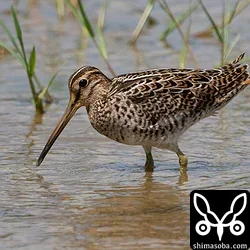
Painted Snipe were at two locations — two males and two females. In this paddy it was one male and two females.
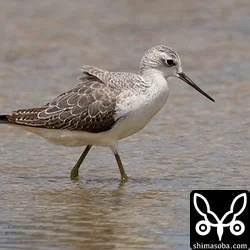
First record of a juvenile Marsh Sandpiper this season. Common Greenshank, Common Redshank, Black-winged Stilt, Wood Sandpiper, Long-toed Stint, and Red-necked Stint all appear to be passing through Ishigaki in a steady stream, with the cast turning over continuously.
The first Marsh Sandpiper juvenile of the season. Already in first-winter plumage.
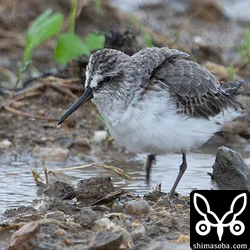
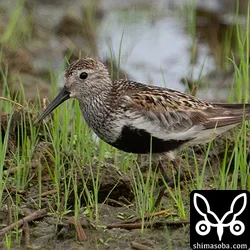
Ishigaki had a rough day under the influence of a tropical depression. When the rain eased I did the rounds of the paddies and found the first Broad-billed Sandpiper of the season had arrived — encountered in a puddle in a sugarcane field. Out on the grassland I also picked up first records of Curlew Sandpiper and Grey Plover. Bad weather does have a way of pushing birds into unexpected places.
Found a Broad-billed Sandpiper in a puddle in a sugarcane field. Was able to observe it right in front of me.
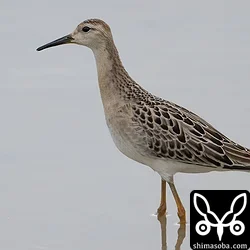
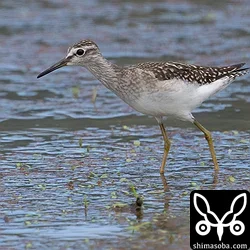
First juveniles of the season confirmed for Wood Sandpiper and Common Sandpiper. Red-necked Stint and Sharp-tailed Sandpiper also first records of the season. The Greater Painted-snipe chicks are still moving with the adults but have grown large enough that they are barely distinguishable from them.
First Wood Sandpiper juveniles of the season. It seems they arrived all at once.
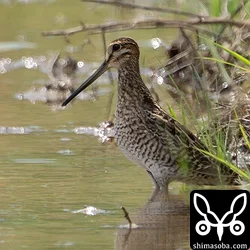
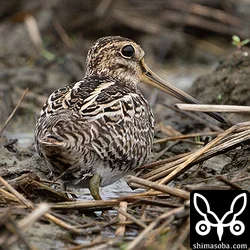
First Pin-tailed Snipe and Swinhoe's Snipe of the season confirmed. The Pin-tailed Snipe consisted of two adults and one juvenile; the Swinhoe's Snipe were five juveniles. I expect numbers to increase steadily from here.
The 3rd Ishigaki Island Snipe Camp will be held on 30 August.
Pin-tailed Snipe, adult.
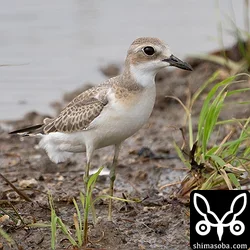
Took two apprentice birders who live on the island out for about four hours of birdwatching. We came across juvenile Greater Sand Plover and Common Redshank — first juveniles of the season for both species. Together with Kentish Plover and Little Ringed Plover, that brings the juvenile wader tally to four species for the season.
A juvenile Greater Sand Plover. It was found in a rice paddy — possibly due to the influence of the typhoon.
Typhoon No. 3 passed through without causing major damage, but even after it reached the western side of Taiwan the wind continued to make itself felt in the Yaeyamas.
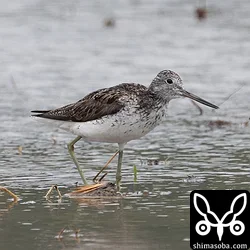
In the rice paddies, wader numbers increased considerably — Wood Sandpipers were present in flocks of several dozen wherever I went. Common Greenshank, Common Sandpiper, Green Sandpiper, Red-necked Stint, and Long-toed Stint were all up in numbers too, making for a lively scene.
A Common Greenshank still largely in summer plumage.
Typhoon No. 3 is bearing down on Ishigaki Island — the first approach of the year.
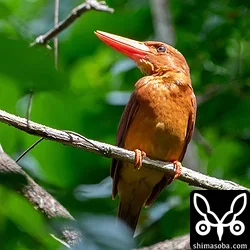
The wind had a suspicious feel to it, but I had plenty of encounters with Ruddy Kingfisher. The Oriental Pratincole fledging season appears to be in its final stages, with numbers dropping steadily.
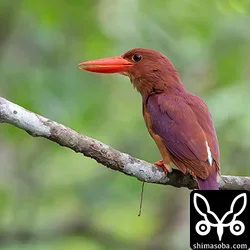
A slow drive along the usual forest road turned up several Ruddy Kingfishers in a short time.
The Northern Boobooks have fledged. Pair formation was later than usual this year, so fledging was delayed too. I wonder whether one of the pair has changed.
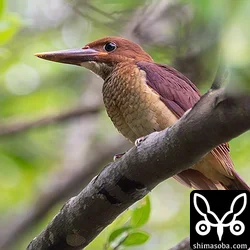
Ruddy Kingfisher fledging is finished everywhere now, and the adults are catching their breath. The fledglings are still within their parents' territories but are catching prey on their own.
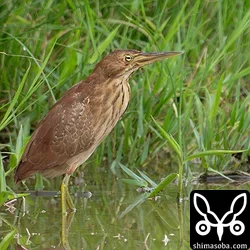
Cinnamon Bittern chick-rearing is also over, and juveniles are appearing in rice paddies here and there. Juvenile Purple Herons that have become independent are also starting to show up in the paddies. Chinese Pond Herons and Black-faced Spoonbills are arriving on autumn passage.
Waders are beginning to move through little by little. As autumn migration gets into full swing, numbers and species will keep increasing.
Terns are in the thick of chick-rearing. Black-naped Tern chicks that are roughly one to two weeks post-hatch are starting to be seen.
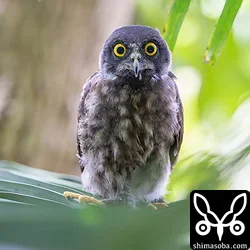
The last fledgling of the season for the Brown Hawk-Owl. There were still some remaining in the nest.
The Ruddy Kingfishers that were breeding near my home had fledged before I noticed. I confirmed three fledglings that can now fly.
Malayan Night Herons have also fledged. I confirmed two juveniles that have been out of the nest for some time. Three or so Cinnamon Bittern juveniles were in a flooded paddy. The adults' calls were audible too.
Oriental Pratincoles apparently bred at a quarry on private land — there were around 30 birds in total, adults and juveniles together. Two Little Ringed Plover juveniles as well. There is a possibility they bred on Ishigaki Island.
The Ruddy Kingfisher just a stone's throw from home fledged around three chicks again, as it did last year.
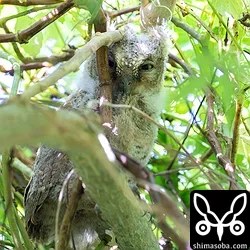
Continuing to observe the Ryukyu Scops Owl chick after fledging. It was in a somewhat more visible spot than before. The female parent was nearby keeping watch.
Northern Boobooks are fledging one after another, but at a nest where the chicks are still small the male parent was standing guard close to the nest.
Black Paradise Flycatcher breeding also appears to be going well — the chick that fledged from the pair I have been watching for some time has grown considerably. The adults will probably begin a second breeding attempt, so the fledgling may end up acting as a helper.
The Ryukyu Scops Owl fledgling had moved to a more visible position, giving me a full view of the bird.
I confirmed the first Ryukyu Scops Owl fledging of the season. It is a tree cavity that has been used for breeding year after year. The pair may be the same birds, but without banding there is no way to be certain. Only one chick fledged this season, so if it is the same pair, ageing of the parents could be a factor.
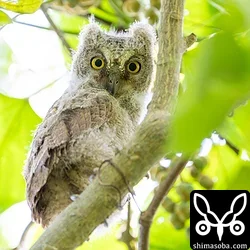
A fledgling Ryukyu Scops Owl.
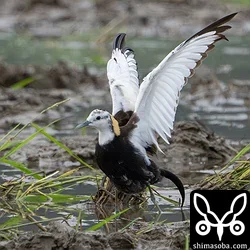
The third Pheasant-tailed Jacana of the season has arrived. Multiple individuals have been confirmed on Okinawa Island as well. This bird showed the most advanced transition to summer plumage of any I have seen so far. It is not at all wary and easy to observe.
Oriental Pratincoles and Greater Painted-snipes are also appearing in the same paddy. Cinnamon Bittern was confirmed by call only.
A Pheasant-tailed Jacana flapping its wings after bathing. It appears to be moulting into adult summer plumage.