A daily record.
Featuring photos of wild birds and nature, mainly from Okinawa Main Island and Ishigaki Island

Migrant waders increasing

Aug. 19, 2026
Migrant waders are building up and the paddies on Ishigaki are getting lively.

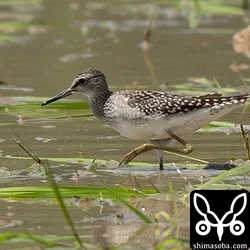
Juveniles now make up more than half of the Long-toed Stints present, and I confirmed the first juvenile Wood Sandpiper of the season. I had already found juvenile Common Redshank about two weeks ago, but this was my first time photographing one this season.

Common Greenshank, Marsh Sandpiper, Black-winged Stilt, Pacific Golden Plover, and Black-faced Spoonbill have also been showing up one after another.

First juvenile Wood Sandpiper of the season. Only one individual confirmed, but numbers will keep climbing from here.
Javan Pond Heron, Chinese Pond Heron, Cinnamon Bittern and more (video)

Aug. 14, 2026

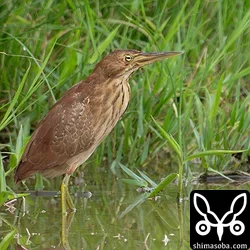
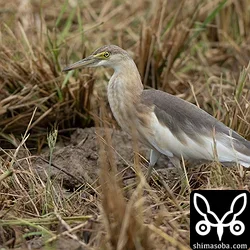
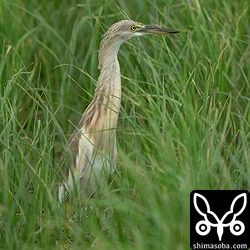
Two Javan Pond Herons and one Chinese Pond Heron are currently present. Encounters with Cinnamon Bittern and Purple Heron — both adults and juveniles — are becoming more frequent.

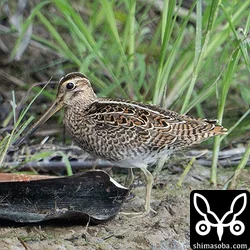
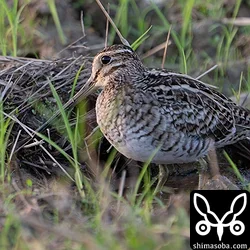
Snipe numbers are also growing steadily. On this day I found several individuals each of Pin-tailed Snipe and Swinhoe's Snipe.

Javan Pond Heron in winter plumage. Two birds have been present for the past few days.

Javan Pond Heron, Cinnamon Bittern, Pin-tailed Snipe and more

Aug. 13, 2026

Three Javan Pond Herons turned up. While I was watching one, two more burst out chasing each other from among the rice in a nearby paddy. As happens every year, once Javan Pond Herons have been around for a while on Ishigaki in autumn, Chinese Pond Herons follow. Two Javan Pond Herons are also currently staying on Okinawa main island.

Encounters with Cinnamon Bittern — adults and juveniles alike — are becoming more frequent. It is the season when numbers peak after the breeding period ends. Purple Heron adults and juveniles are also showing up regularly.

Pin-tailed Snipe seem to be increasing gradually. I confirmed the first juvenile Black-winged Stilt of the season.

最初に見つけたジャワアカガシラサギ。あまり警戒心のない個体でした。

Glossy Ibis Still Present; Javan Pond Heron in Summer Plumage Arrives

July 20, 2026

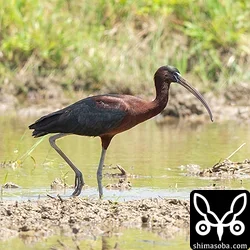
The Glossy Ibis is still here. A Javan Pond Heron in beautiful summer plumage has also turned up. Both are unwary and easy to observe and photograph.

I recorded the first Common Greenshank, Long-toed Stint, and Black-winged Stilt of the season. Young Purple Herons have also started to appear — breeding seems to have concluded successfully.

A Crested Serpent Eagle was on the forest road, likely in the middle of raising chicks. I expect fledglings to appear from late August onward.

The other day I went to check on a recently fledged Ryukyu Scops Owl and found the parent locked in a battle with crows — apparently holding its own against four of them.

The Glossy Ibis seems to have a favourite paddy — it is always in the same spot.

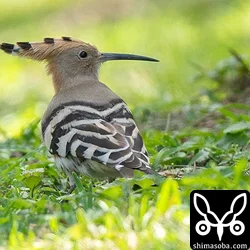
Third Common Hoopoe of the season found (video)

Feb. 21, 2026

The third Common Hoopoe of the season has arrived, following last week's bird. This individual showed no wariness at all — when a car passed nearby it flew off only a short distance. Reports of arrivals have also come in from other islands, and it looks like this is a good year for Common Hoopoe.

Temperatures are rising and spring migration is beginning. A mixed flock of Taiwan Wagtail, White Wagtail, and White Wagtail arrived in the rice paddies.

Among the waders, wintering birds — Common Snipe, Common Redshank, and Wood Sandpiper — have been joined by northbound migrants, making things a little livelier.

Resident birds — Crested Serpent Eagle, Purple Heron, and Cinnamon Bittern — were all active in the run-up to the breeding season.

Discovered what is the third Eurasian Hoopoe of the season on Ishigaki Island.

Short-eared Owls Wintering

Jan. 16, 2026

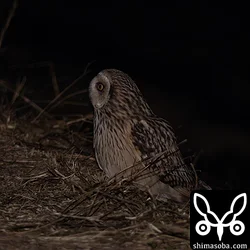
Short-eared Owls have been wintering here again this season, as they did from around the end of last year. Surprisingly large numbers have turned up. A Long-eared Owl was also reported, but only for a single day — unfortunately I was not able to see it myself.

Out in the paddies during the day there are also wintering waders and plovers. Past mid-January I get the sense that they are slowly starting to move. I expect the main movement to begin around late February.

There was a Short-eared Owl staring intently at a thicket where mice were lurking. It seemed there was another one in the same area.

Juvenile Crested Serpent Eagle, Greater Painted-snipe family and more (video)

Sept. 11, 2025

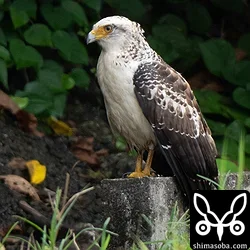
As the young birds begin to move away from their parents, juvenile Crested Serpent Eagles are becoming easier to observe. Multiple juveniles have been confirmed across Ishigaki Island. There were no typhoons this season so breeding success looks good — I'm looking forward to seeing how many individuals are counted.

Of the recent Greater Painted-snipe brood, one chick died in the nest, but the surviving chick is doing well with the parent. There are plenty of predators — cats, crows, and Black-winged Kites — so let's hope it makes it through safely.

Crested Serpent Eagle, juvenile. When it spotted something in a roadside ditch it would swoop down — practising its hunting on its own.

Common Emerald Dove, Northern Boobook, Malayan Night Heron, Cinnamon Bittern, Purple Heron, and More

July 19, 2025

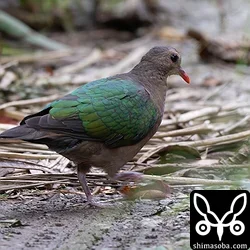
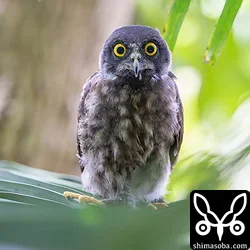
Common Emerald Doves are approaching the end of the breeding season, and encounters are becoming more frequent. Northern Boobooks, Ryukyu Scops Owls, and Ruddy Kingfishers are fledging one after another.

I recorded my first Cinnamon Bittern and Purple Heron of the season, along with a juvenile Little Egret.

A Emerald Dove near home. A few juvenile feathers remain. Perhaps a second-calendar-year female.

A Pair of Crested Serpent Eagles

March 26, 2025

As late March arrives, I am seeing Crested Serpent Eagle pairs more often. This is an active season for them, and road casualties also increase. More and more Purple Herons are beginning to show breeding plumage.

Spring migration is slowly getting underway. Waders are gradually increasing, and I also encountered a large flock of Eastern Yellow Wagtails apparently on the move.

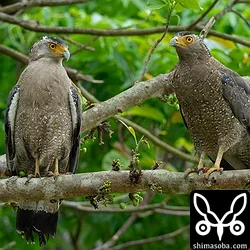
A pair of Crested Serpent Eagles. The male is on the left. The area where this pair lives is surrounded by farmland, so traffic accidents seem unlikely to be a concern.

Chinese Blackbird Arrives

March 13, 2025

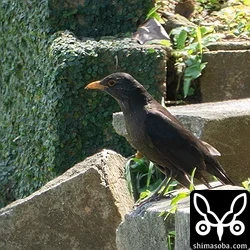
The Chinese Blackbird, harbinger of spring on Ishigaki, has arrived. I heard its call nearby as well, so it seems multiple birds are staying. Brown-headed Thrush, Pale Thrush, and Dusky Thrush migration also appears to be approaching its peak — small flocks can be found in patches of grassland in coastal settlements and similar spots.

I heard a Hooded Crane was staying in the north of the island, so I went to have a look. It seemed to favour a field prepared for sugarcane planting, with a pineapple plantation as a backdrop.

Cinnamon Bittern and Purple Heron are also full of vitality with the feel of spring in the air.

A Common Blackbird turned up in a good patch of habitat. Looks like it may stay a while.

Birdwatching on Yonaguni Island

Jan. 24, 2025

The Minister of Defense was visiting Yonaguni Island, so off I went on another work trip. I managed a little birdwatching in between duties. ^^

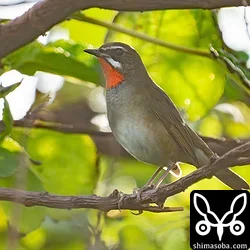
Driving through the farmland, I could hear Siberian Rubythroat, Ryukyu Robin, Manchurian Bush Warbler, Japanese Bush Warbler, Arctic Warbler, and Emberiza buntings calling. The density is considerably higher than on Ishigaki Island. It was a short visit, but I enjoyed it a great deal.

A Siberian Rubythroat in the morning, moving through the undergrowth while giving its call note.

Baillon's Crake, Oriental Stork, Pied Avocet, Black-faced Spoonbill, juvenile Crested Serpent Eagle and more

Nov. 26, 2024

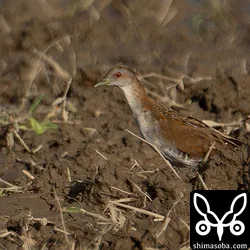
While watching the Oriental Stork, a Black Bittern flew into view, so I searched for where it had landed — and a Baillon's Crake appeared. ^^; It was a wary individual that ducked straight into the grass at the slightest disturbance. The habitat looks good, so it might stick around.

The Oriental Stork was a ringed individual. ID number "J0701", apparently hatched on 31 March this year in Obama City, Fukui Prefecture. It had also been observed in Minamisatsuma City, Kagoshima Prefecture, a week earlier. It stayed on Ishigaki for several days before crossing to Iriomote.

Two Pied Avocets are still present. Whether they are part of the flock of eleven that arrived on 6 November is unknown.

Encounters with juvenile Crested Serpent Eagles have been increasing. On this day I found the previously recorded "No. 7" and a new individual. With the second-crop rice harvest now underway, it is becoming a good season to watch Crested Serpent Eagles. This season's sugarcane harvest is scheduled to start around 6 December.

First Gadwall and Eastern White Wagtail of the season confirmed.

Adult White-browed Crake. It seemed quite wary.

3rd Ishigaki Island Snipe Camp held!!

Aug. 31, 2024

We held the 3rd Ishigaki Island Snipe Camp, which has earned quite a following. The participant came from Aichi Prefecture. As it happens, every participant from the 1st through the 3rd camps has been from Aichi. ^^;

This time an unavoidable work commitment cut things short, so we only had about three hours of snipe watching — but we spent that time poring over roughly 20 snipe in paddy fields in a single area with intense focus.

Individual numbers this season have been as high as usual, but Pin-tailed Snipe were frustratingly scarce. On the other hand, we got to observe some very interesting Swinhoe's Snipe, so as snipe camps go it was a great success. ^^

Swinhoe's Snipe, juvenile.

Cinnamon Bittern, Malayan Night Heron, Purple Heron

Aug. 14, 2024

Cinnamon Bittern, Malayan Night Heron, and Purple Heron — all of which breed on Ishigaki Island — can be seen as juveniles here and there. The Grey Heron, a winter visitor, was recorded for the first time this season.

Juvenile Ryukyu Least Bittern.

Northern Boobook fledging, Ruddy Kingfisher, Cinnamon Bittern, Chinese Pond Heron, Black-naped Tern chick-rearing and more

July 14, 2024

The Northern Boobooks have fledged. Pair formation was later than usual this year, so fledging was delayed too. I wonder whether one of the pair has changed.

Ruddy Kingfisher fledging is finished everywhere now, and the adults are catching their breath. The fledglings are still within their parents' territories but are catching prey on their own.

Cinnamon Bittern chick-rearing is also over, and juveniles are appearing in rice paddies here and there. Juvenile Purple Herons that have become independent are also starting to show up in the paddies. Chinese Pond Herons and Black-faced Spoonbills are arriving on autumn passage.

Waders are beginning to move through little by little. As autumn migration gets into full swing, numbers and species will keep increasing.

Terns are in the thick of chick-rearing. Black-naped Tern chicks that are roughly one to two weeks post-hatch are starting to be seen.

The last fledgling of the season for the Brown Hawk-Owl. There were still some remaining in the nest.

Lesser Cuckoo, Northern Boobook, Little Tern, and others

May 29, 2024

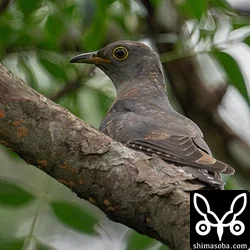
I had a close-range view of Lesser Cuckoo — an adult and a young bird, foraging in a pine grove. Around six Asian Koels were in the area too, making it a spot with a notably high concentration of cuckoos.

Despite the heavy rain, the Northern Boobook's incubation seems to be going smoothly; the male was keeping a steady watch. Year by year it has become less wary, and it shows no concern when walkers pass right in front of it.

Little Terns have arrived at the planned site of the cruise-terminal building — close to 30 birds, the same location as last year. Some individuals were already incubating. Last year the nest colony was completely wiped out by a PAC-3 deployment, so I wonder whether this season will go better. Kentish Plovers were running about — several chicks at various stages, from just-hatched to those that could manage a short flight.

White-breasted Waterhen are in full breeding mode; I often come across pairs with chicks. The breeding season is long, so for a while yet I expect to encounter families at all different stages of development.

In the paddies after the rice harvest, Purple Herons, Grey Herons, Intermediate Egrets, and Little Egrets are gathering to hunt.

A Common Cuckoo still in juvenile plumage. I was able to observe it at close range.

Black Drongo, Oriental Pratincole, Black-faced Spoonbill, Eurasian Spoonbill, Chinese Pond Heron and others

May 9, 2024

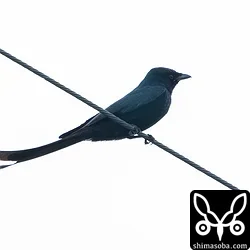
The Black Drongo that appeared near my home has been drifting slowly eastward and is now into its fourth day of stay. It is an unwary individual, always perched on the roadside wires. This season has been a bumper year for Black Drongo on Ishigaki Island — on peak days nearly 20 birds were recorded in a single day.

A small flock of Oriental Pratincoles had moved into the paddies. They were working the same area as the Whiskered Terns, but while the terns drifted low and picked insects off the rice plants, the pratincoles were up high, hawking incoming insects.

Black-faced Spoonbill, Eurasian Spoonbill and Chinese Pond Heron have also been dropping into the paddies one after another.

A Black Drongo near home, now on its fourth day of the stay.

Snipe Camp on Ishigaki — Session 2: Bonus Post

April 15, 2024

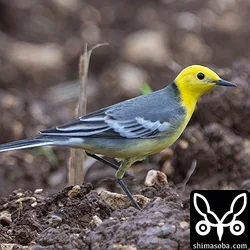
A bonus from the 2nd Ishigaki Snipe Camp: a Citrine Wagtail turned up — and a strikingly beautiful adult male in summer plumage at that. Juveniles appear every year, but adults are uncommon, so this was a real treat.

It was associating with a flock of Taiwan White Wagtails and Grey Wagtails, though it seemed the Grey Wagtails and the Citrine Wagtail didn't get on — I watched the Citrine Wagtail get chased off several times.

The main post from this snipe camp features large numbers of Pin-tailed Snipe and Swinhoe's Snipe, so please have a look at that too. The 3rd session is planned for late August. In autumn both Pin-tailed Snipe and Swinhoe's Snipe are present in good numbers, and it's great fun watching juveniles alongside adults and comparing moult stages between the two species.

A male Citrine Wagtail in breeding plumage. That vivid yellow is stunning.

Pin-tailed Snipe, Swinhoe's Snipe, Javan Pond Heron and more (video)

Feb. 22, 2024

After finding the season's first Pin-tailed Snipe the day before , I went back after work to try for shots of the tail feathers. You want the first record of the season to be done properly. While I was there I also picked up the season's first Swinhoe's Snipe — more than a month earlier than usual. Spring migration this year is behaving strangely.

Two Javan Pond Herons are continuing to winter here. Every year I hope they'll stay long enough to come into breeding plumage, but in most years they depart during February. We'll see how this season goes.

I'll be holding the "2nd Ishigaki Snipe Camp" sometime in early to mid-April. A report from the 1st is here → Day 1 , Day 2 , Extra edition .

First-winter Pin-tailed Snipe. Same individual as the previous day.