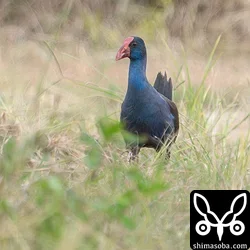
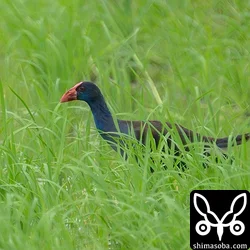
The Grey-headed Swamphen had become difficult to see for a while, but from this day it started showing well again. It may be because the Hen Harrier, which had been causing the poor appearance rate, was no longer around.
I had been kept waiting 40 minutes for a work appointment, so in frustration I stopped by the paddies — and there was the Swamphen, walking along the farm track.
I contacted several acquaintances who had come to Ishigaki specifically to see it, and we all got to watch it together. Hearing them say "I can see it!! The trip was worth it!!" made me happy too. ^^
A Purple Swamphen walking along a farm track toward me.
I have found a Grey-headed Swamphen — a first record!! There were apparently three records on the mainland in the 1970s and one on Okinawa Island in 1995, but all have been ruled as escapes, so there is no accepted record. There is therefore a strong possibility this will become the first accepted national record after further review.
A planned assignment was cancelled, so I reluctantly stopped by the paddies — and found it. At first I thought it was a Watercock, but when I put binoculars on it, question marks started spinning through my head. "Wait, a Takahē?" "No, Takahē can't fly." "Could this be a Grey-headed Swamphen!!!!!!" — and the enormity of it became real.
The genus Porphyrio has several members worldwide; they were formerly treated as subspecies, but after splitting the IOC list now recognises at least seven species. Among them, this bird struck me as closest to the Philippine Swamphen.
In the 2023 eighth edition of the Check-List of Japanese Birds it is listed as a species under consideration. I would like to take this opportunity to write up a report and have it elevated from that status.
When a bird you hadn't even considered turns up, you have no idea what you're looking at…. ^^;
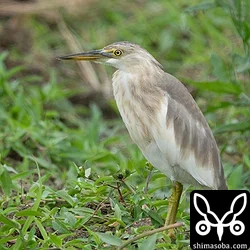
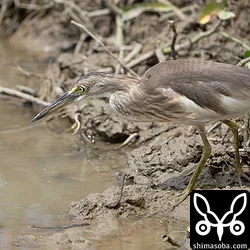
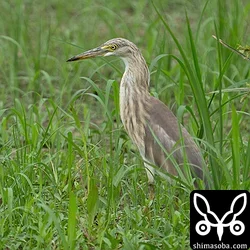
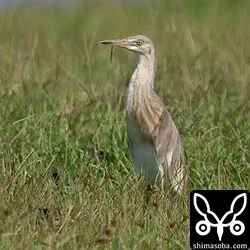
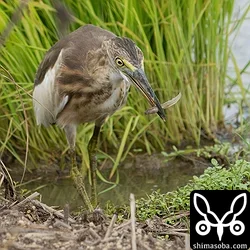
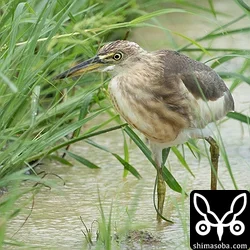
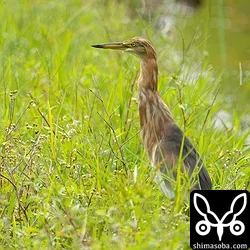
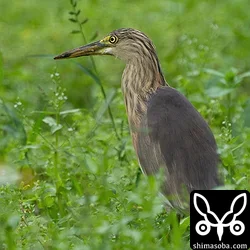
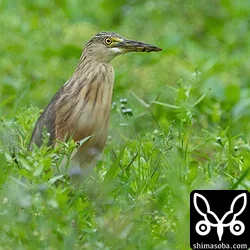
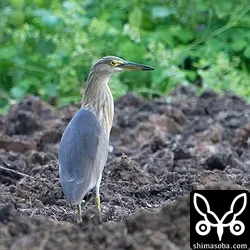
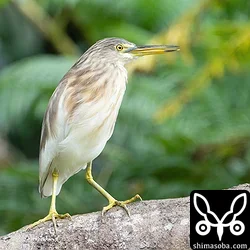
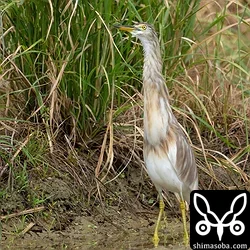
Confirmed the first Common Kestrel and Eurasian Teal of the season. Autumn is deepening steadily. The Javan Pond Heron has been staying on for an extended period — there were briefly two in the same paddy, but on this day only one.
Could this be a second breeding attempt for Greater Painted-snipe? Parent birds with small chicks are turning up in paddies here and there.
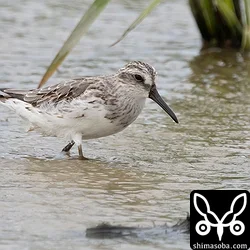
Marsh Sandpiper, Common Greenshank, Common Redshank, Wood Sandpiper, Long-toed Stint, Red-necked Stint, Green Sandpiper, Black-winged Stilt and three snipe species are all still present, numbers fluctuating.
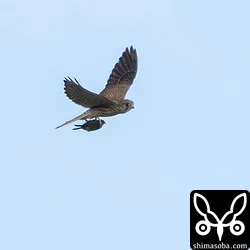
A juvenile male Common Kestrel with a captured Eastern Yellow Wagtail.
The Javan Pond Heron staying since late August was still feeding with no sign of wariness.
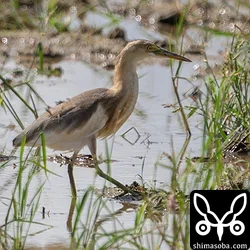
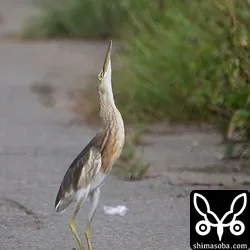
Cinnamon Bitterns are dispersing — this year's fledglings are turning up all over the place. Many individuals are crossing roads, and I have witnessed two traffic casualties in the past month.
One White-winged Tern was mixed in with a flock of Whiskered Terns.
A Javan Pond Heron with zero wariness. It has now been staying for over a week.
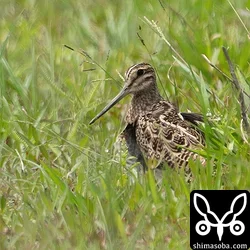
In this sideshow from the 1st Ishigaki Snipe Camp, I introduce the birds encountered during two days of snipe hunting.
A Javan Pond Heron was found — the fourth individual on Ishigaki this season. First juvenile Common Greenshank, Green Sandpiper, and Red-necked Stint of the season were confirmed. An adult Sharp-tailed Sandpiper was seen for the first time this season. A Greater Painted-snipe family with small chicks was encountered.
Please also see the day 1 and day 2 reports.
A Javan Pond-Heron that stayed for several days.
I found a Javan Pond Heron on Yonaguni Island — almost certainly a first record. Veterans who have visited the island for decades have not seen one, and it does not appear in any checklist.
Up to about seven Yonaguni Wood Pigeons came to Tacchigami Rock on the south-east side of the island. What draws them there, I wonder?
On the schoolground of Kubura Elementary School after rain there was 1 Pin-tailed Snipe and 2 Swinhoe's Snipes. The rice fields on Yonaguni have completely dried up, so they presumably have nowhere else to go. A few dozen Pacific Golden Plovers had also come down.
A Javan Pond Heron — a first record for Yonaguni Island. It was at Agariizaki. This individual was fairly wary.
The season's first Javan Pond Heron and White-browed Eastern Yellow Wagtail have arrived. Javan Pond Herons will trickle through from here on, while the Eastern Yellow Wagtails will suddenly surge in numbers.
This year's Cinnamon Bitterns appear to be dispersing; individuals in the same area have been thinning out.
Javan Pond Heron with a tadpole it had caught. First record of the season.
Confirmed the first Swinhoe's Snipe of the season — two birds on a paddy bund. Several Common Snipe as well.
Six Pied Avocets arrived, which I believe is a record count for a flock here. The paddies also hold Common Redshank, Black-winged Stilt, Wood Sandpiper, Oriental Pratincole, and Grey-headed Lapwing — a scarce species on Ishigaki.
A small group of four pond herons — Javan Pond Heron and Chinese Pond Heron combined — is also lingering.
In the farmland on the western side of the island, Daurian Redstarts have arrived in large numbers. Apparently the situation is similar on Iriomote.
The first Swinhoe's Snipe of the season. It's good to finally meet one again.
One Javan Pond Heron and three Chinese Pond Herons are staying on — all four are always together.
Oriental Pratincoles are increasing. On this day, nine were resting in the paddies, taking a break from the rain.
A Siberian Yellow Wagtail was on a paddy bund. The distance and the grass obscuring the bird made observation difficult; getting a few photos was the best I could manage. A Siberian Pipit was nearby.
The wintering Common Snipe have all but disappeared, though migrants are trickling through. Swinhoe's Snipe should be arriving soon.
Four Garganey turned up. If there's a duck that says spring on Ishigaki, it's the Garganey.
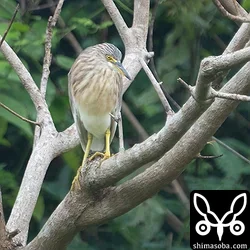
A Javan Pond Heron in winter plumage. Probably a first-winter individual.
冬羽から夏羽に変わりつつあるジャワアカガシラサギを確認。 昨年から同所にいる同じ個体 なのかは不明。同じ田んぼにアカガシラサギも飛来。こちらも冬羽から夏羽に変わりつつある個体で換羽の状態は似たようなステージでした。
ズグロミゾゴイも繁殖期を迎えつつあり、雑木林の中ではペアが寄り添っていました。
Javan Pond Heron moulting into summer plumage.
10日ほど前に見つけたジャワアカガシラサギ が3羽に増量して滞在中。緑がきれいな環境でミミズが多く発生しているようです。
餌が多いと多くの個体が集まりますね。ジャワアカガシラサギのほかにシロハラクイナなども餌を求めて多く現れます。
4日前に見つかったタカサゴモズ も元気に滞在中のほか、ヤツガシラも散発的に現れています。カンムリワシやムラサキサギ、カタグロトビ、オオクイナなども見やすい季節です。
春休みで石垣島入りする鳥屋が増えています。^^
みなさん、よい鳥見を!!
The background for Javan Pond Heron shots is usually brown, but when the backdrop is attractive I tend to fire off more frames. ^^;
仕事中にヤツガシラがいると連絡をもらい、時間を見つけて行きましたが、すでに移動した後か見つからず。副産物としてジャワアカガシラサギを発見しました。
沈砂池のメジロガモは、ほかのカモがほとんど消えたのにまだ滞在中。
海岸では春の渡りのシギやチドリが入れ替わり飛来します。この日はオオメダイチドリが特に多かったです。ほかには、シロチドリが数十羽にキョウジョシギ十数羽、ダイゼンが数羽、アオアシシギ、トウネン、ムナグロ、イソシギなど。
田んぼでは越冬組と渡り組のタシギが混在しています。セイタカシギやアカアシシギ、タカブシギなども増えてきました。
A Javan Pond Heron in a field. It appears to be changing into breeding plumage.
ジャワアカガシラサギは滞在期間2カ月 となりました。同エリアにいるアカガシラサギも同じような期間います。両者とも夏羽へ変わるまでの滞在に期待が高まります。
ツルシギは12/6から 滞在中。越冬個体のタシギは十数羽、ハマシギも8羽ほど確認しました。ほかにはアオアシシギが多いです。
A long-staying Javan Pond Heron. On alert for a Peregrine Falcon.