A daily record.
Featuring photos of wild birds and nature, mainly from Okinawa Main Island and Ishigaki Island

Collared Kingfisher, Black-winged Kite, White Wagtail, and others

Feb. 12, 2025
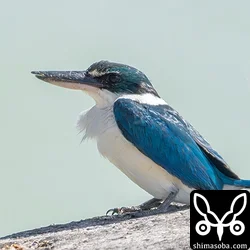
A friend was visiting Ishigaki Island, so I checked on the Collared Kingfisher. It was doing well at its usual stretch of coastline. There are some guys drinking there in the middle of the day, but the bird doesn't seem to mind much. It flushes when pedestrians approach, but quickly returns to its regular perch on the tetrapod or the windbreak branches.

I spotted the Black-winged Kite on the way back from the municipal office — it was perched on a phone line eating a mouse. The town birds have lost a lot of their wariness toward people and are easy to observe.

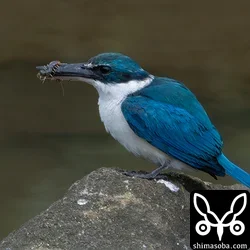
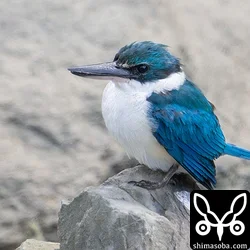
A Collared Kingfisher on a tetrapod. Perching on spots like this is probably why its tail feathers are so heavily worn.
Whiskered Tern, Pacific Golden Plover, White-shouldered Starling

Feb. 5, 2025

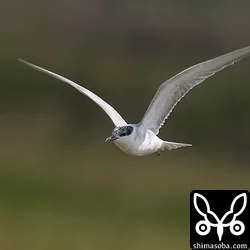
Possibly carried in by the strong northerly winds of the previous days, Whiskered Terns and Pacific Golden Plovers were recorded at several sites. It will still be a while before either species turns up in real numbers.

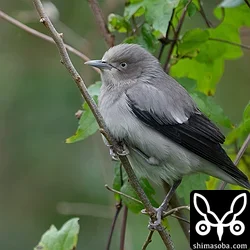
A dozen or so White-shouldered Starlings were coming to eat the fruit of the Orange Jessamine in the office car park. A flock of Asian Glossy Starlings has also visited recently, making it a regular feeding spot for the town's birds.

White-winged Tern in winter plumage. Numbers increase sharply come April.

White-shouldered Starling, Red Collared Dove, Chinese Pond Heron, and others

Feb. 3, 2025

A quick stop at a rice paddy near the town centre turned up White-shouldered Starling, Red Collared Dove, Chinese Pond Heron, Red-throated Pipit, Eurasian Skylark, and Eastern Yellow Wagtail. Being able to fit in some birdwatching even in a short spare moment is one of the great things about Ishigaki Island. ^^

A female Daurian Starling appeared right in front of me.

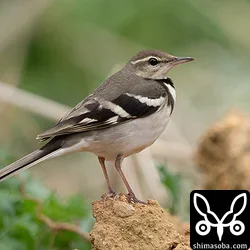
Two Forest Wagtails!! Japan's First Western Gull!!

Feb. 1, 2025

On a family trip to Okinawa's main island, I took the opportunity to see two overwintering Forest Wagtails and the first-ever Western Gull recorded in Japan.

With help from local friends, I managed to see both target species in a short time. ^^

Grey Wagtails appear on Ishigaki Island every year, but this was a rare chance to see two individuals at the same time, so I made the trip all the way to the north of the island to observe them.

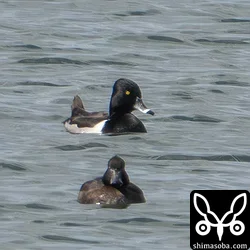
Second Record of Ring-necked Duck for Okinawa Prefecture!!

Jan. 31, 2025

I tracked down the second-ever Ring-necked Duck for Okinawa Prefecture among a flock of 600 Tufted Ducks. The distance was over 200 metres and branches and leaves limited the view, but after searching for about an hour I managed to find it. Once I knew which area it was floating in, I didn't lose it again and was able to watch it for over an hour.

Ring-necked Duck, male breeding plumage. Following a record on Miyako Island in 2023, this became the second record in the prefecture — a valuable sighting.

Birdwatching on Yonaguni Island

Jan. 24, 2025

The Minister of Defense was visiting Yonaguni Island, so off I went on another work trip. I managed a little birdwatching in between duties. ^^

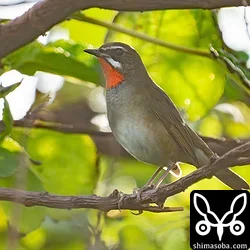
Driving through the farmland, I could hear Siberian Rubythroat, Ryukyu Robin, Manchurian Bush Warbler, Japanese Bush Warbler, Arctic Warbler, and Emberiza buntings calling. The density is considerably higher than on Ishigaki Island. It was a short visit, but I enjoyed it a great deal.

A Siberian Rubythroat in the morning, moving through the undergrowth while giving its call note.

White's Thrush, Pied Avocet, and others

Jan. 22, 2025

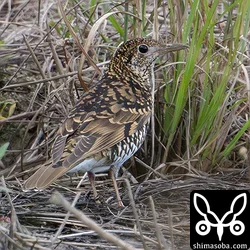
White's Thrush has been turning up frequently this season. They're quite wary, so this was the first individual I managed to photograph. Pale Thrush and Brown-headed Thrush are also present on Ishigaki Island at the moment, but Dusky Thrush has been almost nowhere to be seen.

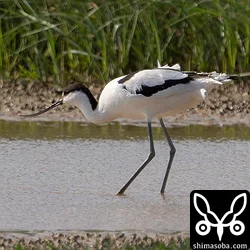
The Pied Avocet has been staying a long time. Temminck's Stint, Little Ringed Plover, Long-toed Stint, and Wood Sandpiper have all increased slightly in number. Spring migration may be getting underway soon.

A White's Thrush in the rice fields. It is noticeably larger than Pale and Brown Thrushes, and the bold patterning adds to its presence.

Collared Kingfisher Still Present After Three Months, Over the New Year (video)

Jan. 14, 2025

The Collared Kingfisher that appeared on Ishigaki Island last October has safely made it through the new year and is wintering in good health. Watching from the bridge is fine, but if you walk along the farm road to get a closer look it flies off in an instant. Once it disappears, it can be hours before it shows again. I recommend approaching by vehicle. However, in an ordinary passenger car the seat is too low to see into the channel, so rent a minivan, kei truck, or kei van!!

On this day it caught centipedes and mudskippers (Periophthalmus modestus). Prey items confirmed so far are: crab, hermit crab, centipede, and mudskipper. The Collared Kingfisher that wintered at Manko Wetland on Okinawa Island between August 2017 and April 2018 was only ever seen taking crabs, but it seems that in a different habitat the bird takes a wider variety of prey.

A Collared Kingfisher that caught a centipede. Ruddy Kingfishers, Crested Serpent Eagles, and Blue Rock Thrushes all seem to be very fond of centipedes.

Siberian Eastern Yellow Wagtail, Siberian Pipit, Red-throated Pipit

Jan. 16, 2025

Among a flock of several dozen Eastern Yellow Wagtails and Red-throated Pipits, there was one Siberian Eastern Yellow Wagtail. This season the numbers of Eastern Yellow Wagtails and Red-throated Pipits have been low — quite disappointing.

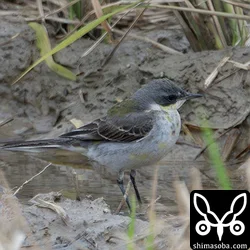
Eastern Yellow Wagtail (beema), first-winter plumage.

Malayan Night Heron, Chinese Pond Heron, Crested Serpent Eagle Juvenile

Jan. 10, 2025

While I was eating my packed lunch in the park, a juvenile Malayan Night Heron wandered up to me. It had not been fed by people — it just happened to approach. Even so, the lack of wariness in a juvenile Malayan Night Heron is worrying.

About three Chinese Pond Herons were wintering in the paddies. They seem to be foraging in a variety of habitats — dropping into drainage channels and disappearing into the grass.

I caught up for the first time in a while with "Hayate," the juvenile Crested Serpent Eagle released in November last year. It had moved more than 10 km south in a straight line from the release point. The area is close to town and has heavy traffic, so I worry it may be hit by a vehicle.

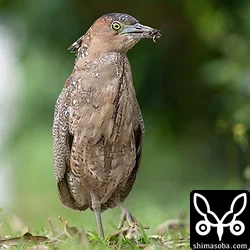
A juvenile Malayan Night Heron. Born last year, it is in the process of molting into adult plumage.

Approachable Upland Buzzards and Plenty of Crested Serpent Eagle Juveniles

Jan. 8, 2025

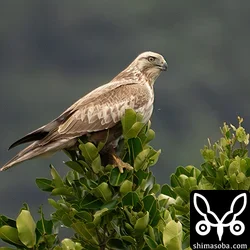
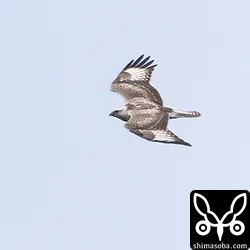
Both of the Upland Buzzards that have been present since late last year are juveniles, so they are not particularly wary and there are many chances to observe them. When they are not on the farmland they are usually perched in a favourite tree at the foot of the hills.

Both juvenile and adult Crested Serpent Eagles have been easy to see. I worry about the juveniles — when cold days continue, prey becomes harder to catch and the young birds start to look listless.

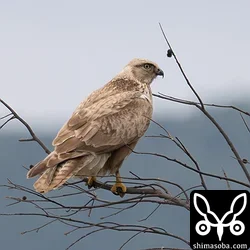
An Upland Buzzard perched on a branch beside a channel, targeting a Eurasian Coot. It dive-bombed into the channel shortly afterwards but failed to make a catch.

Pied Avocet, Northern Lapwing, Grey-headed Lapwing

Jan. 8, 2025

The Pied Avocet is down to one bird, but it shows no wariness and has been staying for an extended period. Nearby, several Northern Lapwings and two Grey-headed Lapwings are also lingering.

A flock of Common Snipe is present at the same site. There are no Swinhoe's Snipe or Pin-tailed Snipe. Two Tundra Swans are happily wintering together on this southern island.

The Pied Avocets that arrived in a group of eleven in November have dwindled one by one, down to a single bird now.

Birdwatching in Nagoya

Jan. 3, 2025

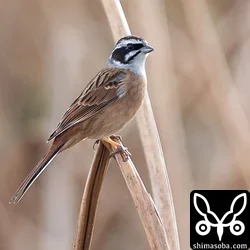
I spent the New Year holiday in Nagoya and managed about an hour of birdwatching. I had hoped to see a Japanese Wagtail, but unfortunately that didn't happen.

Meadow Bunting — a species I almost never get to see in Okinawa.

Last Look at the Collared Kingfisher for 2024

Dec. 29, 2024

Before heading home to Nagoya I went for one last look at the Collared Kingfisher for 2024. Temperatures have dropped and crabs — its main prey — seem to be less available; its ranging area has expanded considerably.

The Common Hoopoe was still present too, but my camera was already packed in the carry-on bag, so no photos this time.

There was also a strangely pale Chinese Pond Heron. Looking closely, the median coverts on the left wing are white. Three Chinese Pond Herons are wintering in the same area.

The last Collared Kingfisher of the year. This happy blue bird drew many birdwatchers to Ishigaki Island. Moult appears to have begun slightly, with fresh bright feathers coming in on the head. I hope it stays until the plumage is fully renewed.

Common Hoopoe Day 5, Pied Avocet, Ryukyu Scops Owl

Dec. 29, 2024

It's a hectic schedule at year-end, but I happened to pass nearby during work so I stopped to check on the Common Hoopoe. It was foraging in its usual spot. There are a lot of feral cats around, so I worry about it coming to harm.

In the paddies the Pied Avocet was still present. There were also Long-toed Stints, Wood Sandpipers, Black-winged Stilts, and Common Greenshanks.

In the evening I checked for owls for the first time in a while. No Long-eared Owl or Short-eared Owl found. Ryukyu Scops Owls were fairly numerous. At this time of year moult is complete and they are in fresh winter plumage — well worth a look.

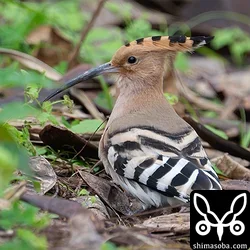
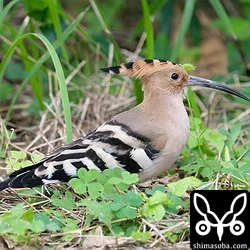
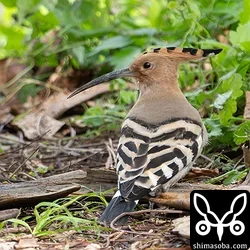
A Eurasian Hoopoe in wintering mode, searching for food at its usual spot.

Common Hoopoe and a Pair of Peregrine Falcons Staying On (video)

Dec. 27, 2024

The Common Hoopoe that appeared on Christmas Eve is now on its third day. It shows no wariness and isn't being pestered by birders, so I have a feeling it will stick around.

The pair of Peregrine Falcons (former subspecies Siberian Peregrine) that wintered here last year are back again, terrorising the paddies and hunting Eurasian Coots and herons relentlessly. Eurasian Coots are well down on last year's numbers, and Eurasian Teal are completely absent. The Upland Buzzard wintering in the same area alongside the falcons may be a factor.

Common Snipe have moved in all over, including a flock of 47, but they are all Common Snipe.

A Eurasian Hoopoe with little wariness. There is a fair amount of foot traffic, but no birders come, so it is never chased off and is well into wintering mode.

Common Hoopoe Appears on Christmas (video)

Dec. 26, 2024

I went back to see the Common Hoopoe I had found while working the day before, and it was still there. It is in a residential estate, but the bird is so unwary that it may well decide to stay.

A Eurasian Hoopoe foraging at the base of a tree planted inside a housing complex.

Upland Buzzard, Little Bunting, Black-tailed Gull and more on Yonaguni

Dec. 20, 2024

About five days on Yonaguni for work. Managed a little birdwatching in the spare time. Around Yonaguni Airport: two Upland Buzzards, an Eastern Buzzard, a Hen Harrier, a Peregrine Falcon and a Common Kestrel, apparently hunting small birds in the grass along the runway.

Pale Thrushes were present in large numbers across the island — flocks of thirty or more in the best spots. A few Brown-headed Thrushes were also seen. Pale Thrushes and Brown-headed Thrushes were concentrated mainly in the northern part of the island from Sonai to Kubura, while Dusky Thrushes were conspicuous in the south from Minamimakiba to Hikawa.

Little Buntings, Eastern Yellow Wagtails, Red-throated Pipits and Daurian Redstarts were all holding on through the strong winds. At Kubura fishing port, two Black-tailed Gulls and four Black-headed Gulls were staying over.

A juvenile Upland Buzzard appeared in the distance.

Black-winged Kite, Siberian Peregrine, juvenile Crested Serpent Eagle and more

Dec. 14, 2024

The juvenile Black-winged Kite seems to have finally become independent recently. Black-winged Kites on Ishigaki breed multiple times a year, so the population keeps growing. The Peregrine Falcon pair that wintered here last year has returned to the same spot again this year. An Upland Buzzard is also in the same area, keeping the Eurasian Coots and herons on edge. A nearby juvenile Crested Serpent Eagle looked startled as the two Peregrines chased it around.

The two Tundra Swans are still present. Around ten Northern Lapwings — all juveniles — have arrived. The rice paddies are busy with Marsh Sandpipers, Common Greenshanks, Common Redshanks, Wood Sandpipers, Northern Shovelers and Eurasian Teals. The first Tufted Duck of the season was also confirmed.

A Black-winged Kite juvenile with zero wariness. Given the location and timing, it may be the individual that was being fed in mid-air by a parent bird previously.