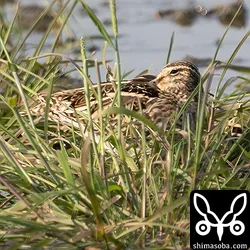
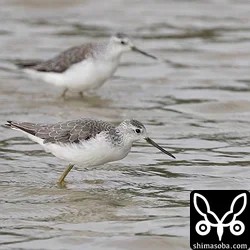
Took two apprentice birders who live on the island out for about four hours of birdwatching. We came across juvenile Greater Sand Plover and Common Redshank — first juveniles of the season for both species. Together with Kentish Plover and Little Ringed Plover, that brings the juvenile wader tally to four species for the season.
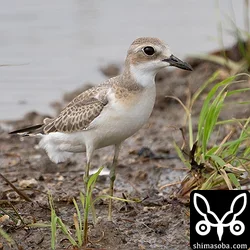
A juvenile Greater Sand Plover. It was found in a rice paddy — possibly due to the influence of the typhoon.
Typhoon No. 3 is bearing down on Ishigaki Island — the first approach of the year.
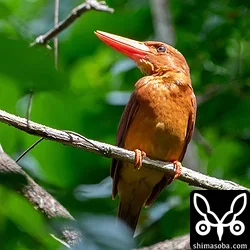
The wind had a suspicious feel to it, but I had plenty of encounters with Ruddy Kingfisher. The Oriental Pratincole fledging season appears to be in its final stages, with numbers dropping steadily.
A slow drive along the usual forest road turned up several Ruddy Kingfishers in a short time.
First records this season of Black-tailed Godwit, Sharp-tailed Sandpiper and Striated Heron. Unless the weather turns rough, large waders like the Black-tailed Godwit don't come down to Ishigaki. Striated Heron is scarce on the island, so finding one felt like a bonus.
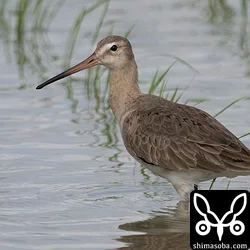
The Black-tailed Godwit is still very much in winter plumage.
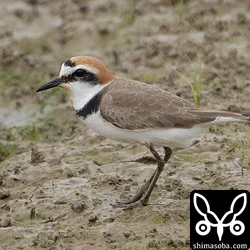
A Kentish Plover turned up that looks slightly different from the birds that breed on Ishigaki. I haven't paid much serious attention to Kentish Plovers before, but this individual stood out.
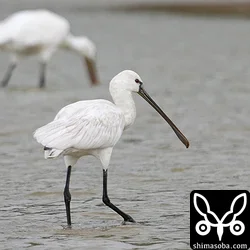
First Whiskered Terns of the season confirmed — two birds quartering over the rice paddies. A juvenile Eurasian Spoonbill is also still present; it's an individual with a noticeably pale bill. Wood Sandpiper and Black-winged Stilt numbers are up, though the peak for waders in the paddies hasn't really arrived yet this season. Little Ringed Plover and Long-toed Stint are also gradually increasing.
Isabeline Shrikes are thinning out as they head to breeding grounds. The pair of overwintering Peregrine Falcons is still here. The one-eyed Crested Serpent Eagle near my home is somehow hanging on. Ishigaki Tit appears to be busy with nesting.
Male Kentish Plover in breeding plumage. Beautiful. The breeding population in Okinawa is considerably paler.
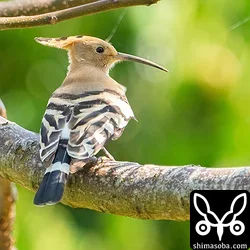
I was up in the northern part of Ishigaki for work, so I took the chance to do a bit of birding. I had a feeling Common Hoopoe and Chinese Blackbird might have arrived, so I made a short detour — and found them straight away. Two Common Hoopoes at two sites, and one Chinese Blackbird. Common Hoopoes are being seen in good numbers on Okinawa main island, Miyako-jima and Iriomote as well; this could be a bumper year.
Also present were Arctic Warbler, Kamchatka Leaf Warbler, Daurian Redstart and Mugimaki Flycatcher. White Wagtail numbers are up, but almost all of them are the leucopsis subspecies — the largest flock was close to 30 birds. In a typical year the leucopsis birds arrive first, followed by the nominate subspecies a while later.
In the paddies, Crested Serpent Eagle — both juvenile and adult — and Malayan Night Heron are being encountered frequently.
Four Spotted Redshanks dropped out of the sky into a rice field. They came in from the direction of the sea, so they may be the birds that were recorded on Iriomote a few days ago.
Eurasian Hoopoe resting on a branch. It ended up settling in and staying put just like that.
The one Crested Serpent Eagle juvenile that's been reliably viewable was at it again today — foraging at its own pace in the rice fields, walking the bunds and catching what looked like small insects.
Malayan Night Heron adults are turning up more often. This day I had three adults and one juvenile.
The Pin-tailed Snipe is still present. The same paddy field held nearly 30 Common Snipe — presumably spring migrants passing through. New arrivals of Common Redshank, Common Greenshank and Wood Sandpiper were also noted. Migration is picking up pace.
The season's first Northern Lapwing and Grey-headed Lapwing have also arrived.
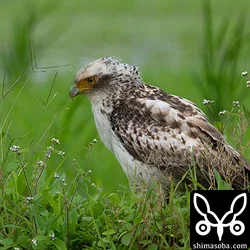
A completely fearless Crested Serpent Eagle, juvenile.
I spent the New Year holidays in Nagoya, so I squeezed in three hours of birdwatching. There were several bunting species in the same area and it was fun listening to their calls. A short outing, but very satisfying — experiences you simply can't have on Ishigaki Island. ^^ I also got to see Eurasian Skylark and Bull-headed Shrike, both rarely encountered on the island.
There was a Common Starling in the same paddy field, which surprised me. Five birds were mixed in with a flock of White-cheeked Starlings. Northern Lapwing and Grey-headed Lapwing were there too. Grey-headed Lapwings are always around in that area, but it was my first time seeing Northern Lapwing there.
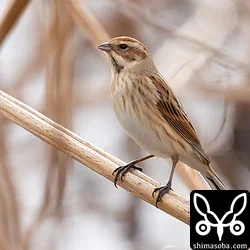
I was listening for Emberiza calls when a Reed Bunting appeared right in front of me. You don't get to see these on Ishigaki.
A juvenile Crested Serpent Eagle, which has been hard to find reliably this season, was out in the farmland. A Common Kestrel that has been present for several days seems to have taken a liking to the pasture and was hunting in a relaxed manner.
The Javan Pond Heron has been staying a long time, but the recent pattern is for it to leave around March, before shifting into breeding plumage.
Six Pied Avocets are staying at four sites. How long will they stick around?
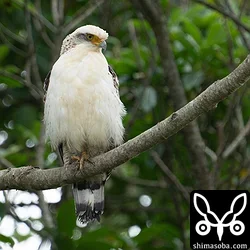
Juvenile Crested Serpent Eagle. I heard its call and went looking — and there it was.
The first Pied Avocet, Spotted Redshank, Eurasian Wigeon, and Northern Shoveler of the season have arrived. I had been hearing Japanese Leaf Warbler by call for several days, but this time I finally managed a photograph.
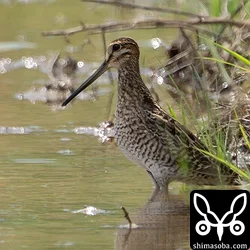
Pin-tailed Snipe numbers have dropped; today I could only squeeze out a single bird. Swinhoe's Snipe are past their peak but still well represented. Common Snipe are increasing.
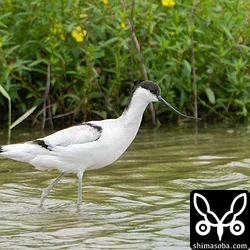
Pied Avocet, juvenile.
White-browed Eastern Yellow Wagtails are increasing — flocks of up to around 20. I also confirmed the season's first juvenile Black-winged Stilt. Red-necked Stints, Long-toed Stints, and Wood Sandpipers continue to turn over and build in numbers. A Greater Painted-snipe is incubating.
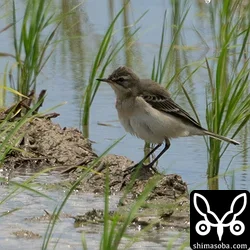
Eastern Yellow Wagtail, 1st-winter.
Still stalking Pin-tailed Snipe the day after, trying to get shots of the tail feathers. And then — incredibly!! — I managed to get video with the call of a Pin-tailed Snipe!! It's shaping up to be another wonderful autumn migration season!!
I recorded my first Marsh Sandpiper and Green Sandpiper of the season. Common Redshank and Whiskered Tern had also arrived.
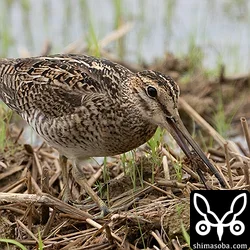
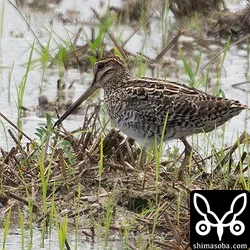
An extremely close Pin-tailed Snipe. Preying on a cricket.
With Typhoon No. 6 moving away from Ishigaki Island, I did a patrol of the rice paddies. Pin-tailed Snipe, Swinhoe's Snipe, and Red-necked Phalarope had all arrived for the first time this season.
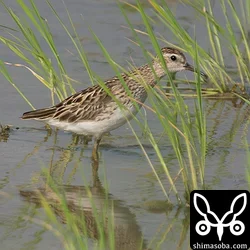
I recorded my first juvenile Wood Sandpiper and Long-toed Stint of the season. Common Greenshank and Little Ringed Plover numbers were also up.
Cinnamon Bitterns breed on the island, and I am encountering recently fledged juveniles more and more often.
First Pin-tailed Snipe adult of the season.
Oriental Pratincole and Kentish Plover are breeding well, with many fledged chicks on view. The Oriental Pratincoles in particular have formed a flock of nearly 60 juveniles. At the reclaimed land site, chicks from several Kentish Plover pairs have fledged and are running around energetically.
The Little Terns, which share the same site as the Kentish Plovers in a colony, had their nests flooded by heavy rain brought by the typhoon. Some eggs that had been submerged for several hours did hatch, but their prognosis looks poor.
In the rice paddies, juvenile Common Redshank arrived for the first time this season. Every year, Common Redshank is the first shorebird species to arrive as a juvenile.
Migrating waders and plovers are gradually increasing. Wood Sandpiper, Long-toed Stint and Grey-tailed Tattler have arrived in the paddies. On the coast, Greater Sand Plover, Siberian Sand Plover and Grey-tailed Tattler numbers are building.
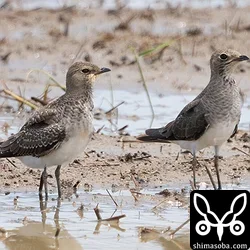
Oriental Pratincole in juvenile plumage (left) and first-winter plumage.
The long-awaited autumn wader migration has begun. Six Long-toed Stints have arrived. A few Wood Sandpipers as well. Black-winged Stilt and Common Greenshank are present in small numbers sporadically throughout the year. Little Ringed Plover has also arrived.
First Wood Sandpiper of the season. Summer plumage.
Turnover among shorebirds in the fields and along the coast has intensified.
In the rice fields, Curlew Sandpipers in beautiful summer plumage were mixed in with a flock of Sharp-tailed Sandpipers. A Little Stint also in summer plumage has arrived, and nine Black-tailed Godwits have come in, adding to the activity.
Pin-tailed Snipe, Swinhoe's Snipe, and Common Snipe are staying on, including some long-term individuals.
Common Redshank, Common Greenshank, and Marsh Sandpiper are beginning to show noticeably contrasting summer plumage.
Along the coast, large numbers of Siberian Sand Plover, Greater Sand Plover, Grey-tailed Tattler, Ruddy Turnstone, Red-necked Stint, and Eurasian Whimbrel have been arriving.
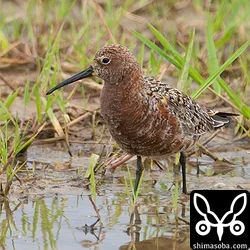
A Curlew Sandpiper flushed red.
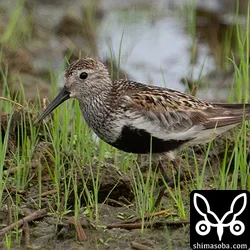
Visited my family home in Aichi and did some birdwatching on the side. I was targeting Latham's Snipe, but in spring they are far fewer in number and the timing was a little early, so I struck out…
Even so, I managed to see birds that are hard to come by in Okinawa or on Ishigaki, so it was a satisfying trip.
Common Snipe. I'm not sure of the situation in Aichi, but could this be a wintering bird?
A Eurasian Spoonbill and Common Shelduck are staying in the rice fields. The Ruddy Shelducks were startled by a hunting dog, flew off and have not returned — they may have taken refuge somewhere around the dam.
Wintering Common Snipe are everywhere, but a wintering Swinhoe's Snipe has not been found since the end of the year…
Two Eurasian Spoonbills, moving back and forth between Anparu wetland and the rice fields.
The wintering Swinhoe's Snipe I found at year-end could not be relocated. Common Snipe were present in numbers exceeding 100.
Others included wintering Common Redshank, Common Greenshank, and Marsh Sandpiper.
A Marsh Sandpiper wintering in the same rice field. First-winter plumage.