A daily record.
Featuring photos of wild birds and nature, mainly from Okinawa Main Island and Ishigaki Island

Autumn Migration in Full Swing

Sept. 1, 2026

September has arrived, and autumn migration on Ishigaki Island is now in full swing. Eastern Yellow Wagtail numbers jumped overnight, and flocks ranging from small to large can be seen in farmland all over the island.

Among the waders, juveniles have started arriving on the heels of the adults. Flocks in fresh juvenile plumage are coming in.

An adult Eastern Yellow Wagtail of the white-supercilium type, transitioning into winter plumage.

Migrant waders increasing

Aug. 19, 2026

Migrant waders are building up and the paddies on Ishigaki are getting lively.

Juveniles now make up more than half of the Long-toed Stints present, and I confirmed the first juvenile Wood Sandpiper of the season. I had already found juvenile Common Redshank about two weeks ago, but this was my first time photographing one this season.

Common Greenshank, Marsh Sandpiper, Black-winged Stilt, Pacific Golden Plover, and Black-faced Spoonbill have also been showing up one after another.

First juvenile Wood Sandpiper of the season. Only one individual confirmed, but numbers will keep climbing from here.

Pin-tailed Snipe appear!! Wader migration in full swing

Aug. 11, 2026

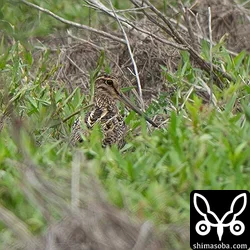
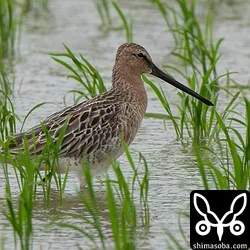
I found three Pin-tailed Snipe — the first of the season!! The three were together, so they may well have come through last night.

Besides snipe, the paddies now hold Common Redshank, Common Greenshank, Marsh Sandpiper, Black-winged Stilt, Long-toed Stint, Wood Sandpiper, and Whiskered Tern. Migration is well and truly under way.

For moult notation, from this season I will be adopting the WRP System (Wolfe–Ryder–Pyle System).

Finally got confirmation. Pin-tailed Snipe, adult. DCA (Definitive Alternate plumage).

Glossy Ibis: Day 5

July 17, 2026

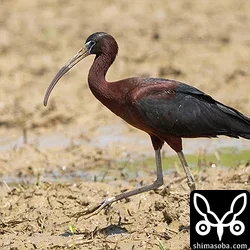
The Glossy Ibis that arrived on Ishigaki Island with Typhoon No. 9 is now in its fifth day of stay. It has become less wary and easier to observe.

Wood Sandpipers and Little Ringed Plovers on autumn migration have increased rapidly in the rice paddies. Little Terns that apparently bred on the island came to bathe, bringing their recently fledged chicks.

The Ruddy Kingfisher along the forest road has finished raising its young and is taking it easy.

By the fifth day of its stay, wariness had faded. It stopped flushing even when tractors and kei trucks passed by.

Northern Boobook starts breeding, six White-winged Terns arrive, Eastern Yellow Wagtail appears

May 11, 2026

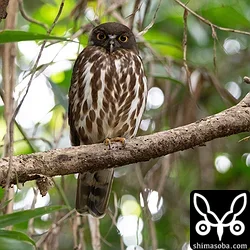
The Ryukyu Northern Boobook has begun breeding. The nest site changes almost every year because the nest trees rot and fall, yet breeding still succeeds and typically two or three chicks fledge.

A flock of six White-winged Terns appeared over the paddies. The weather had been a little rough, so they seemed to have taken shelter on the island. All were in summer plumage — a beautiful sight.

A Eastern Yellow Wagtail also turned up nearby. It has been a very long time since the last one. By the following day it was gone.

The sandpipers have largely moved on, which makes things feel rather quiet, but at least one Pin-tailed Snipe managed to hang on.

A male Japanese Scops Owl. I've had a long acquaintance with this individual.

Shorebirds in the Paddies

April 29, 2026

Temperatures rose and the paddy birds became a little more active — I had good views of bathing behavior and similar scenes.

A distant Pin-tailed Snipe.

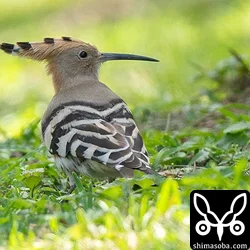
Third Common Hoopoe of the season found (video)

Feb. 21, 2026

The third Common Hoopoe of the season has arrived, following last week's bird. This individual showed no wariness at all — when a car passed nearby it flew off only a short distance. Reports of arrivals have also come in from other islands, and it looks like this is a good year for Common Hoopoe.

Temperatures are rising and spring migration is beginning. A mixed flock of Taiwan Wagtail, White Wagtail, and White Wagtail arrived in the rice paddies.

Among the waders, wintering birds — Common Snipe, Common Redshank, and Wood Sandpiper — have been joined by northbound migrants, making things a little livelier.

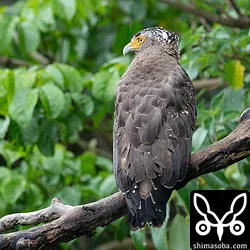
Resident birds — Crested Serpent Eagle, Purple Heron, and Cinnamon Bittern — were all active in the run-up to the breeding season.

Discovered what is the third Eurasian Hoopoe of the season on Ishigaki Island.

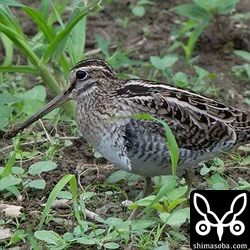
Wintering Pin-tailed Snipe!! (video)

Nov. 20, 2025

This breaks the latest date record for Pin-tailed Snipe on Ishigaki Island by a full month!!

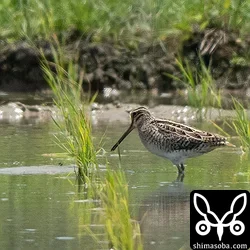
I found it among a small flock of Common Snipe. It was not a typical Pin-tailed Snipe individual, and at first I wavered between that and Swinhoe's Snipe, but after watching for a while I became certain it was Pin-tailed. I stuck it out for about an hour and managed to get photos of the tail feathers as documentary evidence.

It is an exceptionally Swinhoe's-like individual, which makes it all the more interesting. This is definitely a Pin-tailed Snipe I won't forget in a hurry. ^^

The previous late record for Pin-tailed Snipe on Ishigaki was an adult on 18 October, so this is a substantial update to the record. ^^

Incidentally, the earliest record is a juvenile in late February. That individual may well have been wintering, though.

Pin-tailed Snipe, first-winter plumage.

Black-headed Bunting, Forest Wagtail, Arctic Warbler, White-shouldered Starling and others

Nov. 3, 2025

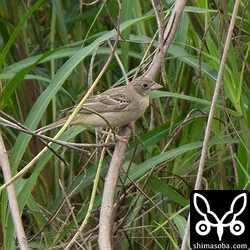
A Black-headed Bunting turned up after a long absence. It was very likely the same individual I briefly glimpsed in the same paddy field about a week ago. It was mixed in with a flock of several hundred Eurasian Tree Sparrows.

A Forest Wagtail appeared on the usual forest road — the sixth individual this season. Arriving this late in the year, there is a good chance it will winter here. Last year one wintered at the same spot. Once they settle into wintering mode, though, they tend to stay deep inside the forest and become harder to observe.

Arctic Warblers have been showing up since early October. Birds fresh in from migration are often in small flocks, but now they have spread across the island and each is holding a small territory. Many individuals will stay through to spring. Come April, they form flocks again in preparation for the northward journey, and some begin to sing.

Brambling have also appeared. They joined up with Eurasian Tree Sparrow flocks and were feeding on second-crop rice grain in the paddies.

White-shouldered Starlings — a few birds — were mixed into a flock of several tens of White-cheeked Starlings, along with around 20 Common Starlings. The wintering White-shouldered Starling population on the island is sizeable in its own right, and flocks of several tens are regularly seen in parks and the like.

At this time of year, snipe are mostly Common Snipe, but among a flock of ten-odd I found just two Swinhoe's Snipe. I expect them to disappear once the second-crop rice harvest gets under way. Other waders lingering in the paddies include Common Redshank, Common Greenshank, Marsh Sandpiper, Black-winged Stilt, Wood Sandpiper, Green Sandpiper, Common Sandpiper, and Long-toed Stint.

Ducks are increasing too — I recorded my first Mallard of the season on Ishigaki. Mallard used to be quite scarce on Ishigaki and Okinawa, but the numbers being seen seem to grow a little more each year.

A Black-headed Bunting standing out prominently among a flock of Eurasian Tree Sparrows. It was constantly harassing them….
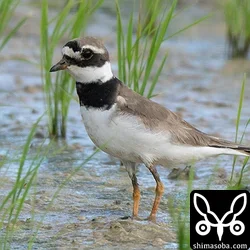
Common Ringed Plover appears!!

Sept. 4, 2025

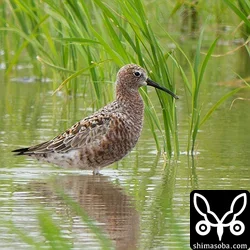
A Common Ringed Plover — a rare bird on Ishigaki Island — has turned up. It's only the second time I've seen one on the island. It was associating with a flock of Little Ringed Plovers. A juvenile Curlew Sandpiper, the first of the season, also arrived. I had noted it a few days earlier, but today I managed to get photographs.

The rice fields have a true migration-season feel, with Common Greenshank, Marsh Sandpiper, Wood Sandpiper, Long-toed Stint, Black-winged Stilt, and Red-necked Stint all coming and going.

The Kentish Plover was in transition from breeding to non-breeding plumage.

Javan Pond Heron numbers up, juvenile waders arriving

Aug. 11, 2025

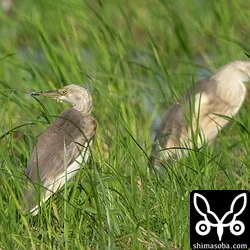
Javan Pond Heron have increased, with 4 birds confirmed at 3 sites. They seem to be turning up steadily on Okinawa Island too, and have become a fixture of this time of year. I recorded the first juveniles of the season for Black-winged Stilt, Long-toed Stint, Wood Sandpiper, and Marsh Sandpiper. Both the variety and numbers of juveniles are growing day by day.

Two Javan Pond Herons. Not particularly wary — easy to observe.

Shorebird Migration Under Way — Gull-billed Tern Arrives

July 19, 2025

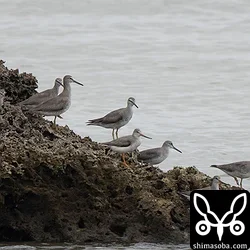
The wader migration has started on Ishigaki Island. Along the coast, Grey-tailed Tattlers, Terek Sandpipers, Eurasian Whimbrels, and Greater Sand Plovers have appeared, while the paddyfields have received Common Greenshanks, Black-winged Stilts, Wood Sandpipers, Long-toed Stints, and Little Ringed Plovers. Numbers and species will keep building from here. With any luck, the snipe we have all been waiting for will show up in late August.

As the tide came close to high, Grey-tailed Tattlers and Terek Sandpipers gathered on the coastal rocks.

Asian Dowitcher, Pectoral Sandpiper, Little Stint, Broad-billed Sandpiper, Curlew Sandpiper and More (video)

April 29, 2025

With shorebirds on the increase, I spent the entire day searching for waders. The result: starting with Asian Dowitcher, I recorded Pectoral Sandpiper, Little Stint, Broad-billed Sandpiper, Curlew Sandpiper, Pin-tailed Snipe, Greater Sand Plover, and more — 21 species of waders in total. Seeing this many species in a single day is one of the great pleasures of this time of year. ^^

A Bar-tailed Godwit in summer plumage that suddenly dropped in alongside Black-winged Stilts and Black-tailed Godwits near the end of a shorebird search. Looking sharp in that summer plumage.

Migrants Grounded by Bad Weather

April 4, 2025

Two consecutive days of bad weather brought large numbers of shorebirds and plovers — apparently mid-migration — dropping in to localized spots. The biggest group was Black-winged Stilts, over 400 birds, followed by Wood Sandpipers at 200+. There were too many to keep counting, so I stopped midway. ^^;

Pied Avocet, Black-tailed Godwit, Marsh Sandpiper, Curlew Sandpiper, Sharp-tailed Sandpiper, and Garganey also arrived, making the paddies extremely lively — though two days later everything was back to normal. ^^;

Along the coast, Greater Sand Plover numbers increased, and a small number of Grey Plovers also came through.

Two Curlew Sandpipers confirmed.

Resident Birds Active, Spring Migration Beginning

March 10, 2025

In early March on Ishigaki, Crested Serpent Eagle activity is surging with breeding season. On fine days it is possible to watch display flights. Malayan Night Herons are also moving into breeding condition and gradually taking on their nuptial colours.

Bramblings, Garganey, Wood Sandpipers, and Common Greenshanks heading north on their return migration have also arrived.

A Crested Serpent Eagle calmly lying in wait for prey in its usual territory.

First Mandarin Duck of the Season

Oct. 17, 2024

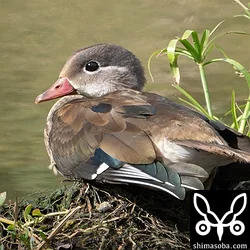
The first Mandarin Duck of the season has arrived. It was a male in eclipse plumage.

Male Mandarin Duck. It's in eclipse plumage, so it doesn't look very Mandarin-like.

White-winged Tern, Garganey, Arctic Warbler, Ruff Arrive

Oct. 5, 2024

Autumn is well and truly here — White-winged Terns, Garganey, Ruffs and Arctic Warblers are all building up steadily and the paddies are getting lively. Snipe numbers have also jumped sharply: 40 Common Snipe against 2 Swinhoe's Snipe. I couldn't find any Pin-tailed Snipe.

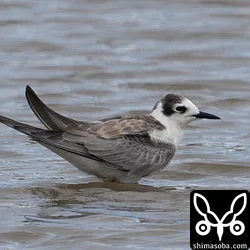
White-winged Tern, juvenile. The third bird this season.

Marsh Sandpiper, Common Greenshank, Common Redshank, and Others

Aug. 23, 2024

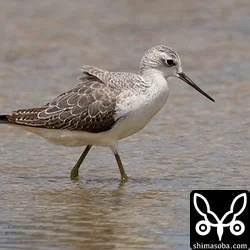
First record of a juvenile Marsh Sandpiper this season. Common Greenshank, Common Redshank, Black-winged Stilt, Wood Sandpiper, Long-toed Stint, and Red-necked Stint all appear to be passing through Ishigaki in a steady stream, with the cast turning over continuously.

The first Marsh Sandpiper juvenile of the season. Already in first-winter plumage.

Ruff, Red-necked Stint, and Others

Aug. 20, 2024

The Ruff is still present. Red-necked Stint numbers are growing and small flocks are now being seen here and there.

Ruff juvenile. It was close, right in front of me.

Greater Painted-snipe, Red-necked Stint, Sharp-tailed Sandpiper, Oriental Pratincole and others

Aug. 18, 2024

First juveniles of the season confirmed for Wood Sandpiper and Common Sandpiper. Red-necked Stint and Sharp-tailed Sandpiper also first records of the season. The Greater Painted-snipe chicks are still moving with the adults but have grown large enough that they are barely distinguishable from them.

First Wood Sandpiper juveniles of the season. It seems they arrived all at once.