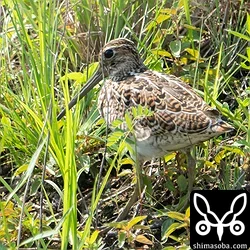
A daily record.
Featuring photos of wild birds and nature, mainly from Okinawa Main Island and Ishigaki Island

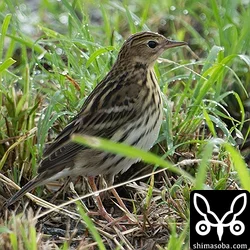
Two Pechora Pipits Show Up!!
Oct. 4, 2024

I finally got photos of the Pechora Pipits whose calls I had been picking up from the grassland for the past few days.

Red-throated Pipits have arrived in large numbers, so picking out the Pechora Pipits took some patience — but when I waited by the call, a bird popped up onto a rice-paddy berm right after the rain stopped. Finding a bird exactly as planned is a special kind of satisfaction. ^^

Chinese Sparrowhawk migration has been under way since early September, but bad weather has continued thanks to the typhoon and a lot of birds are lingering on Ishigaki-jima. At peak times three or so were perched on the power lines together. Once the weather clears they should push through all at once.

Grey-streaked Flycatchers on migration and wintering Arctic Warblers are also increasing. A large flock of around 500 Chestnut-cheeked Starlings was moving through parks in the town centre.

Buff-bellied Pipit, first-winter.
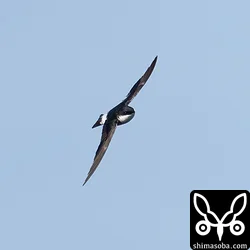
Siberian House Martin Shows Up!!

Sept. 28, 2024

Following the Himalayan Swiftlet the other day, a Siberian House Martin has now turned up on Ishigaki-jima.

I only had a short window before work and was shooting casually, thinking it was an Asian House Martin, but I was told afterward it was a Siberian House Martin. Too late to wish I had taken photos that showed the field marks more clearly. A Siberian House Martin was also recorded on 1 October at Nago-dake on Okinawa Island.

Himalayan Swiftlet Shows Up!!

Sept. 29, 2024

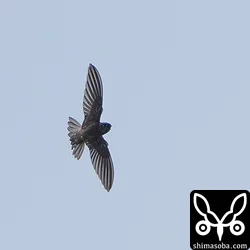
While I was watching Chinese Sparrowhawk migration, a Himalayan Swiftlet appeared!! Dark, slender and very sharp-looking.

Several hundred Chinese Sparrowhawks moved through. The largest single group was a few dozen birds. Migration should continue for a while, but I'm keeping an eye on the typhoon track.

I also had my first Eurasian Coots of the season and juvenile Pacific Golden Plovers. A flock of around 100 Ashy Minivets and the calls of Arctic Warblers were in the air too — it feels like autumn is deepening.

A Himalayan Swiftlet appeared. It was flying around together with swallows at high speed.

Chinese Sparrowhawk Migration Begins; First Eurasian Teal

Sept. 26, 2024

Chinese Sparrowhawk migration is under way. The weather has been unsettled but it should pick up in earnest from here. Two Eurasian Teal — my first of the season — had arrived.

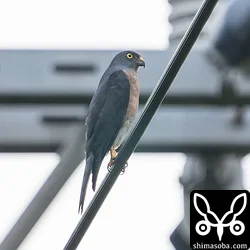
Chinese Sparrowhawk, adult female.

Snipe Numbers Dropping

Sept. 19, 2024

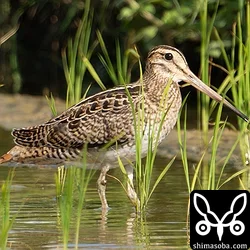
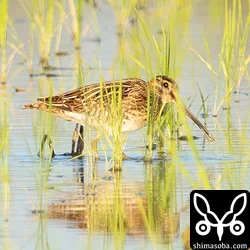
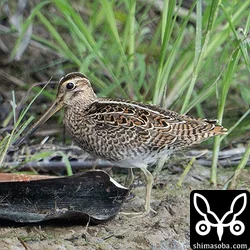
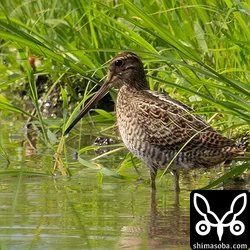
The snipe that built up from late August are thinning out now. At peak times there were nearly 40 in a single paddy field; now there are just a handful. I managed to find one Pin-tailed Snipe. Common Snipe hadn't increased much, but I'd expect the majority to be Common Snipe once October comes.

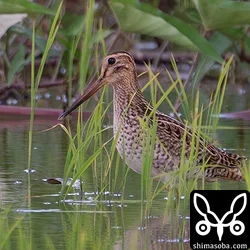
Pin-tailed Snipe, juvenile. Swinhoe's Snipe, juvenile, in the background.

Second Wave of Snipe at Peak

Sept. 17, 2024

The second wave of snipe is peaking. That said, most birds are Swinhoe's Snipe and Pin-tailed Snipe — the Common Snipe peak is still ahead. The busier paddies hold around 30 snipe per field, mostly Swinhoe's Snipe. Next most numerous are Pin-tailed Snipe; Common Snipe seem to number only two or three.

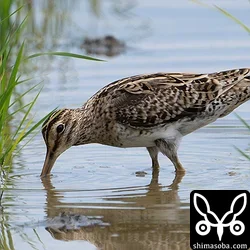
Swinhoe's Snipe, adult.

Second Arrival of Pin-tailed Snipe

Sept. 12, 2024

The second wave of Pin-tailed Snipe — which has been on the low side this season — appears to have arrived. It feels slightly earlier than usual, so it may simply be that migration has been running late. Worth watching how things develop.

Since late August I have been visiting the same paddy field day after day to identify individual snipe, keep continuous records, and sort out tricky birds. Some individuals stay for a long time; others disappear within a day. Pin-tailed Snipe, Swinhoe's Snipe and Common Snipe alike tend to stick to almost exactly the same spot once they settle in.

New birds have joined the resident Pin-tailed Snipe, and the snipe scene in the paddies is a little livelier.

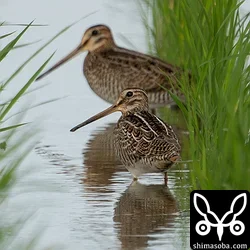
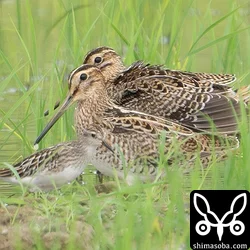
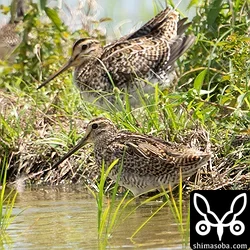
Pin-tailed Snipe (rear) and Swinhoe's Snipe. Both juveniles.

Pin-tailed Snipe, Swinhoe's Snipe, Common Snipe

Sept. 10, 2024

Almost every evening I am picking up snipe in the same paddy field. Some individuals have been staying a long time, and I can still find new arrivals. Swinhoe's Snipe continues to make up the majority, but Pin-tailed Snipe were there too. A few new Common Snipe had also come in.

A Pin-tailed Snipe juvenile appeared right in front of me.

Common Hoopoe, White-shouldered Starling, juvenile Crested Serpent Eagle (with video)

Sept. 8, 2024

We went birdwatching as a family in the evening. We only had a short window before our dinner reservation, but we managed to see the first Common Hoopoe of the season and a few other species. The kids were delighted by a juvenile Crested Serpent Eagle calling loudly. ^^

Common Hoopoe turned up at two locations, three birds in total. They have already been recorded on Iriomote Island as well. I wonder if it will be a bumper year like the Hoopoes last spring.

I also had my first White-shouldered Starling of the season and got a look at the juvenile Crested Serpent Eagle. I spotted an Asian Koel on a wire but could not get a shot. The following day an Asian Koel was seen on wires in the same area. Numbers are increasing year by year — could it be settling here year-round rather than just in spring?

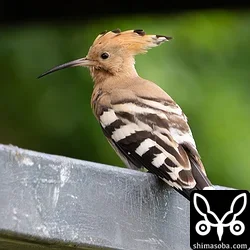
A tired-looking Eurasian Hoopoe. Freshly arrived on migration, perhaps.

Pin-tailed Snipe and Swinhoe's Snipe every day (with video)

Sept. 7, 2024

On this day, a large flock of Barn Swallows moved into the paddy field where I have been watching snipe every day — prime viewing conditions.

When Barn Swallows spot snipe feeding in the paddies they sometimes dive-bomb them for no apparent reason. The snipe then raise their tail feathers in alarm, which actually makes them much easier to observe.

The bird in the foreground is a Pin-tailed Snipe juvenile.

Two Broad-billed Sandpipers, Marsh Sandpiper, Red-necked Stint

Sept. 5, 2024

I have been watching snipe every day, but in between I also had two Broad-billed Sandpipers. Marsh Sandpiper, Common Greenshank, Red-necked Stint, Dunlin, Black-winged Stilt, Long-toed Stint, and Wood Sandpiper are also still present.

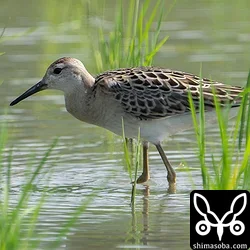
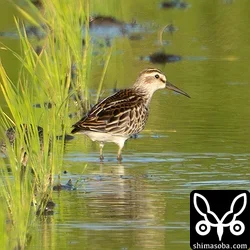
Two Broad-billed Sandpipers. Both were juveniles.

An outsized Swinhoe's Snipe

Sept. 4, 2024

Among a flock of around 20 Swinhoe's Snipe, one individual stood out conspicuously. It was large-bodied with a long bill, reminiscent of a Latham's Snipe. At this time of year a bird in near-juvenile plumage cannot realistically be Latham's Snipe, so Swinhoe's Snipe it must be. The tertial pattern also does not fit Latham's Snipe.

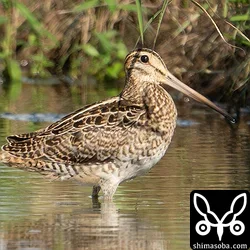
A Swinhoe's Snipe juvenile that stood out quite a bit among the flock.

First Common Snipe of the season

Sept. 2, 2024

I recorded my first Common Snipe of the season. The timing is about average for the year. On Ishigaki Island, all three snipe species — Common Snipe, Swinhoe's Snipe, and Pin-tailed Snipe — can be enjoyed through to around late October. ^^

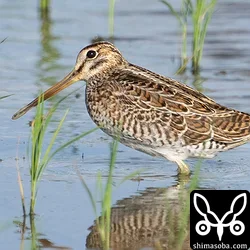
First Common Snipe of the season. It was a juvenile.

3rd Ishigaki Island Snipe Camp held!!

Aug. 31, 2024

We held the 3rd Ishigaki Island Snipe Camp, which has earned quite a following. The participant came from Aichi Prefecture. As it happens, every participant from the 1st through the 3rd camps has been from Aichi. ^^;

This time an unavoidable work commitment cut things short, so we only had about three hours of snipe watching — but we spent that time poring over roughly 20 snipe in paddy fields in a single area with intense focus.

Individual numbers this season have been as high as usual, but Pin-tailed Snipe were frustratingly scarce. On the other hand, we got to observe some very interesting Swinhoe's Snipe, so as snipe camps go it was a great success. ^^

Swinhoe's Snipe, juvenile.

Scouting for the Snipe Camp

Aug. 30, 2024

I went out to scout for the 3rd Ishigaki Island Snipe Camp. That said, these are rice paddies I check every day, so I already have a fair idea of who's around.

First records for the season: juvenile Broad-billed Sandpiper, Red-necked Stint, and Dunlin. All three are season firsts as juveniles.

Swinhoe's Snipe, juvenile. A dark individual — or rather, one with a strong brownish tone. Every now and then you get a Swinhoe's Snipe like this.

Pin-tailed Snipe, Swinhoe's Snipe, Broad-billed Sandpiper

Aug. 29, 2024

There was a Pin-tailed Snipe in the finest condition I've seen this season. Among the Swinhoe's Snipe, one individual had notably narrow outer tail feathers — an interesting bird.

The juvenile Broad-billed Sandpiper is a first for the season.

Pin-tailed Snipe, juvenile. A very beautiful bird — I wanted to see it in full, but it was extremely wary and didn't move at all.

Juvenile Common Greenshank Arrives; Swinhoe's Snipe

Aug. 27, 2024

First record of a juvenile Common Greenshank this season. The remaining juvenile species still coming through include Red-necked Stint, Long-toed Stint, Dunlin, and Broad-billed Sandpiper.

Snipe are moving through steadily too. There are 20 or more in one area alone. The group seems to have settled into a regular cast, and things will probably stay that way until the second wave arrives.

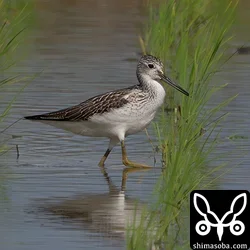
Common Greenshank, juvenile. Still in full juvenile plumage.