A daily record.
Featuring photos of wild birds and nature, mainly from Okinawa Main Island and Ishigaki Island

Naumann's Thrush, Olive-backed Pipit, Eastern Yellow Wagtail and others

Feb. 28, 2023
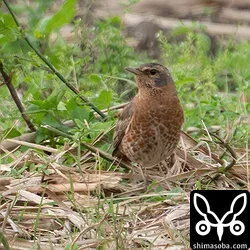
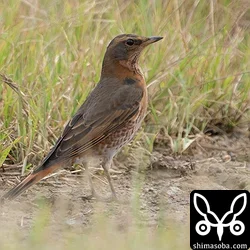
While driving through farmland I spotted an orange-coloured bird. Through binoculars it turned out to be a strikingly bright Naumann's Thrush. Eight Olive-backed Pipits came into the garden — a flock that has been wintering in the village. They have grown considerably more accustomed to people over the course of the winter.

White Wagtails and Eastern Yellow Wagtails, apparently moving through, can be seen on a day-by-day basis.

Oriental Greenfinch, scarce on Ishigaki Island, is staying on and feeding in unharvested rice.

A strikingly vivid Naumann's Thrush. It was conspicuous enough to catch the eye even at a distance.
Eurasian Spoonbill, Common Shelduck, Common Snipe and others

Feb. 25, 2023

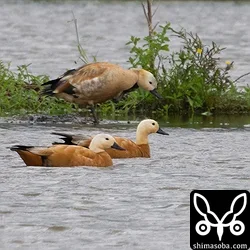
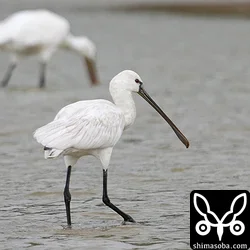
A Eurasian Spoonbill and Common Shelduck are staying in the rice fields. The Ruddy Shelducks were startled by a hunting dog, flew off and have not returned — they may have taken refuge somewhere around the dam.

Wintering Common Snipe are everywhere, but a wintering Swinhoe's Snipe has not been found since the end of the year…

Two Eurasian Spoonbills, moving back and forth between Anparu wetland and the rice fields.

Common Hoopoe, Ruddy Shelduck, Common Shelduck (video included)

Feb. 18, 2023

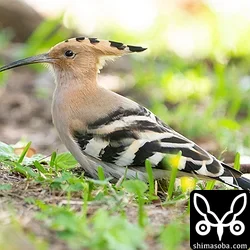
I went to see a Common Hoopoe that has been present for the past few days. It was a completely unwary bird.

The Ruddy Shelduck and Common Shelduck are also on a long stay. Rice planting has begun, so they may be moving on soon.

Eurasian Hoopoe. Judging by the arrival numbers so far, I have a feeling this spring will bring a lot of Hoopoes to Ishigaki.

Crested Serpent Eagle, Common Kestrel and others

Feb. 15, 2023

A quick burst of birdwatching in a spare moment. Crested Serpent Eagles are active and encounters with both adults and juveniles are frequent. Common Kestrels are wintering all over the place.

Two Black-tailed Gulls were at the fishing harbour, apparently eyeing up bait from the anglers.

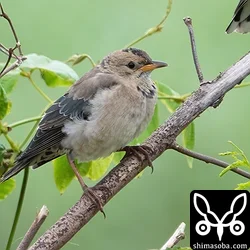
Northern Lapwing flocks have appeared in various locations. The largest was over ten birds. Red-billed Starlings and Dusky Thrushes come to the compost heaps in the sugarcane fields every day.

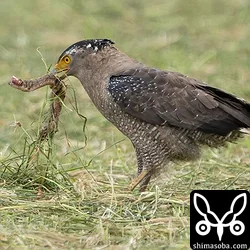
A Crested Serpent Eagle eating a habu.

Little Bunting, Red-throated Pipit, Eastern Yellow Wagtail and others

Feb. 14, 2023

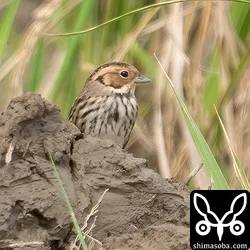
Little Buntings are wintering here, but they bury themselves in the grass and are hard to photograph. Their call notes can be heard everywhere.

Red-throated Pipits also tend to stay hidden, but this flock came out into open ground and was easy to observe. The birds were in various stages of moult, which made for a good mix.

Wagtails included White Wagtail, Taiwanese White Wagtail, Eastern Yellow Wagtail and Grey Wagtail all together.

A fair number of Little Buntings are wintering in the rice paddies on the island, but they're difficult to photograph.

A brief birdwatching detour on a family trip to eastern Hokkaido

Feb. 12, 2023

A family trip to eastern Hokkaido, 3–7 February, four of us. I seized the few spare moments to do just a little birdwatching. The Rock Sandpiper I had been hoping to see was extremely distant, but I did get to see it. It was scope-distance only, so no photographs. I'll try again someday.

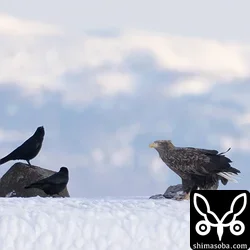
Adult White-tailed Eagle with Kunashir Island in the background.

Crested Serpent Eagle — juvenile and adult (video included)

Feb. 2, 2023

I finally photographed the Crested Serpent Eagle near home that I had kept missing. It appears regularly in the field right in front of the house. There were 42 Mallards at the dam — quite an unusual number for Ishigaki Island.

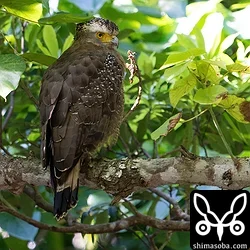
A Crested Serpent Eagle I often spotted from my living room. It's always being hassled by a Common Kestrel.

Wintering Eurasian Bittern (video)

Jan. 30, 2023

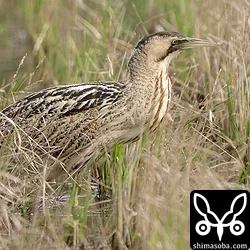
A Eurasian Bittern that has been staying since last year. There are several individuals, but one of them shows no wariness at all and can be watched closely. It has been appearing reliably of late, and its behaviour — so utterly unlike the other herons — is a real pleasure to observe. ^^

A Eurasian Bittern appeared right in front of me. It noticed me but showed no alarm.

Ruddy Shelduck and Tundra Swan on extended stays

Jan. 26, 2023

The Ruddy Shelduck that have been present since last year fluctuate between three and five birds. Two Tundra Swans are also on a long stay.

One Mallard was among a flock of Eastern Spot-billed Ducks — an unusual sighting for Ishigaki Island. A flock of 42 was at the dam.

It has become considerably less wary than when it first arrived.

A pair of Black-winged Kites

Jan. 24, 2023

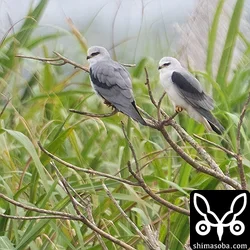
Black-winged Kites are seen in numbers on a given day, with many pairs apparently moving into breeding. Crested Serpent Eagles are also in the early stages of breeding, and calling between individuals can be observed. The number of birds visible is high.

A pair of Black-winged Kites. These individuals showed little wariness.

Western Yellow Wagtail or Russian Yellow Wagtail!!

Jan. 24, 2023

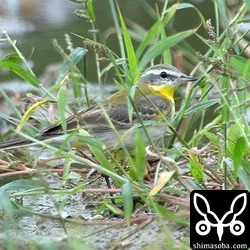
Within a mixed flock of around 100 White Wagtails, Eastern Yellow Wagtails, and Red-throated Pipits, I found one individual that stood out from the rest.

Aside from being at a different stage of moult compared with the surrounding (Blyth's) Eastern Yellow Wagtails, the bird's bright blue-grey head, broad and long supercilium, white below the eye, and white throat suggest it could be Western Yellow Wagtail ( Motacilla flava beema ) or Russian Yellow Wagtail ( Motacilla flava flava ).

Incidentally, some taxonomic treatments regard Western Yellow Wagtail as a species separate from Eastern Yellow Wagtail, in which case Russian Yellow Wagtail would be a subspecies of Western Yellow Wagtail.

However, since this individual is in first-winter plumage, moult will need to progress a bit further before anything conclusive can be said. Picking out a bird like this from within a huge wagtail flock is its own kind of fun.

Within the White Wagtail flock, alongside the White Wagtails proper, there were also Taiwanese White Wagtails and White-faced White Wagtails.

An individual that looks distinctly odd — probably a Western Yellow Wagtail or an Eastern Yellow Wagtail. That said, there are cases where first-winter Citrine Wagtails moulting into summer plumage also show white below the eye.

First birds of 2023

Jan. 12, 2023

Wishing everyone a happy new year.

The new year got off to a rough start — the entire family came down with COVID-19 right at the beginning of the holidays. We couldn't go anywhere, and I spent the time in bed until the 8th. ^^

My first birding of the year was on the 9th. Overwintering since last year: Common Crane, Ruddy Shelduck, Common Shelduck, Tundra Swan, Korean Kestrel, Grey-faced Buzzard, Eastern Marsh Harrier, Hen Harrier, thrushes, wagtails, Amur Stonechat, Chinese Pond Heron, and four species of starling.

For New Year's, you can't leave out a juvenile Crested Serpent Eagle — the bird celebrated in the Okinawan song "Washi nu Tui-bushi."

Last birds of 2022

Dec. 29, 2022

At year-end, having coughed up blood to get all my copy filed before the end of the year, I squeezed in a short final birdwatch for 2022.

Entering December, Dusky Thrushes, Brown-headed Thrushes, and Pale Thrushes had increased sharply. Most of the Dusky Thrushes were Naumann's Thrushes, and the variation in plumage tones makes comparing them a pleasure in itself. Brown-headed and Pale Thrushes have also relaxed since shortly after arrival and are easier to observe.

Manchurian Bush Warblers and Dusky Warblers were calling from patches of scrub here and there, though slightly fewer than last year.

Daurian Redstart, Amur Stonechat, Red-throated Pipit, and Eastern Yellow Wagtail are also wintering.

In addition to the three Ruddy Shelduck already present, four Common Shelduck also arrived. Tundra Swans, Common Cranes, and Eurasian Spoonbills continue to stay on.

Among the ducks, Northern Shoveler were the most numerous, followed by Eurasian Wigeon, Eurasian Teal, and Tufted Duck. Ferruginous Duck has not been confirmed this season.

Large numbers of Common Snipe are wintering; among roughly 200 counted across multiple paddies, there was one Swinhoe's Snipe.

Crested Serpent Eagles — both immatures and adults — have become easier to see. Road casualties will increase from here on, so care is needed when driving on Ishigaki Island and Iriomote Island.

The most vividly coloured Naumann's Thrush of the day. An adult.

Dark-morph Grey-faced Buzzard, Korean Kestrel, and juvenile Crested Serpent Eagle (video)

Dec. 14, 2022

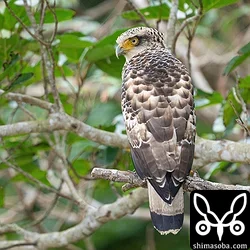
The dark-morph Grey-faced Buzzard that has been wintering on Ishigaki Island for five consecutive years has become easier to observe. It may be showing itself in prominent spots because it is facing off against a neighbouring individual in an adjacent territory.

Korean Kestrels are numerous this season, with three individuals confirmed. Continental birds must be bold — none of them shows any wariness at all.

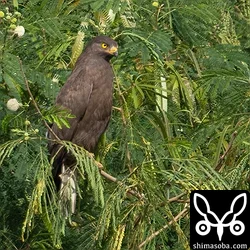
A dark-morph Grey-faced Buzzard visiting for the fifth consecutive year. After a long while, I was finally able to photograph it in sunlight.

Greylag Goose, Ruddy Shelduck, Tundra Swan and others

Dec. 14, 2022

The Greylag Goose, Ruddy Shelduck, and Tundra Swan are settling in for a long winter stay. Duck numbers are also increasing. Quite a few have turned up at the dam, but without a scope they're just too far away…

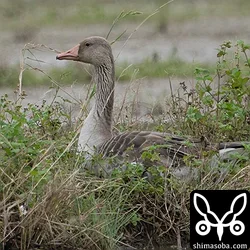
A Grey-lag Goose with no wariness at all, settled into wintering mode alongside a Bean Goose.

Rook visits for the first time in years

Dec. 14, 2022

Rooks used to arrive in reasonable flocks every winter, but I hadn't been able to confirm any in the past few years. This season, three have turned up. They occasionally joined up with flocks of Large-billed Crows.

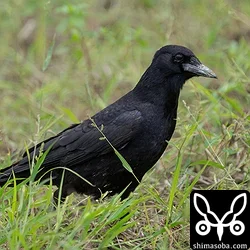
Rooks with not much wariness. Three birds, all juveniles. Moulting into first-winter plumage.

Two Pied Avocets, Common Crane, Eurasian Spoonbill and others

Dec. 14, 2022

Two Pied Avocets have arrived. They may be individuals already wandering around the island — four more Pied Avocets have also been confirmed elsewhere.

The Common Crane is also in wintering mode. At first it was extremely wary, but now not at all. ^^

A Eurasian Spoonbill is also staying on — a friendly individual. Wintering waders are showing up as well.

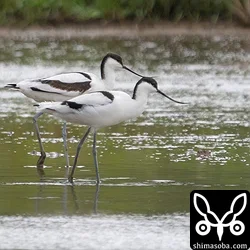
Pied Avocets foraging together. The bird in the background is in first-winter plumage; the one in the foreground is an adult in winter plumage.

Three Ruddy Shelducks, Eurasian Spoonbill (video)

Dec. 8, 2022

The three Ruddy Shelducks already on the island have joined up together. Two more have also arrived, bringing the total on Ishigaki to five — a record high.

While I was watching the Ruddy Shelducks, a Eurasian Spoonbill came down. It's likely the individual that has been moving around the island since last month.

I had just spotted a Von Schrenck's Bittern and was waiting at the edge of the rice field where it had vanished in an instant, when a Cinnamon Bittern walked over from the adjacent paddy. A little while later, just as the Cinnamon Bittern seemed to have entered the rice too, it flushed the Von Schrenck's Bittern out…

The Von Schrenck's Bittern dropped into a fallow field a short distance away, but the grass was too tall to see anything. I had to be somewhere else soon, so I left the rest to my friends. Apparently, once a farmer started working the field, both a Von Schrenck's Bittern and a Eurasian Bittern flushed!! All sorts of things are hiding out here — Ishigaki really is a joy to bird. ^^

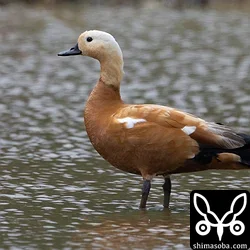
Ruddy Shelduck — juvenile (background) and adult.