A daily record.
Featuring photos of wild birds and nature, mainly from Okinawa Main Island and Ishigaki Island

Scouting Before the Snipe Camp

April 13, 2024

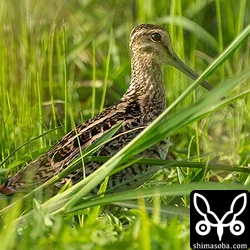
A pre-camp scout for the 2nd Ishigaki Snipe Camp. Up until the day before I'd found nothing but Common Snipe and was getting anxious, but on the eve of the camp a good number of Swinhoe's Snipe and Pin-tailed Snipe arrived. The birds were at just the right distance — not too close, not too far — perfect for relaxed observation. Looking forward to tomorrow.

Five Swinhoe's Snipes and one Pin-tailed Snipe.

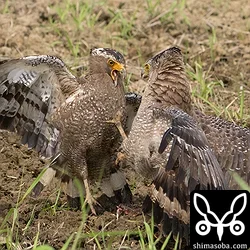
Crested Serpent Eagles Fighting Over Prey (video)

April 13, 2024

In the rice fields, two Crested Serpent Eagles were fighting over a snake. I knew how it would end, and sure enough the resident male — the territory holder — won decisively. See the video for the full story.

The male on the right holds the territory; the female on the left is "Micchan," who has been in wildlife rehabilitation before. He just made a pitiful cry and was no match for her.

Three Common Hoopoes, Lots of Ruddy Kingfishers (video)

April 11, 2024

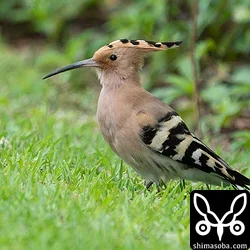
The arrival of Common Hoopoes on Ishigaki this season has been a drawn-out, straggling affair. There are spots where you can watch Common Hoopoe and Ruddy Kingfisher at the same time, and visiting birdwatchers from the mainland all seem very pleased about that. ^^

On this day I found three Common Hoopoes at two locations and nearly ten Ruddy Kingfishers. For some reason every individual was completely unafraid, and photographing them was stress-free.

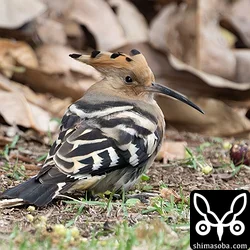
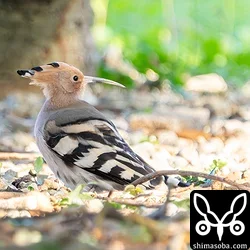
A Eurasian Hoopoe that looked a little tired — perhaps it had just arrived.

Five Ruddy Kingfishers (video)

April 8, 2024

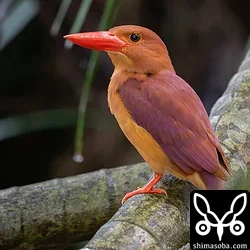
Into April, Ruddy Kingfisher numbers on Ishigaki have been building and their calls can be heard from all directions. The rain had cleared, so from around 3 p.m. I headed out with the family to look for them. We found five in a short time, including birds that were already paired up.

The closest individual let us observe it from just five metres away — close enough for the kids to get a really good look. ^^

A Ruddy Kingfisher observed at just five metres away. The spot seemed to be its regular feeding ground.

Ruddy Kingfisher Arrives, Common Hoopoe Staying, Ryukyu Flycatcher Active

April 2, 2024

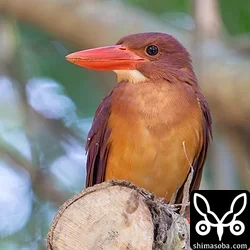
The Ruddy Kingfisher that briefly appeared on Ishigaki in mid-February had been silent for over a month afterwards. From around the end of March calls suddenly increased, and on the 29th I could hear one from home. On the 31st I got a sighting, and on 1 April I managed a photograph. Exactly the same pattern as every year. May and June are the best time to see and photograph Ruddy Kingfishers here.

It's a bumper year for Common Hoopoe, and a third wave has arrived — six individuals were recorded across the island on this day.

Ryukyu Flycatchers are singing actively, and I keep coming across pairs moving around together.

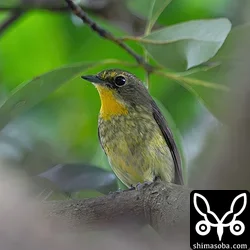
A male Ryukyu Kingfisher. It looked a little tired, as though it had just arrived on migration.

Kentish Plover, Whiskered Tern, Eurasian Spoonbill and Others

April 2, 2024

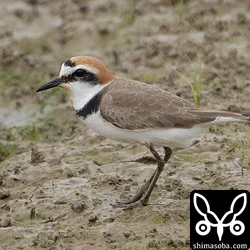
A Kentish Plover turned up that looks slightly different from the birds that breed on Ishigaki. I haven't paid much serious attention to Kentish Plovers before, but this individual stood out.

First Whiskered Terns of the season confirmed — two birds quartering over the rice paddies. A juvenile Eurasian Spoonbill is also still present; it's an individual with a noticeably pale bill. Wood Sandpiper and Black-winged Stilt numbers are up, though the peak for waders in the paddies hasn't really arrived yet this season. Little Ringed Plover and Long-toed Stint are also gradually increasing.

Isabeline Shrikes are thinning out as they head to breeding grounds. The pair of overwintering Peregrine Falcons is still here. The one-eyed Crested Serpent Eagle near my home is somehow hanging on. Ishigaki Tit appears to be busy with nesting.

Male Kentish Plover in breeding plumage. Beautiful. The breeding population in Okinawa is considerably paler.

Nothing but Common Snipe

March 28, 2024

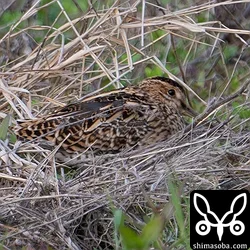
I recorded Pin-tailed Snipe and Swinhoe's Snipe for the first time this season back in February, but since then I haven't been able to find either species at all — Common Snipe numbers just keep climbing. I expect both Pin-tailed and Swinhoe's Snipe to increase from mid-April, but until I actually see them I can't stop worrying….

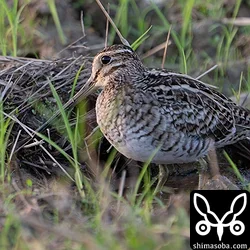
A Common Snipe hunched down on a paddy bund. Looks exhausted.

Garganey — herald of spring — and a lone Taiga Bean Goose

March 26, 2024

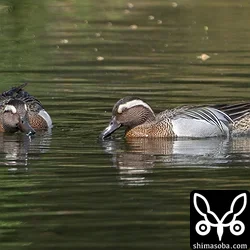
When it comes to spring ducks on Ishigaki, Garganey is the one. Two males were resting on a small settling pond. A Taiga Bean Goose arrived on its own — presumably a northbound bird. There were reports of nearly 100 geese passing over the island; this individual may be a straggler from that flock.

The overwintering Tufted Ducks are coming into breeding plumage. One female Northern Pintail — for some reason just the one — is moving around with a flock of Eastern Spot-billed Ducks. She seems to have missed her window to migrate.

Two male Garganey. Their beautiful breeding plumage gives a real sense of spring.

Common Hoopoe, Malayan Night Heron, Pacific Swift, Red-throated Pipit and more (video)

March 21, 2024

The second wave of Common Hoopoes seems to be winding down. Somewhere between 40 and 50 Common Hoopoes have arrived on Ishigaki this season. While searching for them I came across several Malayan Night Herons whose nuptial colouring has deepened noticeably.

Red-throated Pipit and Siberian Pipit numbers are fluctuating wildly — flocks seem to be passing through one after another. The season's first Pacific Swift and Temminck's Stint also appeared. Little Ringed Plovers are fully in summer plumage and moving through. There was a beautiful male Common Ringed Plover in summer plumage too, but I missed the shot… ^^;

For snipe it's all Common Snipe. The Pin-tailed Snipe I found on 20 February and the Swinhoe's Snipe on 21 February remain the only records, with nothing since.

A Eurasian Hoopoe looking tired, apparently just arrived on migration.

Four Common Hoopoes, possible Naumann's × Redwing hybrid, Red-billed Starling, Arctic Warbler and more (video)

March 15, 2024

During a work break I counted four Common Hoopoes. Others were being seen elsewhere on the island — there were apparently at least seven birds present that day.

There was an odd thrush that looked like a Naumann's Thrush. The pattern on the breast and flanks wasn't quite right for Naumann's Thrush, and the bird gave an overall impression of Redwing. It seems quite likely to be a Naumann's Thrush × Redwing hybrid.

Eyebrowed Thrush, Brown-headed Thrush and Pale Thrush were all feeding on Machilus berries, but they disappeared into the branches and I couldn't get any photos.

The Arctic Warblers that have been wintering on Ishigaki are thinning out as the weather warms — they appear to be moving steadily northward. The individual that had been wintering around my house has quietly vanished.

A Eurasian Hoopoe that has been staying for over a week. It's unusual for one to linger that long on spring passage.

Common Hoopoes every day, Chinese Blackbird still present, White Wagtails of the leucopsis subspecies everywhere

March 9, 2024

The Common Hoopoes on Ishigaki are rivalling the banner year of 2015 in numbers. In 2019, when I was posted to Okinawa main island, an exceptionally large influx of Common Hoopoes arrived as well. This year too, I'm guaranteed to encounter Common Hoopoes somewhere every single day. Every bird is remarkably tame and easy to watch. On this day they were confirmed across the southern, western and northern parts of Ishigaki.

Two Chinese Blackbirds are still present. These individuals are also quite unwary, making for relaxed photography. ^^ I've now found their feeding spot, so they should be even easier to see from here on.

I recorded Black-winged Kite in the northern part of Ishigaki for the first time. Breeding behaviour was first confirmed on the island in 2016, fledglings left the nest in 2017, and in the roughly seven years since, the species has spread across the entire island. There's a real possibility it could expand further to Miyako-jima and Okinawa main island in the future.

White Wagtails of the leucopsis subspecies are present in flocks of up to 50, and almost every White Wagtail I see anywhere on the island is of this subspecies — finding a nominate-type bird is the harder task. Good numbers of returning Red-throated Pipits are also arriving. Little Ringed Plovers are foraging alongside them.

I didn't bother photographing them, but White-shouldered Starling, Red-billed Starling, Common Starling and Eastern Yellow Wagtail are also around.

Five groups of birding acquaintances from the mainland are visiting the island this month — if things continue like this, they're in for a great trip. ^^

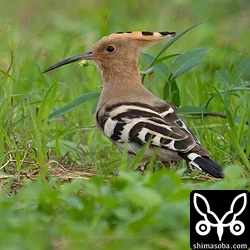
A Eurasian Hoopoe spotted in the grass. As usual, it was feeding on cockroaches.
More Common Hoopoes, and a first island record Snow Goose (video)

March 7, 2024

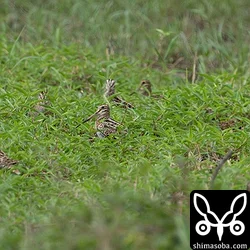
As on the previous day, Common Hoopoes were turning up all over the place — six birds at five sites over two days. I was only making brief detours while travelling for work, so there are likely quite a few more on the island than I've been finding.

I have no photos, but two Snow Geese appeared — a first record not just for Ishigaki but for all of Okinawa Prefecture. They were still being seen just before sunset, so I'm hoping they're still on the island. Getting a re-find and some photos is the goal. ^^

I also caught up with Dusky Thrush — numbers had been exceptionally low this season. Naumann's Thrush was noted at three sites, but the birds were either too wary, the conditions too poor, or I simply ran out of time during work, so I got no photos.

Daurian Redstarts on the move appear to be coming through, and I'm encountering them more frequently.

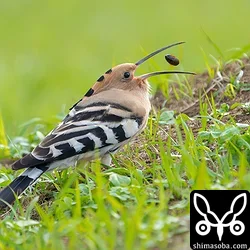
A Eurasian Hoopoe picks up a cockroach and flicks it straight into its bill. The usual way it eats.

Common Hoopoe and Chinese Blackbird arrive; Crested Serpent Eagle active

March 5, 2024

I was up in the northern part of Ishigaki for work, so I took the chance to do a bit of birding. I had a feeling Common Hoopoe and Chinese Blackbird might have arrived, so I made a short detour — and found them straight away. Two Common Hoopoes at two sites, and one Chinese Blackbird. Common Hoopoes are being seen in good numbers on Okinawa main island, Miyako-jima and Iriomote as well; this could be a bumper year.

Also present were Arctic Warbler, Kamchatka Leaf Warbler, Daurian Redstart and Mugimaki Flycatcher. White Wagtail numbers are up, but almost all of them are the leucopsis subspecies — the largest flock was close to 30 birds. In a typical year the leucopsis birds arrive first, followed by the nominate subspecies a while later.

In the paddies, Crested Serpent Eagle — both juvenile and adult — and Malayan Night Heron are being encountered frequently.

Four Spotted Redshanks dropped out of the sky into a rice field. They came in from the direction of the sea, so they may be the birds that were recorded on Iriomote a few days ago.

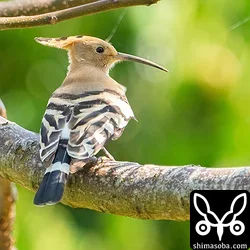
Eurasian Hoopoe resting on a branch. It ended up settling in and staying put just like that.

Crested Serpent Eagle juvenile, Malayan Night Heron, Pin-tailed Snipe, Northern Lapwing and more

March 1, 2024

The one Crested Serpent Eagle juvenile that's been reliably viewable was at it again today — foraging at its own pace in the rice fields, walking the bunds and catching what looked like small insects.

Malayan Night Heron adults are turning up more often. This day I had three adults and one juvenile.

The Pin-tailed Snipe is still present. The same paddy field held nearly 30 Common Snipe — presumably spring migrants passing through. New arrivals of Common Redshank, Common Greenshank and Wood Sandpiper were also noted. Migration is picking up pace.

The season's first Northern Lapwing and Grey-headed Lapwing have also arrived.

A completely fearless Crested Serpent Eagle, juvenile.

雑種ガモ

Feb. 28, 2024

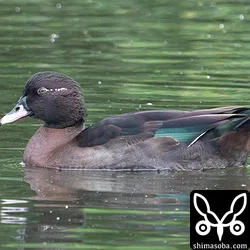
A hybrid duck. I have no idea what's going on… ^^;

Arctic Warbler and three snipe species (video)

Feb. 24, 2024

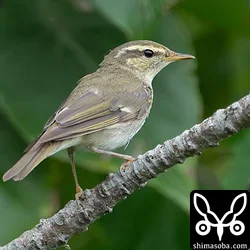
Arctic Warbler numbers are lower than in the bumper year two years ago, but a reasonable number are still wintering here. Lately I've also been hearing Kamchatka Leaf Warbler calls — possibly birds already on the move.

For snipe, all three species have shown up earlier than usual: Pin-tailed Snipe, Swinhoe's Snipe and Common Snipe together at the same time.

An overwintering Lesser Whitethroat appeared right in front of me. I've confirmed the ID by call, but I also think I can make out the classic Lesser Whitethroat feature of P10 being shorter than the primary coverts. ^^;

Pin-tailed Snipe, Swinhoe's Snipe, Javan Pond Heron and more (video)

Feb. 22, 2024

After finding the season's first Pin-tailed Snipe the day before , I went back after work to try for shots of the tail feathers. You want the first record of the season to be done properly. While I was there I also picked up the season's first Swinhoe's Snipe — more than a month earlier than usual. Spring migration this year is behaving strangely.

Two Javan Pond Herons are continuing to winter here. Every year I hope they'll stay long enough to come into breeding plumage, but in most years they depart during February. We'll see how this season goes.

I'll be holding the "2nd Ishigaki Snipe Camp" sometime in early to mid-April. A report from the 1st is here → Day 1 , Day 2 , Extra edition .

First-winter Pin-tailed Snipe. Same individual as the previous day.

First Pin-tailed Snipe of the Season

Feb. 21, 2024

I recorded the first Pin-tailed Snipe of the season. In a normal year they don't arrive until April, so this is more than a month early. This season a Ruddy Kingfisher had already reached Ishigaki Island as well, and I get the impression the seasons are running ahead of schedule.

Update, 22 February

It is a typical Pin-tailed Snipe, but since it was the first of the season I went back the next day just to be safe and photographed the tail feathers. That settles it with a certificate of authenticity. ^^

The first Pin-tailed Snipe of the season. An easy-to-read individual. It did not move at all from the grass, then when a Black-winged Kite appeared it hid completely in the undergrowth.

Active Ryukyu Flycatchers, Crested Serpent Eagle, and a Long-Absent Black Kite

Feb. 20, 2024

Warm days have continued, and I can now hear Ryukyu Flycatchers singing as I drive the forest roads. Common Emerald Doves are calling too. I also confirmed a Ruddy Kingfisher calling from my house — earlier than usual, possibly due to the mild winter.

Crested Serpent Eagles are in the early stages of the breeding season; wherever I go — rice paddies, sugarcane fields, forest roads — I find them in pairs.

Eastern Yellow Wagtails look set to finish the season without ever reaching their peak wintering numbers. Could this also be a mild-winter effect, with fewer flocks moving south from the continent?

Ryukyu Flycatcher heading into second-summer plumage.

Olive-backed Pipit, White Wagtail, Red-throated Pipit, and Others

Feb. 10, 2024

Olive-backed Pipits have been wintering at several sites since last year, but they are hard to photograph. This day I found them by call — six birds had come down onto a lawn. Among the many small birds that dart around constantly, the Olive-backed Pipit's unhurried movements are a real pleasure to watch.

Nearby was a Dusky Thrush. This winter Dusky Thrushes, Pale Thrushes, and Brown-headed Thrushes have all been very scarce. Driving the forest roads I can hear them calling from the undergrowth, but almost none are coming out onto farmland. Some winters are full of Naumann's Thrushes, but there seems to be a year-to-year cycle driven by something or other.

In the rice paddies, flocks of several dozen Eastern Yellow Wagtails and Red-throated Pipits. Among a group of around fifteen White Wagtails there was also a leucopsis White Wagtail. This season leucopsis birds are scarce and ocularis birds are plentiful.

Temminck's Stints, Common Greenshanks, Wood Sandpipers, and Little Ringed Plovers are also present here and there.

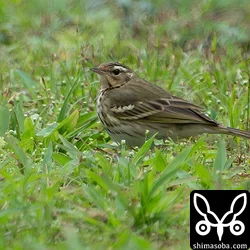
A Tree Pipit I finally managed to photograph. There are several around my house, but they are so wary I haven't been able to get a shot.