A daily record.
Featuring photos of wild birds and nature, mainly from Okinawa Main Island and Ishigaki Island

Pectoral Sandpiper, Red Collared Dove, Black-winged Kite and others

Sept. 25, 2023

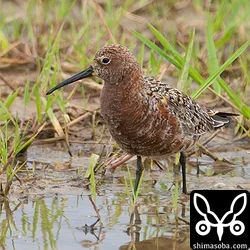
Two juvenile Pectoral Sandpipers arrived — beautiful birds in crisp fresh plumage. While I was watching them, a Black-winged Kite showed up earlier than usual. It didn't hunt and disappeared quickly. ^^;

The first Red Collared Doves of the season — three birds — arrived, but they seemed on edge because of the raptor and were hard to observe.

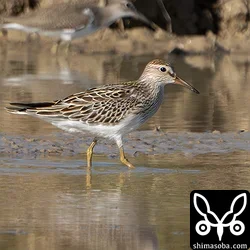
A juvenile Buff-breasted Sandpiper.

Asian Dowitcher arrives, first Ruff of the season, more Broad-billed Sandpipers (video)

Sept. 15, 2023

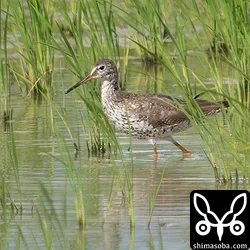
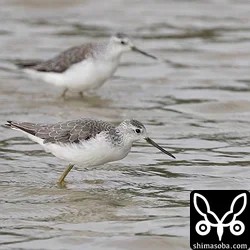
A juvenile Asian Dowitcher has arrived. It is moving around the paddies together with Common Greenshank and Black-winged Stilt.

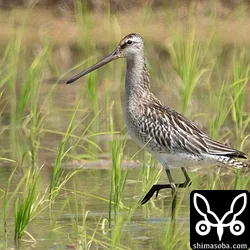
Broad-billed Sandpipers are turning up in paddies across the area — four birds in three locations. All juveniles, naturally. I'd love to see an adult one of these days….

Multiple Ruffs have also arrived. Temminck's Stint numbers are slowly building too.

The first juvenile Eurasian Whimbrel of the season was also confirmed. The paddies are getting livelier with each passing week of autumn.

Long-billed Dowitcher, juvenile. It startled every time a farmer's light truck passed.

1st Ishigaki Snipe Camp — Sideshow

Sept. 2, 2023

In this sideshow from the 1st Ishigaki Snipe Camp, I introduce the birds encountered during two days of snipe hunting.

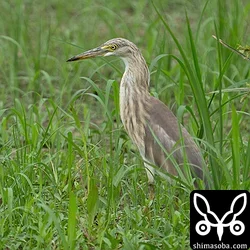
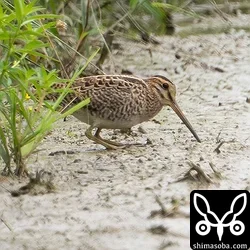
A Javan Pond Heron was found — the fourth individual on Ishigaki this season. First juvenile Common Greenshank, Green Sandpiper, and Red-necked Stint of the season were confirmed. An adult Sharp-tailed Sandpiper was seen for the first time this season. A Greater Painted-snipe family with small chicks was encountered.

Please also see the day 1 and day 2 reports.

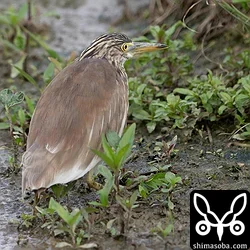
A Javan Pond-Heron that stayed for several days.

Pin-tailed Snipe, first Marsh Sandpiper and Green Sandpiper of the season, and more (video)

Aug. 9, 2023

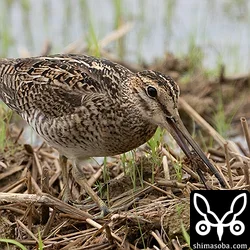
Still stalking Pin-tailed Snipe the day after, trying to get shots of the tail feathers. And then — incredibly!! — I managed to get video with the call of a Pin-tailed Snipe!! It's shaping up to be another wonderful autumn migration season!!

I recorded my first Marsh Sandpiper and Green Sandpiper of the season. Common Redshank and Whiskered Tern had also arrived.

An extremely close Pin-tailed Snipe. Preying on a cricket.

Oriental Pratincole and Kentish Plover breeding, Little Tern breeding, first juvenile Common Redshank of the season (video)

Aug. 2, 2023

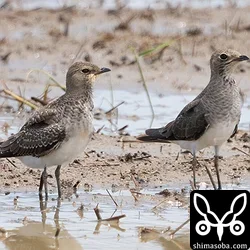
Oriental Pratincole and Kentish Plover are breeding well, with many fledged chicks on view. The Oriental Pratincoles in particular have formed a flock of nearly 60 juveniles. At the reclaimed land site, chicks from several Kentish Plover pairs have fledged and are running around energetically.

The Little Terns, which share the same site as the Kentish Plovers in a colony, had their nests flooded by heavy rain brought by the typhoon. Some eggs that had been submerged for several hours did hatch, but their prognosis looks poor.

In the rice paddies, juvenile Common Redshank arrived for the first time this season. Every year, Common Redshank is the first shorebird species to arrive as a juvenile.

Migrating waders and plovers are gradually increasing. Wood Sandpiper, Long-toed Stint and Grey-tailed Tattler have arrived in the paddies. On the coast, Greater Sand Plover, Siberian Sand Plover and Grey-tailed Tattler numbers are building.

Oriental Pratincole in juvenile plumage (left) and first-winter plumage.

Autumn shorebird migration; Black-naped Tern chick-rearing

July 22, 2023

Once mid-July passes, the autumn migration of waders and plovers really picks up. As usual, Wood Sandpiper and Long-toed Stint lead the way. Then Common Greenshank, Grey-tailed Tattler and Greater Sand Plover start pouring in one after another.

Meanwhile, Black-naped Tern and Little Tern are right in the middle of raising their chicks. This season I have seen no sign of Roseate Tern breeding. I can only hope numbers improve going forward….

Common Redshank, first-summer plumage.

Ruddy Kingfisher, Ryukyu Scops Owl, Northern Boobook — All Incubating

June 7, 2023

Ruddy Kingfishers, Ryukyu Scops Owls, and Northern Boobooks are all incubating everywhere. Typhoon No. 2 appears to have had no effect. Hoping things continue to go smoothly.

There was still a Eurasian Coot on the island. Individuals have occasionally summered here due to injury, but this one looks healthy. Is it really okay not to migrate?

The paddies have little in them besides Black-winged Stilts, but among them I spotted a Common Greenshank that looked unwell. Its bill appeared to be partially missing.

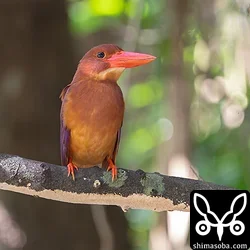
A Ruddy Kingfisher with absolutely no wariness at all.

Latest Spring Record for Pin-tailed Snipe

May 30, 2023

I found a Pin-tailed Snipe that is the latest spring migration record I've had. In just three more months the autumn migration of Pin-tailed Snipe will be starting… With Typhoon No. 2 approaching Ishigaki, there's a good chance it will stay into June. Something to look forward to.

Shorebird migration is nearly over, but a small group of Black-winged Stilts and Common Greenshanks has arrived.

An out-of-season Pin-tailed Snipe. Almost fully in summer plumage.

Four Curlew Sandpipers, a pair of Greater Painted-snipe, Broad-billed Sandpiper, Little Stint and others

April 29, 2023

The shorebird passage seems to be reaching its peak and the rice fields are extremely busy. Greater Painted-snipe — the only snipe that breeds on Ishigaki — are active as a couple.

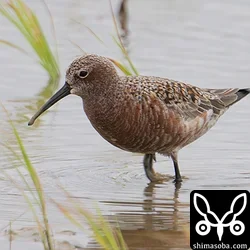
Four Curlew Sandpipers in various stages of moult from summer to winter plumage are present. Also here: the third Little Stint of the season, three Broad-billed Sandpipers, the season's first Temminck's Stint, along with Red-necked Stint, Long-toed Stint, Sharp-tailed Sandpiper, Black-winged Stilt, Marsh Sandpiper, Common Greenshank, Common Sandpiper, and Pacific Golden Plover — all in one area.

Curlew Sandpiper in breeding plumage. Beautiful frosted patterning.

Shorebird migration in full swing — Curlew Sandpiper, Little Stint, Pin-tailed Snipe, Swinhoe's Snipe, Black-tailed Godwit and others

April 26, 2023

Turnover among shorebirds in the fields and along the coast has intensified.

In the rice fields, Curlew Sandpipers in beautiful summer plumage were mixed in with a flock of Sharp-tailed Sandpipers. A Little Stint also in summer plumage has arrived, and nine Black-tailed Godwits have come in, adding to the activity.

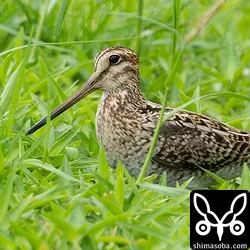
Pin-tailed Snipe, Swinhoe's Snipe, and Common Snipe are staying on, including some long-term individuals.

Common Redshank, Common Greenshank, and Marsh Sandpiper are beginning to show noticeably contrasting summer plumage.

Along the coast, large numbers of Siberian Sand Plover, Greater Sand Plover, Grey-tailed Tattler, Ruddy Turnstone, Red-necked Stint, and Eurasian Whimbrel have been arriving.

A Curlew Sandpiper flushed red.

Chinese Pond Heron, Common Redshank, Common Greenshank and others

March 4, 2023

A few Chinese Pond Herons are wintering on Ishigaki Island. One individual is particularly unwary and has been useful for individual identification — it doesn't flee at all, which is almost worrying.

Common Redshank, Common Greenshank and Temminck's Stint are all wintering birds. Little Ringed Plovers have suddenly increased in number; I've confirmed several flocks of around 20 birds. Spring migration is under way.

A Chinese Pond Heron so tame it looked like it could perch on your hand. Winter plumage, but just a little summer plumage is starting to come in.

Last birds of 2022

Dec. 29, 2022

At year-end, having coughed up blood to get all my copy filed before the end of the year, I squeezed in a short final birdwatch for 2022.

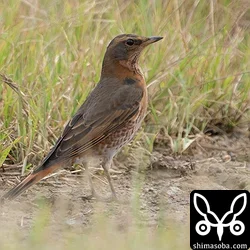
Entering December, Dusky Thrushes, Brown-headed Thrushes, and Pale Thrushes had increased sharply. Most of the Dusky Thrushes were Naumann's Thrushes, and the variation in plumage tones makes comparing them a pleasure in itself. Brown-headed and Pale Thrushes have also relaxed since shortly after arrival and are easier to observe.

Manchurian Bush Warblers and Dusky Warblers were calling from patches of scrub here and there, though slightly fewer than last year.

Daurian Redstart, Amur Stonechat, Red-throated Pipit, and Eastern Yellow Wagtail are also wintering.

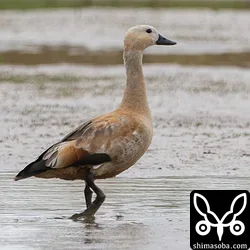
In addition to the three Ruddy Shelduck already present, four Common Shelduck also arrived. Tundra Swans, Common Cranes, and Eurasian Spoonbills continue to stay on.

Among the ducks, Northern Shoveler were the most numerous, followed by Eurasian Wigeon, Eurasian Teal, and Tufted Duck. Ferruginous Duck has not been confirmed this season.

Large numbers of Common Snipe are wintering; among roughly 200 counted across multiple paddies, there was one Swinhoe's Snipe.

Crested Serpent Eagles — both immatures and adults — have become easier to see. Road casualties will increase from here on, so care is needed when driving on Ishigaki Island and Iriomote Island.

The most vividly coloured Naumann's Thrush of the day. An adult.
Two Pied Avocets, Common Crane, Eurasian Spoonbill and others

Dec. 14, 2022

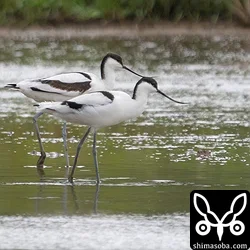
Two Pied Avocets have arrived. They may be individuals already wandering around the island — four more Pied Avocets have also been confirmed elsewhere.

The Common Crane is also in wintering mode. At first it was extremely wary, but now not at all. ^^

A Eurasian Spoonbill is also staying on — a friendly individual. Wintering waders are showing up as well.

Pied Avocets foraging together. The bird in the background is in first-winter plumage; the one in the foreground is an adult in winter plumage.

Third Ruddy Shelduck of the season, long-staying Greylag Goose, summer-plumage Siberian Sand Plover (video)

Nov. 25, 2022

Following the previous two adults, a juvenile Ruddy Shelduck has now arrived. The adults were extremely wary, but this juvenile showed almost no wariness — perhaps a sign of its youth — and was easy to observe.

The Greylag Goose has been staying a long time; it looks like it may well winter over. Taiga Bean Goose, Greater White-fronted Goose, Lesser White-fronted Goose, and Common Crane are also still present.

On the coast, small numbers of Siberian Sand Plovers, Kentish Plovers, Pacific Golden Plovers, Ruddy Turnstones, Common Greenshanks, and Dunlins are staying on. In the paddies, Spotted Redshanks, Black-winged Stilts, Wood Sandpipers, Long-toed Stints, Sharp-tailed Sandpipers, and Common Snipe are conspicuous. Whiskered Terns — both adults and juveniles — are also still present.

This season, the starling family is represented by several species but numbers are low.

Dusky Thrushes, Pale Thrushes, Brown-headed Thrushes, and Eyebrowed Thrushes have started arriving.

The third Ruddy Shelduck of the season was a juvenile — in the process of moulting from juvenile plumage into first breeding plumage.

Tundra Swan Arrives; Chinese Pond Heron Overwintering

Nov. 8, 2022

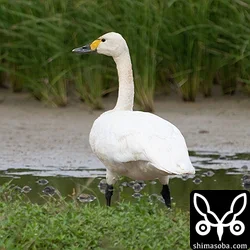
A Tundra Swan arrived for the first time in about two years. Last time it stayed until spring — I wonder how long this one will stick around. It shows almost no wariness, so it would be great if it settles in for a long stay.

Crested Serpent Eagles are becoming more active ahead of the breeding season. I've been hearing them calling back and forth and often seeing them soaring over their territories.

Chinese Pond Herons are overwintering at several locations. Once they step into the grass they blend right in and become very hard to spot.

Eurasian Coots increased sharply after November began. Two years ago they were frequently attacked by Upland Buzzard. This season an Eastern Marsh Harrier, Hen Harrier, and Peregrine Falcon are all present, so it looks like it will be a tense winter for the coots.

For waders, Common Greenshank, Marsh Sandpiper, Black-winged Stilt, Long-toed Stint, Common Snipe, and Wood Sandpiper are all staying on.

I recorded my first Gadwall of the season. Tufted Duck and Eurasian Wigeon numbers are also building up at the dam.

Tundra Swan for the first time in two years. It doesn't seem particularly wary.

Western Sandpiper, Broad-billed Sandpiper, Red-necked Stint and Others (video)

Oct. 4, 2022

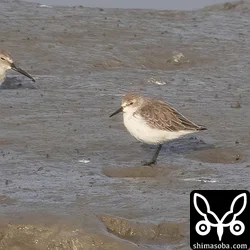
I went to Nagoya for a post-operative check-up after cervical spine surgery and did some birding while I was there. After three years of trying, I finally got to see Western Sandpiper. I also observed Broad-billed Sandpiper, Great Knot, and Red-necked Stint.

Along with the Western Sandpiper, Baikal Teal and Japanese Wagtail were lifers for me.

The Little Stint was at first sitting and resting in a hollow, but there was something about it that felt slightly off. ^^ Still, once it mixes into a flock of Red-necked Stints it gets difficult.

アカエリヒレアシシギ、ハリオシギ、エリマキシギなど

Sept. 16, 2022

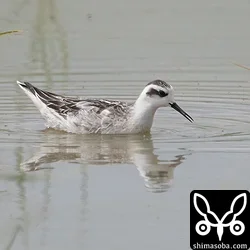
アカエリヒレアシシギが飛来。今季2個体目。エリマキシギは複数個所で複数羽が到着。ハリオシギは数を減らしつつも滞在中。

It was in a paddy field near the airport in an area where Red-necked Phalaropes often turn up. They apparently visit the stadium frequently too — perhaps they are easily attracted to lights.

ツメナガセキレイ幼鳥、ツバメチドリ、アオアシシギ幼鳥など

Aug. 27, 2022

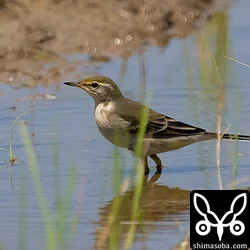
ツメナガセキレイはかなり数を増やしています。そんな中、今季初の幼鳥を確認しました。アオアシシギも今季初の幼鳥が飛来していました。

ツバメチドリもぱらぱらとやってきていますが、まだまだ数は少ないですね。

A juvenile (Yellow-browed) Citrine Wagtail — the first of the season.