A daily record.
Featuring photos of wild birds and nature, mainly from Okinawa Main Island and Ishigaki Island

Pied Avocet, Crested Serpent Eagle and more

Dec. 13, 2024

Three Pied Avocets have been staying for several days. Single birds have also been found elsewhere, so they may have dispersed from the flock of eleven that arrived in November.

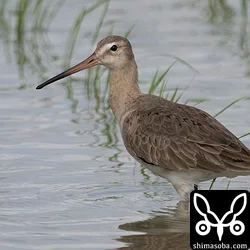
The first Black-tailed Godwit of the season has turned up. Also wintering in the paddies: Common Greenshanks, Common Sandpipers, Green Sandpipers, Dunlins, Common Snipes, Black-winged Stilts, Common Redshanks and Wood Sandpipers.

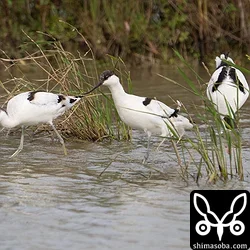
Three Pied Avocets delighting visitors to the island.

White-winged Tern, Garganey, Arctic Warbler, Ruff Arrive

Oct. 5, 2024

Autumn is well and truly here — White-winged Terns, Garganey, Ruffs and Arctic Warblers are all building up steadily and the paddies are getting lively. Snipe numbers have also jumped sharply: 40 Common Snipe against 2 Swinhoe's Snipe. I couldn't find any Pin-tailed Snipe.

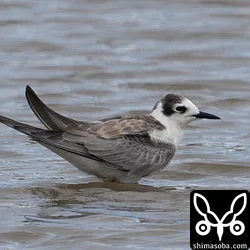
White-winged Tern, juvenile. The third bird this season.

Snipe Numbers Dropping

Sept. 19, 2024

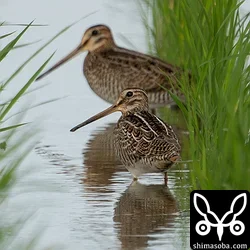
The snipe that built up from late August are thinning out now. At peak times there were nearly 40 in a single paddy field; now there are just a handful. I managed to find one Pin-tailed Snipe. Common Snipe hadn't increased much, but I'd expect the majority to be Common Snipe once October comes.

Pin-tailed Snipe, juvenile. Swinhoe's Snipe, juvenile, in the background.

Two Broad-billed Sandpipers, Marsh Sandpiper, Red-necked Stint

Sept. 5, 2024

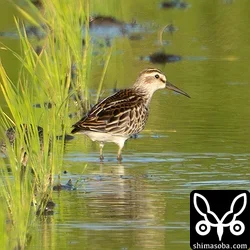
I have been watching snipe every day, but in between I also had two Broad-billed Sandpipers. Marsh Sandpiper, Common Greenshank, Red-necked Stint, Dunlin, Black-winged Stilt, Long-toed Stint, and Wood Sandpiper are also still present.

Two Broad-billed Sandpipers. Both were juveniles.

Juvenile Common Greenshank Arrives; Swinhoe's Snipe

Aug. 27, 2024

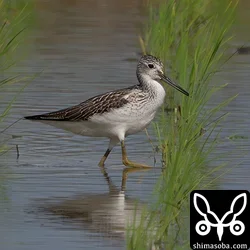
First record of a juvenile Common Greenshank this season. The remaining juvenile species still coming through include Red-necked Stint, Long-toed Stint, Dunlin, and Broad-billed Sandpiper.

Snipe are moving through steadily too. There are 20 or more in one area alone. The group seems to have settled into a regular cast, and things will probably stay that way until the second wave arrives.

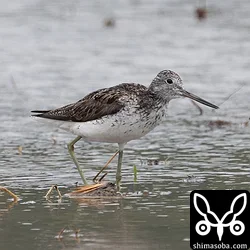
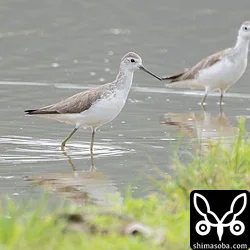
Common Greenshank, juvenile. Still in full juvenile plumage.

Marsh Sandpiper, Common Greenshank, Common Redshank, and Others

Aug. 23, 2024

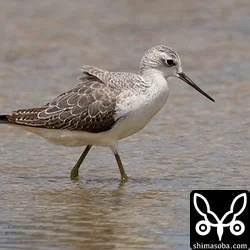
First record of a juvenile Marsh Sandpiper this season. Common Greenshank, Common Redshank, Black-winged Stilt, Wood Sandpiper, Long-toed Stint, and Red-necked Stint all appear to be passing through Ishigaki in a steady stream, with the cast turning over continuously.

The first Marsh Sandpiper juvenile of the season. Already in first-winter plumage.

Dunlin and Pacific Golden Plover arrive

Aug. 7, 2024

First Dunlin and Pacific Golden Plover of the season confirmed. The Dunlin was a single bird; the Pacific Golden Plovers were a flock of nearly ten.

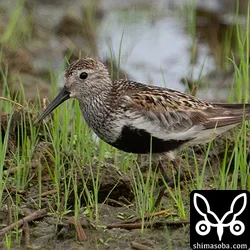
Dunlin with winter plumage beginning to show in patches.

Guiding two young birders who live on the island

Aug. 1, 2024

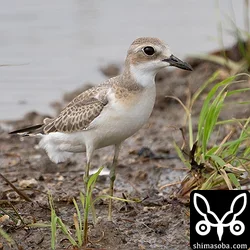
Took two apprentice birders who live on the island out for about four hours of birdwatching. We came across juvenile Greater Sand Plover and Common Redshank — first juveniles of the season for both species. Together with Kentish Plover and Little Ringed Plover, that brings the juvenile wader tally to four species for the season.

A juvenile Greater Sand Plover. It was found in a rice paddy — possibly due to the influence of the typhoon.

Waders increase after the typhoon passes

July 28, 2024

Typhoon No. 3 passed through without causing major damage, but even after it reached the western side of Taiwan the wind continued to make itself felt in the Yaeyamas.

In the rice paddies, wader numbers increased considerably — Wood Sandpipers were present in flocks of several dozen wherever I went. Common Greenshank, Common Sandpiper, Green Sandpiper, Red-necked Stint, and Long-toed Stint were all up in numbers too, making for a lively scene.

A Common Greenshank still largely in summer plumage.

Northern Boobook fledging, Ruddy Kingfisher, Cinnamon Bittern, Chinese Pond Heron, Black-naped Tern chick-rearing and more

July 14, 2024

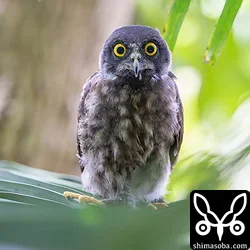
The Northern Boobooks have fledged. Pair formation was later than usual this year, so fledging was delayed too. I wonder whether one of the pair has changed.

Ruddy Kingfisher fledging is finished everywhere now, and the adults are catching their breath. The fledglings are still within their parents' territories but are catching prey on their own.

Cinnamon Bittern chick-rearing is also over, and juveniles are appearing in rice paddies here and there. Juvenile Purple Herons that have become independent are also starting to show up in the paddies. Chinese Pond Herons and Black-faced Spoonbills are arriving on autumn passage.

Waders are beginning to move through little by little. As autumn migration gets into full swing, numbers and species will keep increasing.

Terns are in the thick of chick-rearing. Black-naped Tern chicks that are roughly one to two weeks post-hatch are starting to be seen.

The last fledgling of the season for the Brown Hawk-Owl. There were still some remaining in the nest.

Third Pheasant-tailed Jacana of the season (video)

June 18, 2024

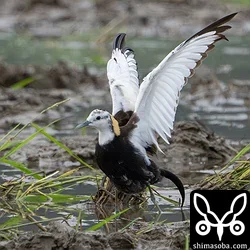
The third Pheasant-tailed Jacana of the season has arrived. Multiple individuals have been confirmed on Okinawa Island as well. This bird showed the most advanced transition to summer plumage of any I have seen so far. It is not at all wary and easy to observe.

Oriental Pratincoles and Greater Painted-snipes are also appearing in the same paddy. Cinnamon Bittern was confirmed by call only.

A Pheasant-tailed Jacana flapping its wings after bathing. It appears to be moulting into adult summer plumage.

Black Drongo, Oriental Pratincole, Black-faced Spoonbill, Eurasian Spoonbill, Chinese Pond Heron and others

May 9, 2024

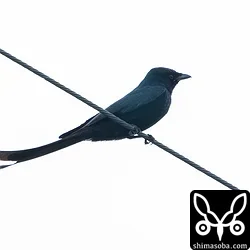
The Black Drongo that appeared near my home has been drifting slowly eastward and is now into its fourth day of stay. It is an unwary individual, always perched on the roadside wires. This season has been a bumper year for Black Drongo on Ishigaki Island — on peak days nearly 20 birds were recorded in a single day.

A small flock of Oriental Pratincoles had moved into the paddies. They were working the same area as the Whiskered Terns, but while the terns drifted low and picked insects off the rice plants, the pratincoles were up high, hawking incoming insects.

Black-faced Spoonbill, Eurasian Spoonbill and Chinese Pond Heron have also been dropping into the paddies one after another.

A Black Drongo near home, now on its fourth day of the stay.

Two Black Drongos, Red Collared Dove, Ruddy Kingfisher and others (video)

April 28, 2024

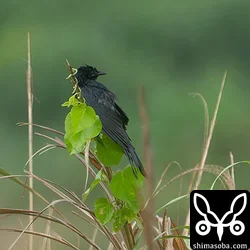
Two Black Drongos turned up at a different location from the three seen the other day. That makes six individuals this season. Birds are also appearing on Iriomote Island and Okinawa Main Island at the same time. Across the Nansei Islands, numbers seem higher than usual.

Red Collared Dove arrived as a male and female pair. After a heavy downpour, the female stopped showing, but the male was foraging on the ground.

The Ruddy Kingfisher near my home sees me so often every day that it pays me no attention at all. I also managed to get video of it singing and dancing.

A Black Drongo after a downpour. It sat motionless on a branch tip — apparently drying its feathers.

First Black-tailed Godwit, Sharp-tailed Sandpiper and Common Greenshank of the Season

April 20, 2024

First records this season of Black-tailed Godwit, Sharp-tailed Sandpiper and Striated Heron. Unless the weather turns rough, large waders like the Black-tailed Godwit don't come down to Ishigaki. Striated Heron is scarce on the island, so finding one felt like a bonus.

The Black-tailed Godwit is still very much in winter plumage.

Crested Serpent Eagle juvenile, Malayan Night Heron, Pin-tailed Snipe, Northern Lapwing and more

March 1, 2024

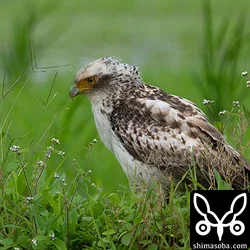
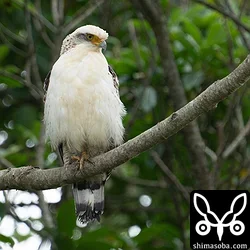
The one Crested Serpent Eagle juvenile that's been reliably viewable was at it again today — foraging at its own pace in the rice fields, walking the bunds and catching what looked like small insects.

Malayan Night Heron adults are turning up more often. This day I had three adults and one juvenile.

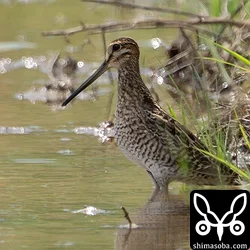
The Pin-tailed Snipe is still present. The same paddy field held nearly 30 Common Snipe — presumably spring migrants passing through. New arrivals of Common Redshank, Common Greenshank and Wood Sandpiper were also noted. Migration is picking up pace.

The season's first Northern Lapwing and Grey-headed Lapwing have also arrived.

A completely fearless Crested Serpent Eagle, juvenile.

Olive-backed Pipit, White Wagtail, Red-throated Pipit, and Others

Feb. 10, 2024

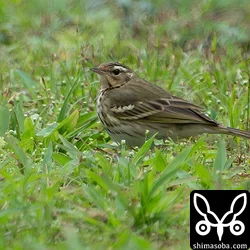
Olive-backed Pipits have been wintering at several sites since last year, but they are hard to photograph. This day I found them by call — six birds had come down onto a lawn. Among the many small birds that dart around constantly, the Olive-backed Pipit's unhurried movements are a real pleasure to watch.

Nearby was a Dusky Thrush. This winter Dusky Thrushes, Pale Thrushes, and Brown-headed Thrushes have all been very scarce. Driving the forest roads I can hear them calling from the undergrowth, but almost none are coming out onto farmland. Some winters are full of Naumann's Thrushes, but there seems to be a year-to-year cycle driven by something or other.

In the rice paddies, flocks of several dozen Eastern Yellow Wagtails and Red-throated Pipits. Among a group of around fifteen White Wagtails there was also a leucopsis White Wagtail. This season leucopsis birds are scarce and ocularis birds are plentiful.

Temminck's Stints, Common Greenshanks, Wood Sandpipers, and Little Ringed Plovers are also present here and there.

A Tree Pipit I finally managed to photograph. There are several around my house, but they are so wary I haven't been able to get a shot.
Wintering Waders

Jan. 30, 2024

Shorebirds are wintering along the coast and in the rice paddies. The most numerous are Greater Sand Plovers, Siberian Sand Plovers, and Ruddy Turnstones on the coast. Unusually for Ishigaki Island, a flock of Grey Plovers is also wintering.

Shorebird numbers in the paddies this season are low; species present include Common Greenshank, Marsh Sandpiper, Common Snipe, Wood Sandpiper, and Green Sandpiper.

Little Stint, winter plumage.

Juvenile Crested Serpent Eagle, Common Kestrel, Javan Pond Heron, Pied Avocet and others

Dec. 7, 2023

A juvenile Crested Serpent Eagle, which has been hard to find reliably this season, was out in the farmland. A Common Kestrel that has been present for several days seems to have taken a liking to the pasture and was hunting in a relaxed manner.

The Javan Pond Heron has been staying a long time, but the recent pattern is for it to leave around March, before shifting into breeding plumage.

Six Pied Avocets are staying at four sites. How long will they stick around?

Juvenile Crested Serpent Eagle. I heard its call and went looking — and there it was.

Ruff, Marsh Sandpiper, Common Redshank, and more

Oct. 6, 2023

Ruff have turned up at several sites, almost all juveniles. The regulars — Red-necked Stint, Common Greenshank, Marsh Sandpiper, Common Redshank, and Long-toed Stint — are present in paddies everywhere. Dunlin have started to appear as well.

The first Pacific Golden Plovers of the season arrived in small flocks of juveniles. Around the park and cattle sheds, Chestnut-cheeked Starling, Red-billed Starling, and White-shouldered Starling are also increasing.

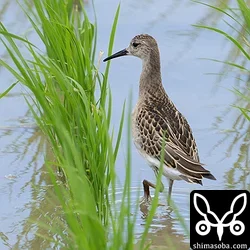
A juvenile Ruff.