A daily record.
Featuring photos of wild birds and nature, mainly from Okinawa Main Island and Ishigaki Island

7th Ishigaki Island Snipe Camp — Extras

Aug. 24, 2026
This is the extras edition of the 7th Ishigaki Island Snipe Camp. Since we had already observed both adult and juvenile Pin-tailed Snipe and Swinhoe's Snipe to a reasonable degree on the first day, the second day was spent observing a wider variety of species beyond snipe. This post covers those sightings, including observations from day one.

Please also see the main report from the Ishigaki Island Snipe Camp.

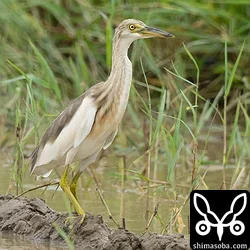
Three Javan Pond Herons confirmed during the Ishigaki Island snipe camp.
Spring migration picks up pace

March 11, 2026

Spring migration on Ishigaki Island has been building gradually since February, and by March it has grown noticeably more active. The variety of waders is increasing first of all. Brown Shrikes and White-cheeked Starlings that spent the winter on the island are beginning to move north.

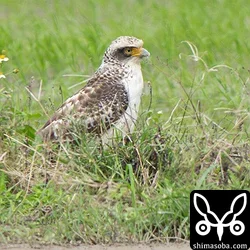
Some individual Crested Serpent Eagle juveniles are well along in their moult.

A juvenile Crested Serpent Eagle. It is within the territory of an adult pair and gets chased off every time it is spotted, yet it stubbornly stays put.

Taiga Bean Goose Arrives; Out-of-season Sharp-tailed Sandpiper and Others

Nov. 27, 2025

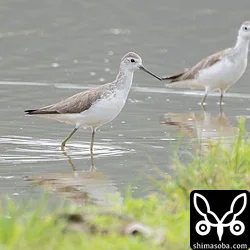
A Taiga Bean Goose that had been reported a little while back was resting in the paddies. Waders present included Pied Avocets, Black-winged Stilts, Long-toed Stints, Wood Sandpipers, Common Redshanks, Common Greenshanks, Marsh Sandpipers and Common Snipe. An out-of-season Sharp-tailed Sandpiper was also there on its own. Temminck's Stints have been numerous this season — I confirmed several birds.

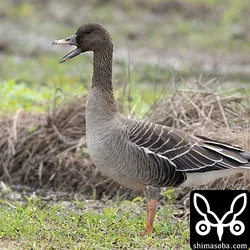
Bean Geese had been seen in multiple individuals, but on this day there was only one.

5th Ishigaki-jima Snipe Camp!!

Sept. 28, 2025

We held the Ishigaki-jima Snipe Camp again this season — five years running, thanks to everyone who has taken part. This time there was one participant. We met at 9 a.m. and spent the day watching snipe until around 4 p.m.

Because we held it about a month later than usual, Pin-tailed Snipe numbers were low — only 2 individuals out of several dozen snipe seen. Swinhoe's Snipe were the most numerous and are at peak, so almost all were juveniles. Common Snipe juveniles are now arriving to join the adults, and numbers should peak soon.

Please also have a look at past Ishigaki-jima Snipe Camps. The next one is planned for spring next year. Come and sharpen your skills at separating Pin-tailed Snipe from Swinhoe's Snipe. ^^

First Grey-tailed Tattler juvenile of the season, Great Knot, and Temminck's Stint juvenile were all seen. Common Greenshank juveniles are increasing. While watching the snipe, a Ruddy-breasted Crake appeared — the first in a while.

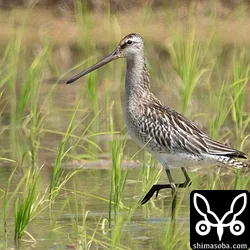
A Pin-tailed Snipe finally squeezed out after scanning through dozens of snipe.

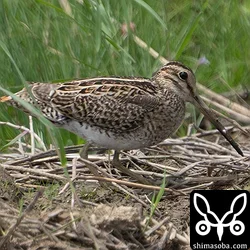
While watching a group of around ten Swinhoe's Snipes, a snipe appeared in the grass. It was a typical Pin-tailed Snipe juvenile, so I followed it with binoculars hoping to get a look at the tail feathers — and it bathed rather sooner than I expected. ^^

Pin-tailed Snipe, Swinhoe's Snipe, and Others (with video)

Sept. 17, 2025

The day before, I had found only one Pin-tailed Snipe on my usual paddy rounds, but numbers were up today. It doesn't feel like a second wave — more likely they were simply hiding in the grass and I missed them.

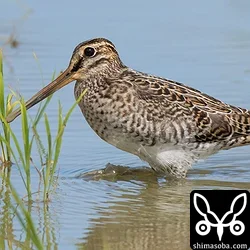
Pin-tailed Snipe juvenile.

Migrants Grounded by Bad Weather

April 4, 2025

Two consecutive days of bad weather brought large numbers of shorebirds and plovers — apparently mid-migration — dropping in to localized spots. The biggest group was Black-winged Stilts, over 400 birds, followed by Wood Sandpipers at 200+. There were too many to keep counting, so I stopped midway. ^^;

Pied Avocet, Black-tailed Godwit, Marsh Sandpiper, Curlew Sandpiper, Sharp-tailed Sandpiper, and Garganey also arrived, making the paddies extremely lively — though two days later everything was back to normal. ^^;

Along the coast, Greater Sand Plover numbers increased, and a small number of Grey Plovers also came through.

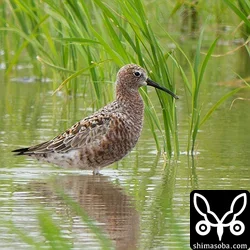
Two Curlew Sandpipers confirmed.

Wintering Japanese Bush Warbler, Chinese Pond Heron, Spring Temminck's Stints

March 15, 2025

Among the wintering warblers, Manchurian Bush Warblers can no longer be found, while more and more Japanese Bush Warblers are beginning to practise their song.

The Chinese Pond Heron that has been here since last autumn is still in its winter plumage as before. In the same paddy, a few Temminck's Stints arrived on spring passage. Common Snipe from the overwintering population were scattered, apparently disrupted by rice-planting and other farm work.

A Japanese Bush Warbler showing off its call notes and singing practice.

White's Thrush, Pied Avocet, and others

Jan. 22, 2025

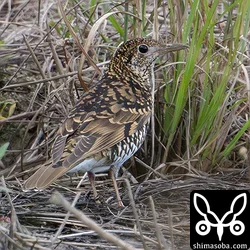
White's Thrush has been turning up frequently this season. They're quite wary, so this was the first individual I managed to photograph. Pale Thrush and Brown-headed Thrush are also present on Ishigaki Island at the moment, but Dusky Thrush has been almost nowhere to be seen.

The Pied Avocet has been staying a long time. Temminck's Stint, Little Ringed Plover, Long-toed Stint, and Wood Sandpiper have all increased slightly in number. Spring migration may be getting underway soon.

A White's Thrush in the rice fields. It is noticeably larger than Pale and Brown Thrushes, and the bold patterning adds to its presence.

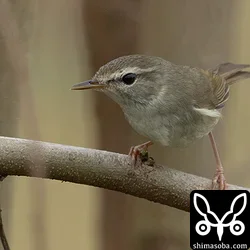
White-winged Tern, Garganey, Arctic Warbler, Ruff Arrive

Oct. 5, 2024

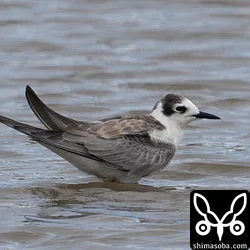
Autumn is well and truly here — White-winged Terns, Garganey, Ruffs and Arctic Warblers are all building up steadily and the paddies are getting lively. Snipe numbers have also jumped sharply: 40 Common Snipe against 2 Swinhoe's Snipe. I couldn't find any Pin-tailed Snipe.

White-winged Tern, juvenile. The third bird this season.

Common Hoopoe, Malayan Night Heron, Pacific Swift, Red-throated Pipit and more (video)

March 21, 2024

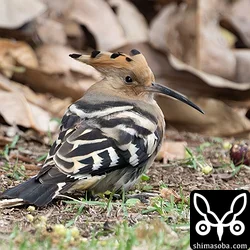
The second wave of Common Hoopoes seems to be winding down. Somewhere between 40 and 50 Common Hoopoes have arrived on Ishigaki this season. While searching for them I came across several Malayan Night Herons whose nuptial colouring has deepened noticeably.

Red-throated Pipit and Siberian Pipit numbers are fluctuating wildly — flocks seem to be passing through one after another. The season's first Pacific Swift and Temminck's Stint also appeared. Little Ringed Plovers are fully in summer plumage and moving through. There was a beautiful male Common Ringed Plover in summer plumage too, but I missed the shot… ^^;

For snipe it's all Common Snipe. The Pin-tailed Snipe I found on 20 February and the Swinhoe's Snipe on 21 February remain the only records, with nothing since.

A Eurasian Hoopoe looking tired, apparently just arrived on migration.

Olive-backed Pipit, White Wagtail, Red-throated Pipit, and Others

Feb. 10, 2024

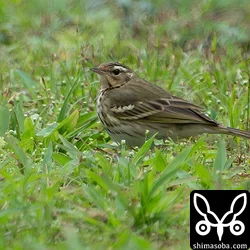
Olive-backed Pipits have been wintering at several sites since last year, but they are hard to photograph. This day I found them by call — six birds had come down onto a lawn. Among the many small birds that dart around constantly, the Olive-backed Pipit's unhurried movements are a real pleasure to watch.

Nearby was a Dusky Thrush. This winter Dusky Thrushes, Pale Thrushes, and Brown-headed Thrushes have all been very scarce. Driving the forest roads I can hear them calling from the undergrowth, but almost none are coming out onto farmland. Some winters are full of Naumann's Thrushes, but there seems to be a year-to-year cycle driven by something or other.

In the rice paddies, flocks of several dozen Eastern Yellow Wagtails and Red-throated Pipits. Among a group of around fifteen White Wagtails there was also a leucopsis White Wagtail. This season leucopsis birds are scarce and ocularis birds are plentiful.

Temminck's Stints, Common Greenshanks, Wood Sandpipers, and Little Ringed Plovers are also present here and there.

A Tree Pipit I finally managed to photograph. There are several around my house, but they are so wary I haven't been able to get a shot.

Wintering Waders

Jan. 30, 2024

Shorebirds are wintering along the coast and in the rice paddies. The most numerous are Greater Sand Plovers, Siberian Sand Plovers, and Ruddy Turnstones on the coast. Unusually for Ishigaki Island, a flock of Grey Plovers is also wintering.

Shorebird numbers in the paddies this season are low; species present include Common Greenshank, Marsh Sandpiper, Common Snipe, Wood Sandpiper, and Green Sandpiper.

Little Stint, winter plumage.

Caspian Tern, Common Gull and others (video)

Jan. 9, 2024

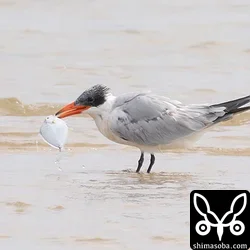
A Caspian Tern was wrestling with a large fish on the coast. The fish was deep-bodied and the tern seemed to have real trouble swallowing it. The thread-like dorsal fin visible in the footage suggests it was a Silvery Moony.

Greater Crested Terns swallow small fish on the wing, but this Monocle Bream was too large, so the bird carried it to the water's edge. Looking closely, I could see it tearing off the obstructive dorsal and pectoral fins with its bill.

Red Collared Dove, Arctic Warbler, Yellow Bittern, White-shouldered Starling, Common Starling and more (with video)

Nov. 11, 2023

Four Red Collared Doves at two sites; Arctic Warblers in thickets here and there; Yellow Bittern again doing well as it did last year, seen frequently. The starling flock, in order of abundance: White-shouldered Starling, White-cheeked Starling, Common Starling, Common Myna. Until a few days ago Red-billed Starling and Rosy Starling were with them, but the group seems to have split up. Six Asian Glossy Starlings are mixed in as well.

Geese and ducks are gradually increasing. In addition to the more numerous Eurasian Teal, Northern Shoveler, and Eurasian Wigeon, Falcated Duck, Ferruginous Duck, Garganey, Greater White-fronted Goose, and Lesser White-fronted Goose have also been recorded.

Eurasian Coot, first noted at the end of October, keeps increasing. Wader numbers in the paddies are declining — Black-winged Stilt, Temminck's Stint, Common Snipe, Common Greenshank, Marsh Sandpiper, Common Redshank, Green Sandpiper, and Common Sandpiper.

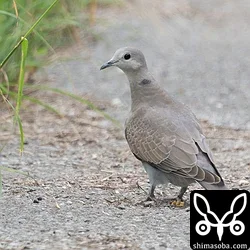
First confirmed juvenile Cream-coloured Dove.

Grey-headed Swamphen stay passes 10 days

Oct. 27, 2023

The Grey-headed Swamphen had become difficult to see for a while, but from this day it started showing well again. It may be because the Hen Harrier, which had been causing the poor appearance rate, was no longer around.

I had been kept waiting 40 minutes for a work appointment, so in frustration I stopped by the paddies — and there was the Swamphen, walking along the farm track.

I contacted several acquaintances who had come to Ishigaki specifically to see it, and we all got to watch it together. Hearing them say "I can see it!! The trip was worth it!!" made me happy too. ^^

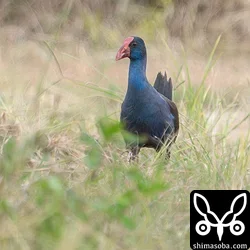
A Purple Swamphen walking along a farm track toward me.

Asian Dowitcher arrives, first Ruff of the season, more Broad-billed Sandpipers (video)

Sept. 15, 2023

A juvenile Asian Dowitcher has arrived. It is moving around the paddies together with Common Greenshank and Black-winged Stilt.

Broad-billed Sandpipers are turning up in paddies across the area — four birds in three locations. All juveniles, naturally. I'd love to see an adult one of these days….

Multiple Ruffs have also arrived. Temminck's Stint numbers are slowly building too.

The first juvenile Eurasian Whimbrel of the season was also confirmed. The paddies are getting livelier with each passing week of autumn.

Long-billed Dowitcher, juvenile. It startled every time a farmer's light truck passed.

First Broad-billed Sandpiper and Temminck's Stint of the season, Snipe lingering

Sept. 11, 2023

I recorded my first Broad-billed Sandpiper and Temminck's Stint of the season — both juveniles. A few Pin-tailed Snipe and Swinhoe's Snipe were also present. Common Snipe still not showing up as usual.

In the paddies: Black-winged Stilt, Common Greenshank, Marsh Sandpiper, Wood Sandpiper, Long-toed Stint, Red-necked Stint, Little Ringed Plover, Pacific Golden Plover, and Terek Sandpiper.

A small flock of Whiskered Terns was feeding and bathing.

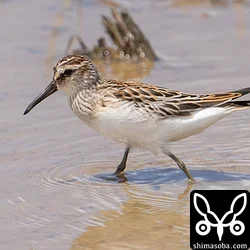
The first Broad-billed Sandpiper of the season, found by my daughter. In autumn it's always a juvenile.

Paddy-field waders, Cinnamon Bittern, Eastern Yellow Wagtail, White-breasted Waterhen

May 5, 2023

The rice fields are lively with migrants, though the spring shorebird passage feels like it may be winding down. In good weather, birds seem to be turning over every two or three days.

Pin-tailed Snipe, Swinhoe's Snipe, Little Stint, and Broad-billed Sandpiper — all popular birds — are still present.

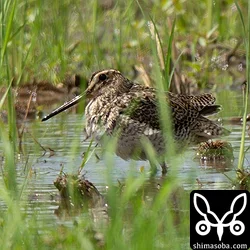
A Pin-tailed Snipe foraging along a paddy bund, mixed in with several Swinhoe's Snipe.

Four Curlew Sandpipers, a pair of Greater Painted-snipe, Broad-billed Sandpiper, Little Stint and others

April 29, 2023

The shorebird passage seems to be reaching its peak and the rice fields are extremely busy. Greater Painted-snipe — the only snipe that breeds on Ishigaki — are active as a couple.

Four Curlew Sandpipers in various stages of moult from summer to winter plumage are present. Also here: the third Little Stint of the season, three Broad-billed Sandpipers, the season's first Temminck's Stint, along with Red-necked Stint, Long-toed Stint, Sharp-tailed Sandpiper, Black-winged Stilt, Marsh Sandpiper, Common Greenshank, Common Sandpiper, and Pacific Golden Plover — all in one area.

Curlew Sandpiper in breeding plumage. Beautiful frosted patterning.

Chinese Pond Heron, Common Redshank, Common Greenshank and others

March 4, 2023

A few Chinese Pond Herons are wintering on Ishigaki Island. One individual is particularly unwary and has been useful for individual identification — it doesn't flee at all, which is almost worrying.

Common Redshank, Common Greenshank and Temminck's Stint are all wintering birds. Little Ringed Plovers have suddenly increased in number; I've confirmed several flocks of around 20 birds. Spring migration is under way.

A Chinese Pond Heron so tame it looked like it could perch on your hand. Winter plumage, but just a little summer plumage is starting to come in.