Shorebirds in the Paddies
April 29, 2026
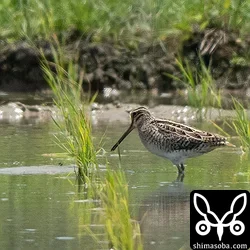
Temperatures rose and the paddy birds became a little more active — I had good views of bathing behavior and similar scenes.
A distant Pin-tailed Snipe.
Temperatures rose and the paddy birds became a little more active — I had good views of bathing behavior and similar scenes.
A distant Pin-tailed Snipe.
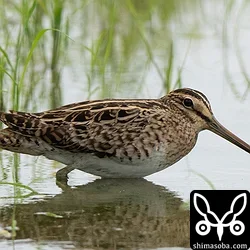
Both Pin-tailed Snipe and Swinhoe's Snipe are scarce on Ishigaki Island in spring, but even so I was able to observe several individuals on this day.
A Swinhoe's Snipe that went into alert posture because I got too close.
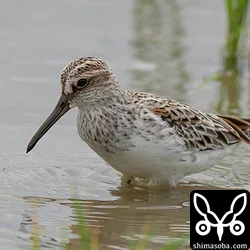
6th Ishigaki Island Snipe Camp side notes: a Broad-billed Sandpiper showed at close range, and the paddies also produced a flock of Sharp-tailed Sandpipers, Long-toed Stints in summer plumage, freshly arrived Eurasian Whimbrels, breeding Greater Painted-snipes, and Cinnamon Bitterns in beautiful nuptial plumage.
While traveling between sites, we encountered Ruddy Kingfishers, a Crested Serpent Eagle, Red-throated Pipits, and a large flock of Eastern Yellow Wagtails.
When I first spotted it the Broad-billed Sandpiper was at the far end of the rice paddy, but it gradually worked its way closer.
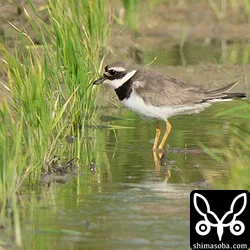
The Common Ringed Plover that appeared in early September was still present — three weeks into its stay. It seems to be moving widely around the island, between the rice paddies and the coast. The Javan Pond Heron is also on an extended visit.
The first Pacific Golden Plover juvenile of the season has also arrived. When these appear, the wader migration is in its final stages.
Pin-tailed Snipe and Swinhoe's Snipe numbers fluctuate daily as residents mix with birds moving through.
A Kentish Plover still present.
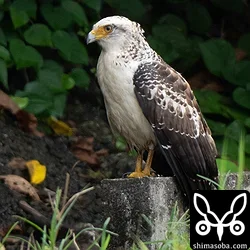
As the young birds begin to move away from their parents, juvenile Crested Serpent Eagles are becoming easier to observe. Multiple juveniles have been confirmed across Ishigaki Island. There were no typhoons this season so breeding success looks good — I'm looking forward to seeing how many individuals are counted.
Of the recent Greater Painted-snipe brood, one chick died in the nest, but the surviving chick is doing well with the parent. There are plenty of predators — cats, crows, and Black-winged Kites — so let's hope it makes it through safely.
Crested Serpent Eagle, juvenile. When it spotted something in a roadside ditch it would swoop down — practising its hunting on its own.
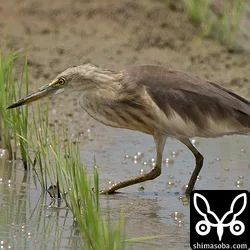
The Javan Pond Heron that arrived in July has been staying long-term and numbers have been building.
In the same rice field, Greater Painted-snipe and Common Moorhen are incubating eggs. They appear to breed multiple times a year. White-breasted Waterhens are at all sorts of different breeding stages simultaneously — newly hatched chicks alongside large, well-grown ones. They too may be raising several broods a year.
Three Javan Pond Herons are staying in the same rice field. They have also been recorded in other areas, and there seem to be a fair number on the island. On the Okinawa main island, arrivals have been confirmed in the north, central, and south. Their range appears to be expanding steadily eastward in recent years.
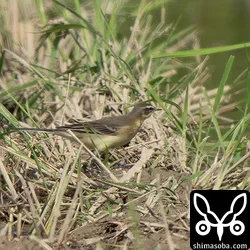
I recorded the first Eastern Yellow Wagtail of the season. It is a juvenile, but appears to be of the subspecies tschutschensis with the white supercilium. The Javan Pond Heron, with zero wariness of humans, continues its long stay.
The Greater Painted-snipe may be on a second breeding attempt — the male was collecting dead leaves and building a nest. When a snipe came close, he threatened it.
A juvenile Eastern Yellow Wagtail (superciliated form), the first confirmed record of the season.
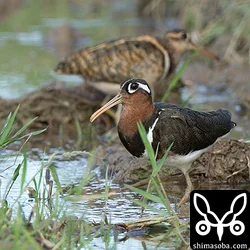
While watching snipe, a female Greater Painted-snipe appeared. She started flapping her wings and then a male emerged from the undergrowth. After that the two moved around together, bathing and going about their business. A second breeding attempt perhaps? The Javan Pond Heron is still on its extended stay.
A pair of Greater Painted-snipe moving around together.
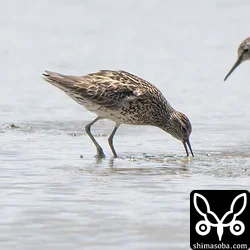
I recorded my first Sharp-tailed Sandpiper of the season — about three birds arrived together. The autumn shorebird passage is now getting properly underway, with Wood Sandpiper, Common Redshank, Long-toed Stint, Red-necked Stint, Black-winged Stilt, Common Greenshank, and Little Ringed Plover passing through the paddies day by day.
While watching the waders, a sudden tension ran through the paddy. Looking up, a juvenile Black-winged Kite appeared to hunt. It plunged into the grass and came out gripping a White-breasted Waterhen chick. The prey seemed heavy and the bird was struggling to carry it off.
The first Pectoral Sandpiper of the season turned out to be an adult.
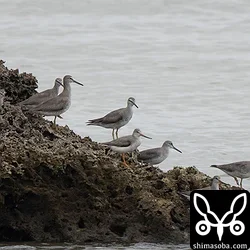
The wader migration has started on Ishigaki Island. Along the coast, Grey-tailed Tattlers, Terek Sandpipers, Eurasian Whimbrels, and Greater Sand Plovers have appeared, while the paddyfields have received Common Greenshanks, Black-winged Stilts, Wood Sandpipers, Long-toed Stints, and Little Ringed Plovers. Numbers and species will keep building from here. With any luck, the snipe we have all been waiting for will show up in late August.
As the tide came close to high, Grey-tailed Tattlers and Terek Sandpipers gathered on the coastal rocks.
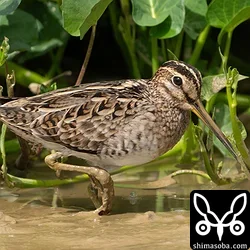
I managed to find a Pin-tailed Snipe that has moulted into winter plumage!! I picked it out from among 40 snipe together with Swinhoe's Snipe and Common Snipe. I had been searching with the belief that "there should still be Pin-tailed Snipe around," and the fact that the bird I finally found was an adult that had already finished moulting its scapulars and tertials into winter plumage made the moment even better!! A genuinely rare Pin-tailed Snipe in winter plumage.
Among the snipe still present, Swinhoe's Snipe numbered a few individuals; the rest were all Common Snipe.
Behold!! The splendid appearance of this adult Pin-tailed Snipe cloaked in winter plumage!!
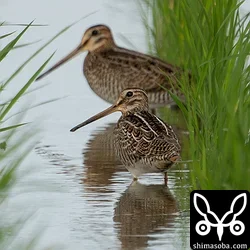
The snipe that built up from late August are thinning out now. At peak times there were nearly 40 in a single paddy field; now there are just a handful. I managed to find one Pin-tailed Snipe. Common Snipe hadn't increased much, but I'd expect the majority to be Common Snipe once October comes.
Pin-tailed Snipe, juvenile. Swinhoe's Snipe, juvenile, in the background.
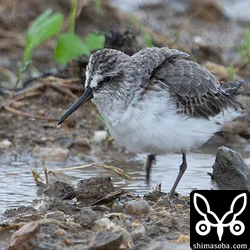
Ishigaki had a rough day under the influence of a tropical depression. When the rain eased I did the rounds of the paddies and found the first Broad-billed Sandpiper of the season had arrived — encountered in a puddle in a sugarcane field. Out on the grassland I also picked up first records of Curlew Sandpiper and Grey Plover. Bad weather does have a way of pushing birds into unexpected places.
Found a Broad-billed Sandpiper in a puddle in a sugarcane field. Was able to observe it right in front of me.
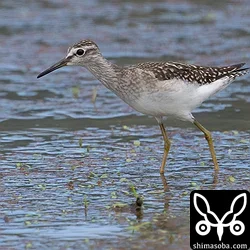
First juveniles of the season confirmed for Wood Sandpiper and Common Sandpiper. Red-necked Stint and Sharp-tailed Sandpiper also first records of the season. The Greater Painted-snipe chicks are still moving with the adults but have grown large enough that they are barely distinguishable from them.
First Wood Sandpiper juveniles of the season. It seems they arrived all at once.
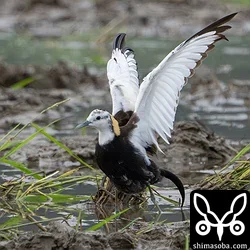
The third Pheasant-tailed Jacana of the season has arrived. Multiple individuals have been confirmed on Okinawa Island as well. This bird showed the most advanced transition to summer plumage of any I have seen so far. It is not at all wary and easy to observe.
Oriental Pratincoles and Greater Painted-snipes are also appearing in the same paddy. Cinnamon Bittern was confirmed by call only.
A Pheasant-tailed Jacana flapping its wings after bathing. It appears to be moulting into adult summer plumage.
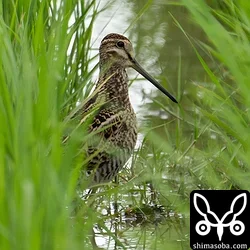
Last spring, 29 May was the final record of Pin-tailed Snipe. This season, this sighting looks set to be the last as well.
This spring, waders in general were very scarce, with almost no encounters with Pin-tailed Snipe, Swinhoe's Snipe or Common Snipe. I am looking forward to the autumn snipe migration, which gets under way from mid-August.
And, following last year, I would like to hold the "3rd Ishigaki Island Snipe Camp" again around late August this autumn. Please do join us. You can also see reports from the 1st camp (autumn) and the 2nd camp (spring).
The rice had grown tall enough that I couldn't see the whole bird, but I found a Swinhoe's Snipe.
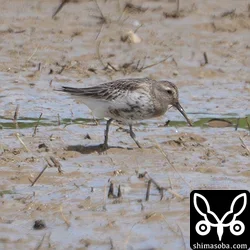
Confirmed the first Dunlin of the season. In the paddies there were Long-toed Stint, Red-necked Stint, Wood Sandpiper, Common Greenshank, Marsh Sandpiper and Black-winged Stilt, among others. On the coast there were also good numbers of Pacific Golden Plover, Ruddy Turnstone, Grey-tailed Tattler and Greater Sand Plover. Whiskered Tern could be seen in flocks of a few birds up to around twenty at various points across the island.
First Dunlin of the season. It was a juvenile.
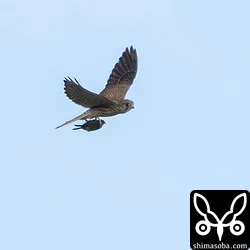
Confirmed the first Common Kestrel and Eurasian Teal of the season. Autumn is deepening steadily. The Javan Pond Heron has been staying on for an extended period — there were briefly two in the same paddy, but on this day only one.
Could this be a second breeding attempt for Greater Painted-snipe? Parent birds with small chicks are turning up in paddies here and there.
Marsh Sandpiper, Common Greenshank, Common Redshank, Wood Sandpiper, Long-toed Stint, Red-necked Stint, Green Sandpiper, Black-winged Stilt and three snipe species are all still present, numbers fluctuating.
A juvenile male Common Kestrel with a captured Eastern Yellow Wagtail.
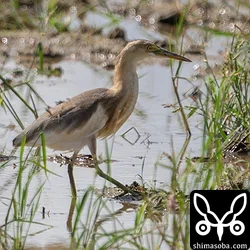
In the same area, the Javan Pond Heron count is up to two birds and the Broad-billed Sandpiper to three, much to the delight of visiting birdwatchers from outside the prefecture.
The Javan Pond Heron count in the same paddy field has gone up to two.
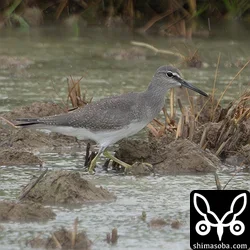
I confirmed the first juvenile Grey-tailed Tattler of the season. Swinhoe's Snipe and Pin-tailed Snipe have crashed in numbers after the typhoon — almost none left. Snipe-watching will have to wait until the next wave arrives.
The Greater Painted-snipe chicks from the first brood of the year are fully grown but still seem to be moving around together as siblings. A second brood is underway and I am seeing adults with small chicks.
A flock of around 200 Eastern Cattle Egrets came into the paddies. Numbers will keep climbing.
First Grey-tailed Tattler juveniles of the season. All five birds in the flock were juveniles.