A daily record.
Featuring photos of wild birds and nature, mainly from Okinawa Main Island and Ishigaki Island

Yonaguni Island

Sept. 15, 2026

I went birdwatching on the side while on a work trip to cover the Yonaguni Town Council election. ^^

I confirmed multiple migrating Chinese Sparrowhawk, and Common Kestrel had also arrived to overwinter. Migrating Oriental Dollarbird and Grey-streaked Flycatcher were also present, along with good numbers of overwintering Brown Shrike, Arctic Warbler, and Eastern Yellow Wagtail.

In recent years the rice paddies on Yonaguni Island have decreased, so waders and plovers are sparse — just small numbers of Black-winged Stilt, Sharp-tailed Sandpiper, Common Snipe, Wood Sandpiper, Long-toed Stint, Common Sandpiper, and Red-necked Stint.

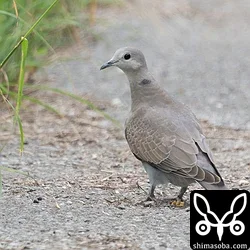
Common Emerald Dove, having finished breeding, formed small flocks and I watched them feeding on several occasions.

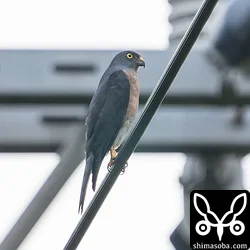
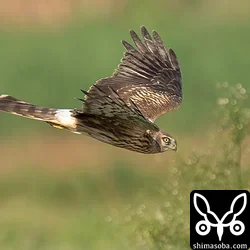
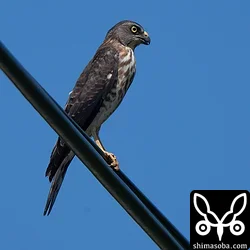
Chinese Sparrowhawk, juvenile. I also picked out several adults soaring.
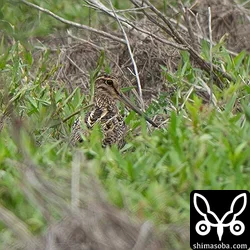
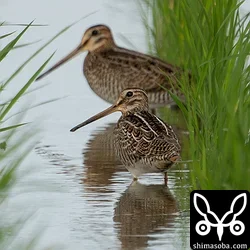
Pin-tailed Snipe appear!! Wader migration in full swing

Aug. 11, 2026

I found three Pin-tailed Snipe — the first of the season!! The three were together, so they may well have come through last night.

Besides snipe, the paddies now hold Common Redshank, Common Greenshank, Marsh Sandpiper, Black-winged Stilt, Long-toed Stint, Wood Sandpiper, and Whiskered Tern. Migration is well and truly under way.

For moult notation, from this season I will be adopting the WRP System (Wolfe–Ryder–Pyle System).

Finally got confirmation. Pin-tailed Snipe, adult. DCA (Definitive Alternate plumage).

6th Ishigaki Snipe Camp — Side Notes

April 20, 2026

6th Ishigaki Island Snipe Camp side notes: a Broad-billed Sandpiper showed at close range, and the paddies also produced a flock of Sharp-tailed Sandpipers, Long-toed Stints in summer plumage, freshly arrived Eurasian Whimbrels, breeding Greater Painted-snipes, and Cinnamon Bitterns in beautiful nuptial plumage.

While traveling between sites, we encountered Ruddy Kingfishers, a Crested Serpent Eagle, Red-throated Pipits, and a large flock of Eastern Yellow Wagtails.

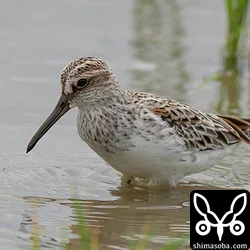
When I first spotted it the Broad-billed Sandpiper was at the far end of the rice paddy, but it gradually worked its way closer.

Ducks, Shorebirds, Wagtails, and Terns on Autumn Migration

Oct. 18, 2025

Ducks have started arriving on Ishigaki-jima. Eurasian Teal and Garganey — the first of the season — are increasing. The first Tufted Duck of the season was also in a drainage ditch on farmland.

In the rice paddies, the snipe are now down to Common Snipe only. Black-winged Stilt, Common Greenshank, Marsh Sandpiper, Long-toed Stint, Wood Sandpiper, Green Sandpiper, and Common Sandpiper are all still present. Eastern Yellow Wagtails are turning up here and there but numbers aren't building much. Could the heat be slowing their movement?

Whiskered Terns have been lingering along the river near my house.

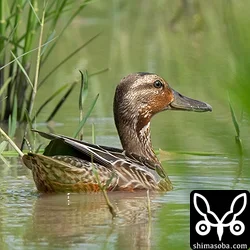
Garganey, juvenile male. Fairly approachable.

Whiskered Tern, Pin-tailed Snipe, Swinhoe's Snipe

Sept. 25, 2025

A group of around ten Whiskered Terns — adults and juveniles — arrived. Among the snipe, Common Snipe numbers are up while Pin-tailed Snipe have decreased.

Long-toed Stint, Wood Sandpiper, Common Greenshank, and Marsh Sandpiper are also present in good numbers.

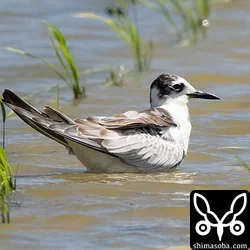
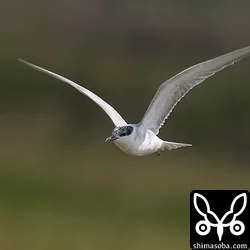
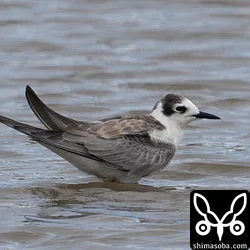
White-winged Tern juvenile. Perhaps due to the lack of typhoons, no large flocks have appeared this season.

Curlew Sandpiper, Dunlin, Long-toed Stint and Whiskered Tern arrive

July 30, 2025

On Ishigaki Island, the autumn wader passage is growing more active by the day, with both species and numbers on the rise.

In the paddies I recorded the first Curlew Sandpiper, Dunlin, and Long-toed Stint of the season. Little Ringed Plover juveniles have also arrived. Wood Sandpiper can be seen in flocks of several dozen birds across various paddy areas around the island. Common Greenshank are also passing through in good numbers. Four Whiskered Tern — the first of the season — had arrived as well.

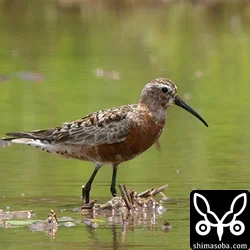
The first Curlew Sandpiper of the season.

Whiskered Tern, Pacific Golden Plover, White-shouldered Starling

Feb. 5, 2025

Possibly carried in by the strong northerly winds of the previous days, Whiskered Terns and Pacific Golden Plovers were recorded at several sites. It will still be a while before either species turns up in real numbers.

A dozen or so White-shouldered Starlings were coming to eat the fruit of the Orange Jessamine in the office car park. A flock of Asian Glossy Starlings has also visited recently, making it a regular feeding spot for the town's birds.

White-winged Tern in winter plumage. Numbers increase sharply come April.

Ten Garganey Arrive; First White Wagtail of the Season

Oct. 12, 2024

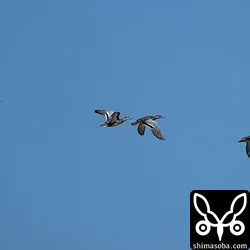
A flock of ten Garganey arrived, a mix of adults and juveniles.

First White Wagtail (leucopsis) of the season. On Ishigaki-jima the leucopsis type typically arrives first, followed by alba and ocularis at around the same time. Eastern Yellow Wagtail numbers keep fluctuating. The wintering birds should build up a bit more yet.

Whiskered Tern passage birds are increasing. From around late October the proportion of juveniles starts to rise. Black-winged Stilts can be seen in groups of around 20 birds at various locations, presumably on the move.

Male Garganey. All in eclipse.

White-winged Tern, Garganey, Arctic Warbler, Ruff Arrive

Oct. 5, 2024

Autumn is well and truly here — White-winged Terns, Garganey, Ruffs and Arctic Warblers are all building up steadily and the paddies are getting lively. Snipe numbers have also jumped sharply: 40 Common Snipe against 2 Swinhoe's Snipe. I couldn't find any Pin-tailed Snipe.

White-winged Tern, juvenile. The third bird this season.

Chinese Sparrowhawk Migration Begins; First Eurasian Teal

Sept. 26, 2024

Chinese Sparrowhawk migration is under way. The weather has been unsettled but it should pick up in earnest from here. Two Eurasian Teal — my first of the season — had arrived.

Chinese Sparrowhawk, adult female.

Snipe Numbers Dropping

Sept. 19, 2024

The snipe that built up from late August are thinning out now. At peak times there were nearly 40 in a single paddy field; now there are just a handful. I managed to find one Pin-tailed Snipe. Common Snipe hadn't increased much, but I'd expect the majority to be Common Snipe once October comes.

Pin-tailed Snipe, juvenile. Swinhoe's Snipe, juvenile, in the background.

Waders increase after the typhoon passes

July 28, 2024

Typhoon No. 3 passed through without causing major damage, but even after it reached the western side of Taiwan the wind continued to make itself felt in the Yaeyamas.

In the rice paddies, wader numbers increased considerably — Wood Sandpipers were present in flocks of several dozen wherever I went. Common Greenshank, Common Sandpiper, Green Sandpiper, Red-necked Stint, and Long-toed Stint were all up in numbers too, making for a lively scene.

A Common Greenshank still largely in summer plumage.

Ruddy Kingfisher, Black-faced Spoonbill, Chinese Pond Heron and others

May 11, 2024

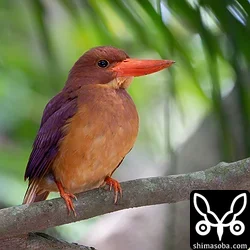
The Ruddy Kingfishers appear to be progressing well through the breeding season — I can watch them nest-building and courtship-feeding.

A Black-faced Spoonbill has been staying for several days. Chinese Pond Herons in breeding plumage are scattered across various paddies, with several individuals present.

In paddies with open water, Ruff, Sharp-tailed Sandpiper, Marsh Sandpiper and Whiskered Tern were resting.

A Ryukyu Ruddy Kingfisher near my home. It appears to be test-digging trial nest holes in several spots.

Black Drongo, Oriental Pratincole, Black-faced Spoonbill, Eurasian Spoonbill, Chinese Pond Heron and others

May 9, 2024

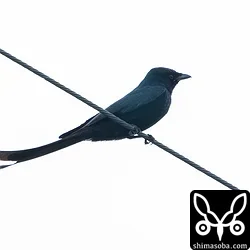
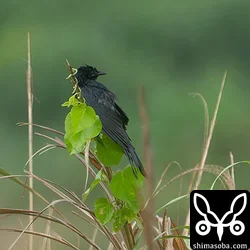
The Black Drongo that appeared near my home has been drifting slowly eastward and is now into its fourth day of stay. It is an unwary individual, always perched on the roadside wires. This season has been a bumper year for Black Drongo on Ishigaki Island — on peak days nearly 20 birds were recorded in a single day.

A small flock of Oriental Pratincoles had moved into the paddies. They were working the same area as the Whiskered Terns, but while the terns drifted low and picked insects off the rice plants, the pratincoles were up high, hawking incoming insects.

Black-faced Spoonbill, Eurasian Spoonbill and Chinese Pond Heron have also been dropping into the paddies one after another.

A Black Drongo near home, now on its fourth day of the stay.

Two Black Drongos, Red Collared Dove, Ruddy Kingfisher and others (video)

April 28, 2024

Two Black Drongos turned up at a different location from the three seen the other day. That makes six individuals this season. Birds are also appearing on Iriomote Island and Okinawa Main Island at the same time. Across the Nansei Islands, numbers seem higher than usual.

Red Collared Dove arrived as a male and female pair. After a heavy downpour, the female stopped showing, but the male was foraging on the ground.

The Ruddy Kingfisher near my home sees me so often every day that it pays me no attention at all. I also managed to get video of it singing and dancing.

A Black Drongo after a downpour. It sat motionless on a branch tip — apparently drying its feathers.

Kentish Plover, Whiskered Tern, Eurasian Spoonbill and Others

April 2, 2024

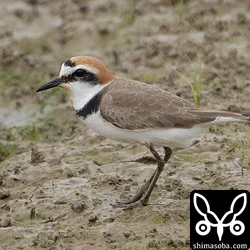
A Kentish Plover turned up that looks slightly different from the birds that breed on Ishigaki. I haven't paid much serious attention to Kentish Plovers before, but this individual stood out.

First Whiskered Terns of the season confirmed — two birds quartering over the rice paddies. A juvenile Eurasian Spoonbill is also still present; it's an individual with a noticeably pale bill. Wood Sandpiper and Black-winged Stilt numbers are up, though the peak for waders in the paddies hasn't really arrived yet this season. Little Ringed Plover and Long-toed Stint are also gradually increasing.

Isabeline Shrikes are thinning out as they head to breeding grounds. The pair of overwintering Peregrine Falcons is still here. The one-eyed Crested Serpent Eagle near my home is somehow hanging on. Ishigaki Tit appears to be busy with nesting.

Male Kentish Plover in breeding plumage. Beautiful. The breeding population in Okinawa is considerably paler.

Red Collared Dove, Arctic Warbler, Yellow Bittern, White-shouldered Starling, Common Starling and more (with video)

Nov. 11, 2023

Four Red Collared Doves at two sites; Arctic Warblers in thickets here and there; Yellow Bittern again doing well as it did last year, seen frequently. The starling flock, in order of abundance: White-shouldered Starling, White-cheeked Starling, Common Starling, Common Myna. Until a few days ago Red-billed Starling and Rosy Starling were with them, but the group seems to have split up. Six Asian Glossy Starlings are mixed in as well.

Geese and ducks are gradually increasing. In addition to the more numerous Eurasian Teal, Northern Shoveler, and Eurasian Wigeon, Falcated Duck, Ferruginous Duck, Garganey, Greater White-fronted Goose, and Lesser White-fronted Goose have also been recorded.

Eurasian Coot, first noted at the end of October, keeps increasing. Wader numbers in the paddies are declining — Black-winged Stilt, Temminck's Stint, Common Snipe, Common Greenshank, Marsh Sandpiper, Common Redshank, Green Sandpiper, and Common Sandpiper.

First confirmed juvenile Cream-coloured Dove.

Hen Harrier, Pheasant-tailed Jacana, Garganey, first Greater White-fronted Goose of the season, and more

Oct. 25, 2023

The Grey-headed Swamphen staying on Ishigaki has had a Hen Harrier turning up at its paddy field for the past few days, causing havoc. Several friends have come to Ishigaki to see the Swamphen, but it has become wary and is showing poorly, so they are having a hard time.

A Pheasant-tailed Jacana is also in residence and going about its business peacefully. I had noted Garganey several times over the past two weeks or so, but this time I finally managed to get it on camera.

I also recorded my first Greater White-fronted Goose and White-faced Wagtail of the season.

The paddies are lively, with Ruff, Dunlin, Common Greenshank, Marsh Sandpiper, Long-toed Stint, Red-necked Stint, Common Snipe, and Black-winged Stilt, as well as Eastern Red-rumped Swallow, Amur Stonechat, Eastern Yellow Wagtail, Grey Wagtail, Red-throated Pipit, and Little Bunting.

A completely unwariness Hen Harrier juvenile. It was an extremely aggressive hunter, and the upper surface of its flight feathers was stained with mud.