A daily record.
Featuring photos of wild birds and nature, mainly from Okinawa Main Island and Ishigaki Island

Yonaguni Island

Sept. 15, 2026

I went birdwatching on the side while on a work trip to cover the Yonaguni Town Council election. ^^

I confirmed multiple migrating Chinese Sparrowhawk, and Common Kestrel had also arrived to overwinter. Migrating Oriental Dollarbird and Grey-streaked Flycatcher were also present, along with good numbers of overwintering Brown Shrike, Arctic Warbler, and Eastern Yellow Wagtail.

In recent years the rice paddies on Yonaguni Island have decreased, so waders and plovers are sparse — just small numbers of Black-winged Stilt, Sharp-tailed Sandpiper, Common Snipe, Wood Sandpiper, Long-toed Stint, Common Sandpiper, and Red-necked Stint.

Common Emerald Dove, having finished breeding, formed small flocks and I watched them feeding on several occasions.

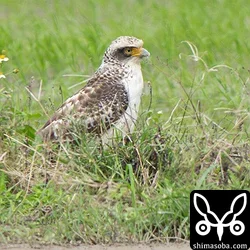
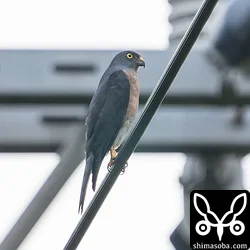
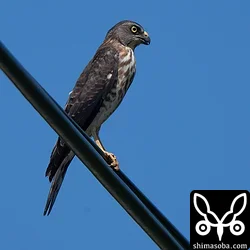
Chinese Sparrowhawk, juvenile. I also picked out several adults soaring.

Third visit to Yonaguni this month

March 18, 2026

I made my third trip to Yonaguni Island this month. Small passerines were the main attraction: White Wagtail, Eastern Yellow Wagtail, Little Bunting, Daurian Redstart, and Brown Shrike among others.

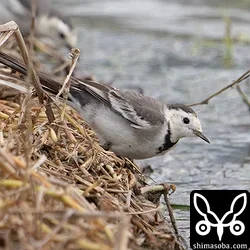
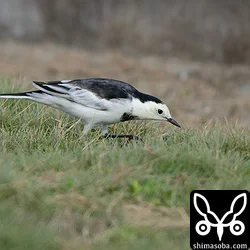
There was a mixed flock of three subspecies of White Wagtail. This is a male leucopsis.

Spring migration picks up pace

March 11, 2026

Spring migration on Ishigaki Island has been building gradually since February, and by March it has grown noticeably more active. The variety of waders is increasing first of all. Brown Shrikes and White-cheeked Starlings that spent the winter on the island are beginning to move north.

Some individual Crested Serpent Eagle juveniles are well along in their moult.

A juvenile Crested Serpent Eagle. It is within the territory of an adult pair and gets chased off every time it is spotted, yet it stubbornly stays put.

Crested Serpent Eagle vs. Cane Toad Venom

Nov. 8, 2025

A Crested Serpent Eagle was eating a toxic Cane Toad. Below I reproduce the article I wrote on Crested Serpent Eagle venom resistance, published in the newspaper on 19 July.

Crested Serpent Eagle's Hidden Ability — A Remarkable Coincidence

The Crested Serpent Eagle, found in Japan only on Ishigaki and Iriomote islands, is known to prey on the toxic Cane Toad. A research team led by Arisa Tobe of Kyoto University has used genetic analysis to show that the eagle may carry resistance to the toad's venom. The birds have harboured a venom-resistance gene mutation for tens of thousands — possibly hundreds of thousands — of years, meaning the "hidden ability" was already in place long before Cane Toads were introduced to Ishigaki Island. The findings were published on 14 July in the scientific journal BMC Ecology and Evolution.

No Symptoms

Cane Toads were introduced to Ishigaki Island around 1978 to control sugarcane pests. They secrete a potent cardiotoxic steroid, bufadienolide, from their skin — a toxin that can stop the heart. There are confirmed cases of the native Sakishima Rat Snake dying after eating one. The Crested Serpent Eagle, on the other hand, shows no ill effects even after consuming the toad's highly toxic skin. Local birdwatchers had long noticed this, but no scientific explanation had been established.

A Gene Mutation?

The research team analysed tissue samples from 24 Crested Serpent Eagles that had died from accidents or illness between 2020 and 2023. Focusing on an enzyme responsible for ion transport across cell membranes — the target of the toxin — they discovered an amino-acid substitution in a key region associated with venom resistance, known as the Q111E mutation. This mutation appears to prevent the toad's toxin from binding to the enzyme, neutralising its effects. Similar mutations have been found in snakes that prey on toads and in birds that eat toxic butterflies, and the finding is regarded as an example of convergent evolution — the process by which unrelated lineages independently arrive at similar traits through different evolutionary paths in different places.

An Ancient Defence

Strikingly, Crested Serpent Eagles on Iriomote Island — where Cane Toads have not established — and even a subspecies of Crested Serpent Eagle on the distant Indonesian island of Simeulue carry the same resistance gene. Genetic analysis suggests the trait has been preserved since around the time the Crested Serpent Eagle diverged as a species, long before any alien species was introduced. Tobe of Kyoto University's Wildlife Research Center explains: "The venom resistance of the Crested Serpent Eagle is not a recent adaptation to environmental change, but an ancient trait inherited from its ancestors — one that has, by coincidence, also helped to mitigate the physiological impact of an invasive species. It is a rare example of that."

Other Raptors Too

The study also confirmed similar resistance gene mutations in snake eagles closely related to the Crested Serpent Eagle. There are reports that the Black-chested Snake Eagle in South Africa showed no health problems after being fed toxic toads in captivity for 12 months, suggesting this ability may be characteristic of the group as a whole. Meanwhile, on Japan's Ogasawara Islands, Eastern Buzzards have been recorded preying on the same Cane Toad, but no clear venom-resistance mutation was found in their genes, pointing to the possibility that they cope through a different mechanism.

A New Perspective for Conservation

The study also found that the Crested Serpent Eagle populations on Ishigaki and Iriomote islands are genetically distinct. Despite a separation of only about 20 kilometres, movement of individuals between the two islands appears to be almost nonexistent — a finding the team says "suggests that the Iriomote and Ishigaki populations should be considered independent conservation units." The research demonstrates that an organism's "hidden abilities" may play an important role in responding to environmental change. While the findings offer a significant new perspective for biodiversity conservation, Tobe also sounds a note of caution: "The fact that the eagle is making use of the invasive species does not mean the invasive species problem can be ignored. Once the Crested Serpent Eagle is preying on them, the toads are being incorporated into the ecosystem, and there is a risk of further disrupting the overall balance." As the global impact of invasive species on ecosystems becomes an ever greater concern, this discovery — shining a light on the unexpected adaptive capacity of native species — underscores both the depth of evolutionary processes and the complexity of conservation strategy.

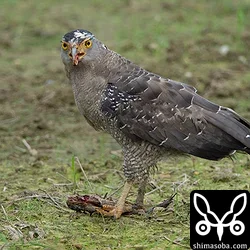
A Crested Serpent Eagle eating a Cane Toad. As the research papers suggest, the toxin seems to pose no problem for it.

Black-headed Bunting, Forest Wagtail, Arctic Warbler, White-shouldered Starling and others

Nov. 3, 2025

A Black-headed Bunting turned up after a long absence. It was very likely the same individual I briefly glimpsed in the same paddy field about a week ago. It was mixed in with a flock of several hundred Eurasian Tree Sparrows.

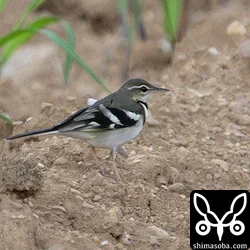
A Forest Wagtail appeared on the usual forest road — the sixth individual this season. Arriving this late in the year, there is a good chance it will winter here. Last year one wintered at the same spot. Once they settle into wintering mode, though, they tend to stay deep inside the forest and become harder to observe.

Arctic Warblers have been showing up since early October. Birds fresh in from migration are often in small flocks, but now they have spread across the island and each is holding a small territory. Many individuals will stay through to spring. Come April, they form flocks again in preparation for the northward journey, and some begin to sing.

Brambling have also appeared. They joined up with Eurasian Tree Sparrow flocks and were feeding on second-crop rice grain in the paddies.

White-shouldered Starlings — a few birds — were mixed into a flock of several tens of White-cheeked Starlings, along with around 20 Common Starlings. The wintering White-shouldered Starling population on the island is sizeable in its own right, and flocks of several tens are regularly seen in parks and the like.

At this time of year, snipe are mostly Common Snipe, but among a flock of ten-odd I found just two Swinhoe's Snipe. I expect them to disappear once the second-crop rice harvest gets under way. Other waders lingering in the paddies include Common Redshank, Common Greenshank, Marsh Sandpiper, Black-winged Stilt, Wood Sandpiper, Green Sandpiper, Common Sandpiper, and Long-toed Stint.

Ducks are increasing too — I recorded my first Mallard of the season on Ishigaki. Mallard used to be quite scarce on Ishigaki and Okinawa, but the numbers being seen seem to grow a little more each year.

A Black-headed Bunting standing out prominently among a flock of Eurasian Tree Sparrows. It was constantly harassing them….
Willow Warbler appears!! Chinese Sparrowhawk and autumn migration in full swing

Sept. 13, 2025

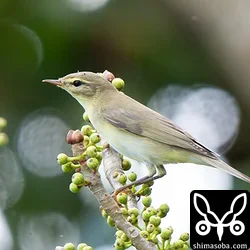
Birding in the gaps between work assignments on Yonaguni Island. As I cruised the forest road with a sense that autumn migration was well and truly getting under way, I spotted a fig tree that birds were gathering in. While watching a flock of Warbling White-eyes, a yellow warbler flew into my field of view. I got it in the binoculars — it was a Willow Warbler!! It was moving from branch to branch, apparently picking off small insects.

I also had first records for the trip of Chinese Sparrowhawk, Oriental Dollarbird, Dark-sided Flycatcher, Asian Brown Flycatcher, Grey-streaked Flycatcher, Garganey, Common Snipe, and White-shouldered Starling. Yonaguni Island delivers, as always. ^^

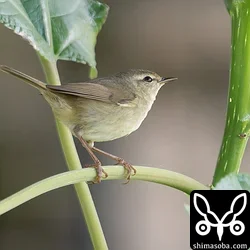
Arctic Warbler makes an appearance. It stands out clearly — obviously different from the other Japanese leaf warblers.

More Black Paradise Flycatchers, Ruddy Kingfisher Nest-building, Northern Boobook, Gray-faced Buzzard (video)

April 30, 2025

Black Paradise Flycatcher numbers have been increasing. I keep coming across pairs of Ruddy Kingfishers hard at work nest-building. Some Northern Boobooks have already paired up, showing that breeding is underway. An individual that appears to be a Gray-faced Buzzard was also found.

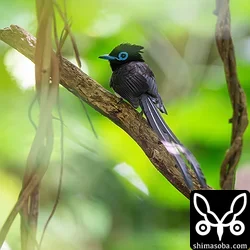
A Japanese Paradise Flycatcher pair moving around together. They will probably build a nest somewhere in this area.

Second Record of Ring-necked Duck for Okinawa Prefecture!!

Jan. 31, 2025

I tracked down the second-ever Ring-necked Duck for Okinawa Prefecture among a flock of 600 Tufted Ducks. The distance was over 200 metres and branches and leaves limited the view, but after searching for about an hour I managed to find it. Once I knew which area it was floating in, I didn't lose it again and was able to watch it for over an hour.

Ring-necked Duck, male breeding plumage. Following a record on Miyako Island in 2023, this became the second record in the prefecture — a valuable sighting.

Black-winged Kite, Siberian Peregrine, juvenile Crested Serpent Eagle and more

Dec. 14, 2024

The juvenile Black-winged Kite seems to have finally become independent recently. Black-winged Kites on Ishigaki breed multiple times a year, so the population keeps growing. The Peregrine Falcon pair that wintered here last year has returned to the same spot again this year. An Upland Buzzard is also in the same area, keeping the Eurasian Coots and herons on edge. A nearby juvenile Crested Serpent Eagle looked startled as the two Peregrines chased it around.

The two Tundra Swans are still present. Around ten Northern Lapwings — all juveniles — have arrived. The rice paddies are busy with Marsh Sandpipers, Common Greenshanks, Common Redshanks, Wood Sandpipers, Northern Shovelers and Eurasian Teals. The first Tufted Duck of the season was also confirmed.

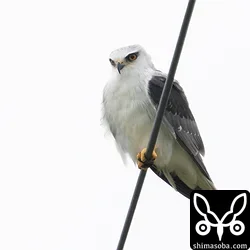
A Black-winged Kite juvenile with zero wariness. Given the location and timing, it may be the individual that was being fed in mid-air by a parent bird previously.

Chinese Sparrowhawk Migration Begins; First Eurasian Teal

Sept. 26, 2024

Chinese Sparrowhawk migration is under way. The weather has been unsettled but it should pick up in earnest from here. Two Eurasian Teal — my first of the season — had arrived.

Chinese Sparrowhawk, adult female.

Kentish Plover, Whiskered Tern, Eurasian Spoonbill and Others

April 2, 2024

A Kentish Plover turned up that looks slightly different from the birds that breed on Ishigaki. I haven't paid much serious attention to Kentish Plovers before, but this individual stood out.

First Whiskered Terns of the season confirmed — two birds quartering over the rice paddies. A juvenile Eurasian Spoonbill is also still present; it's an individual with a noticeably pale bill. Wood Sandpiper and Black-winged Stilt numbers are up, though the peak for waders in the paddies hasn't really arrived yet this season. Little Ringed Plover and Long-toed Stint are also gradually increasing.

Isabeline Shrikes are thinning out as they head to breeding grounds. The pair of overwintering Peregrine Falcons is still here. The one-eyed Crested Serpent Eagle near my home is somehow hanging on. Ishigaki Tit appears to be busy with nesting.

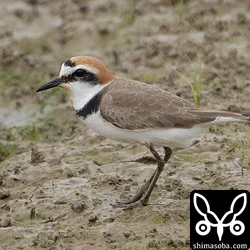
Male Kentish Plover in breeding plumage. Beautiful. The breeding population in Okinawa is considerably paler.

Olive-backed Pipit, White Wagtail, Red-throated Pipit, and Others

Feb. 10, 2024

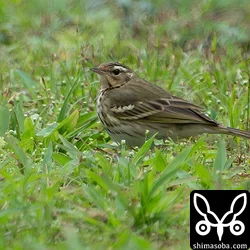
Olive-backed Pipits have been wintering at several sites since last year, but they are hard to photograph. This day I found them by call — six birds had come down onto a lawn. Among the many small birds that dart around constantly, the Olive-backed Pipit's unhurried movements are a real pleasure to watch.

Nearby was a Dusky Thrush. This winter Dusky Thrushes, Pale Thrushes, and Brown-headed Thrushes have all been very scarce. Driving the forest roads I can hear them calling from the undergrowth, but almost none are coming out onto farmland. Some winters are full of Naumann's Thrushes, but there seems to be a year-to-year cycle driven by something or other.

In the rice paddies, flocks of several dozen Eastern Yellow Wagtails and Red-throated Pipits. Among a group of around fifteen White Wagtails there was also a leucopsis White Wagtail. This season leucopsis birds are scarce and ocularis birds are plentiful.

Temminck's Stints, Common Greenshanks, Wood Sandpipers, and Little Ringed Plovers are also present here and there.

A Tree Pipit I finally managed to photograph. There are several around my house, but they are so wary I haven't been able to get a shot.

Upland Buzzard, Saker Falcon, Short-eared Owl and other wintering raptors (video)

Dec. 23, 2023

The raptors that winter on Ishigaki Island are now all showing up: Upland Buzzard, Saker Falcon, Eastern Marsh Harrier, Grey-faced Buzzard, Common Kestrel, Short-eared Owl, and more.

The ducks, Eurasian Coots, and small birds that serve as prey are on edge whenever a raptor appears.

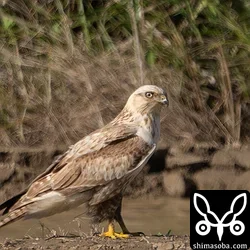
Juvenile Upland Buzzard. One appears every year, but this individual is not very wary and is easy to observe and photograph.

Forest Wagtail roosting, Red Collared Dove staying

Nov. 4, 2023

On the way home from work I found a pre-roost gathering of about 50 Grey Wagtails and 20 Eastern Yellow Wagtails, and while checking for anything mixed in I spotted one Forest Wagtail. They normally live along forest tracks, so finding a Forest Wagtail in a sugarcane field was a real surprise.

The following day it was again mixed in with the Grey Wagtail flock at the same spot, so it is presumably spending its days somewhere on a nearby forest track. One White Wagtail was in the same flock. It would be nice if it overwintered together with the Grey Wagtails.

Two Red Collared Doves are staying, but they look unsettled — a Black-winged Kite, Hen Harrier, and Eurasian Sparrowhawk come by every day. For some reason a Brown Shrike was moving around with the Red Collared Doves and Oriental Turtle Doves — perhaps because it too is wary of the raptors.

A rare experience — encountering a White-browed Wagtail in a sugarcane field. It appears to roost together with other wagtails.

Ruff, Marsh Sandpiper, Common Redshank, and more

Oct. 6, 2023

Ruff have turned up at several sites, almost all juveniles. The regulars — Red-necked Stint, Common Greenshank, Marsh Sandpiper, Common Redshank, and Long-toed Stint — are present in paddies everywhere. Dunlin have started to appear as well.

The first Pacific Golden Plovers of the season arrived in small flocks of juveniles. Around the park and cattle sheds, Chestnut-cheeked Starling, Red-billed Starling, and White-shouldered Starling are also increasing.

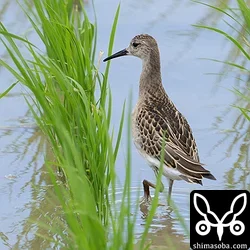
A juvenile Ruff.

Brown Shrikes up, more White-browed Eastern Yellow Wagtails

Sept. 12, 2023

Heading north for work, I found Brown Shrikes had increased. Numbers in the south should follow. The Eastern Yellow Wagtails are all of the white-browed type so far — the yellow-browed birds should be along any time now….

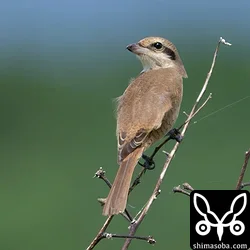
Brown Shrike, first-winter plumage.

Common Hoopoe, Rosy Starling, Red-billed Starling, White's Thrush, and More (video)

March 21, 2023

Common Hoopoes are being reported from all over the island. It looks like a decent start to the season.

The Rosy Starling that has been wintering since last year is gradually moulting. I'm hoping it will stay as long as possible, but I have a feeling it may move on soon…

Lately, a fairly large flock of Red-billed Starlings has been coming to the car park at my workplace. They appear to be feeding on the fruits of the planted ironwood trees.

A completely fearless White's Thrush turned up — spotted and pointed out to me by a friend visiting from Akita Prefecture. I had several encounters with White's Thrush from late last year into early January, but after that they vanished. This individual seems to have stopped in on spring passage.

Japanese Bush Warblers have increased sharply, just as the Manchurian Bush Warblers have completely disappeared. I'm hearing subsong frequently these days. Little Buntings and Red-throated Pipits — whether they're on passage or moving around within the island I can't say — are fluctuating, with numbers going up and down.

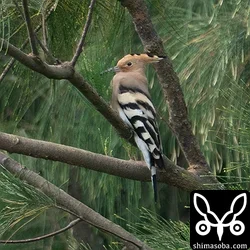
Eurasian Hoopoes at the reliable spot. There appeared to be around four of them.

Japanese Bush Warbler and Brown Shrike

March 6, 2023

Japanese Bush Warblers are becoming noticeably more active. Along the coastal woodland, several seem to be gathering as if preparing for migration. I'm also hearing their clumsy subsong.

A Japanese Bush Warbler moving along the boundary between coastal woodland and farmland. It felt like several birds were moving together.

Naumann's Thrush, Olive-backed Pipit, Eastern Yellow Wagtail and others

Feb. 28, 2023

While driving through farmland I spotted an orange-coloured bird. Through binoculars it turned out to be a strikingly bright Naumann's Thrush. Eight Olive-backed Pipits came into the garden — a flock that has been wintering in the village. They have grown considerably more accustomed to people over the course of the winter.

White Wagtails and Eastern Yellow Wagtails, apparently moving through, can be seen on a day-by-day basis.

Oriental Greenfinch, scarce on Ishigaki Island, is staying on and feeding in unharvested rice.

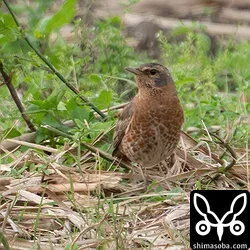
A strikingly vivid Naumann's Thrush. It was conspicuous enough to catch the eye even at a distance.