First Mandarin Duck of the Season
Oct. 17, 2024
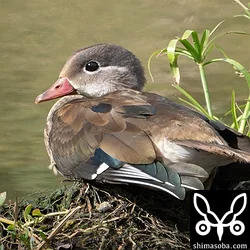
The first Mandarin Duck of the season has arrived. It was a male in eclipse plumage.
Male Mandarin Duck. It's in eclipse plumage, so it doesn't look very Mandarin-like.
The first Mandarin Duck of the season has arrived. It was a male in eclipse plumage.
Male Mandarin Duck. It's in eclipse plumage, so it doesn't look very Mandarin-like.
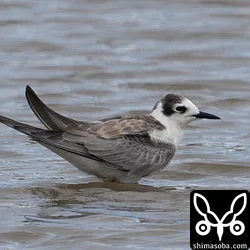
Autumn is well and truly here — White-winged Terns, Garganey, Ruffs and Arctic Warblers are all building up steadily and the paddies are getting lively. Snipe numbers have also jumped sharply: 40 Common Snipe against 2 Swinhoe's Snipe. I couldn't find any Pin-tailed Snipe.
White-winged Tern, juvenile. The third bird this season.
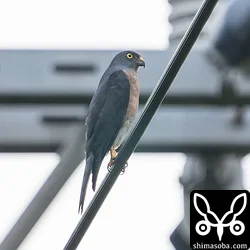
Chinese Sparrowhawk migration is under way. The weather has been unsettled but it should pick up in earnest from here. Two Eurasian Teal — my first of the season — had arrived.
Chinese Sparrowhawk, adult female.
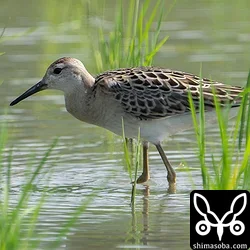
The Ruff that has been staying since last month. When it is not in the paddies, it apparently moves into the irrigation channels. Common Redshank, Long-toed Stint, Red-necked Stint, Dunlin, Common Greenshank, Marsh Sandpiper, Black-winged Stilt, and Wood Sandpiper are all still present.
Reunited with a Ruff. Apparently when they're not in the paddies, they're in the irrigation channels.
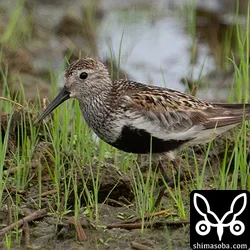
First Dunlin and Pacific Golden Plover of the season confirmed. The Dunlin was a single bird; the Pacific Golden Plovers were a flock of nearly ten.
Dunlin with winter plumage beginning to show in patches.
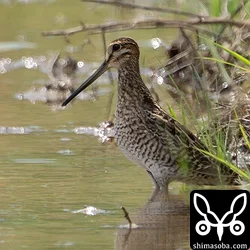
Pin-tailed Snipe numbers are gradually building. The first Ruff of the season has also arrived. Oriental Pratincoles appear to be on the move, fledglings included. First juvenile Long-toed Stint of the season also confirmed.
Spotted a Pin-tailed Snipe adult in the distance.
Typhoon No. 3 passed through without causing major damage, but even after it reached the western side of Taiwan the wind continued to make itself felt in the Yaeyamas.
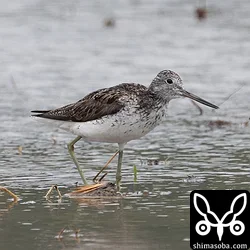
In the rice paddies, wader numbers increased considerably — Wood Sandpipers were present in flocks of several dozen wherever I went. Common Greenshank, Common Sandpiper, Green Sandpiper, Red-necked Stint, and Long-toed Stint were all up in numbers too, making for a lively scene.
A Common Greenshank still largely in summer plumage.
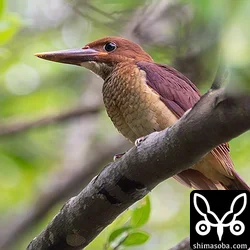
The Ruddy Kingfishers that were breeding near my home had fledged before I noticed. I confirmed three fledglings that can now fly.
Malayan Night Herons have also fledged. I confirmed two juveniles that have been out of the nest for some time. Three or so Cinnamon Bittern juveniles were in a flooded paddy. The adults' calls were audible too.
Oriental Pratincoles apparently bred at a quarry on private land — there were around 30 birds in total, adults and juveniles together. Two Little Ringed Plover juveniles as well. There is a possibility they bred on Ishigaki Island.
The Ruddy Kingfisher just a stone's throw from home fledged around three chicks again, as it did last year.
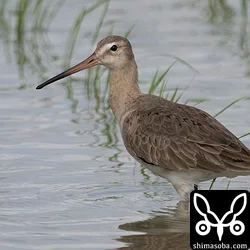
First records this season of Black-tailed Godwit, Sharp-tailed Sandpiper and Striated Heron. Unless the weather turns rough, large waders like the Black-tailed Godwit don't come down to Ishigaki. Striated Heron is scarce on the island, so finding one felt like a bonus.
The Black-tailed Godwit is still very much in winter plumage.
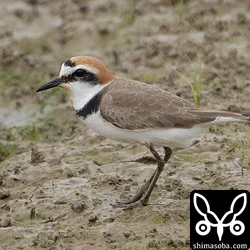
A Kentish Plover turned up that looks slightly different from the birds that breed on Ishigaki. I haven't paid much serious attention to Kentish Plovers before, but this individual stood out.
First Whiskered Terns of the season confirmed — two birds quartering over the rice paddies. A juvenile Eurasian Spoonbill is also still present; it's an individual with a noticeably pale bill. Wood Sandpiper and Black-winged Stilt numbers are up, though the peak for waders in the paddies hasn't really arrived yet this season. Little Ringed Plover and Long-toed Stint are also gradually increasing.
Isabeline Shrikes are thinning out as they head to breeding grounds. The pair of overwintering Peregrine Falcons is still here. The one-eyed Crested Serpent Eagle near my home is somehow hanging on. Ishigaki Tit appears to be busy with nesting.
Male Kentish Plover in breeding plumage. Beautiful. The breeding population in Okinawa is considerably paler.
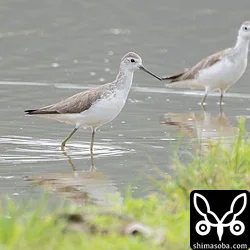
Shorebirds are wintering along the coast and in the rice paddies. The most numerous are Greater Sand Plovers, Siberian Sand Plovers, and Ruddy Turnstones on the coast. Unusually for Ishigaki Island, a flock of Grey Plovers is also wintering.
Shorebird numbers in the paddies this season are low; species present include Common Greenshank, Marsh Sandpiper, Common Snipe, Wood Sandpiper, and Green Sandpiper.
Little Stint, winter plumage.
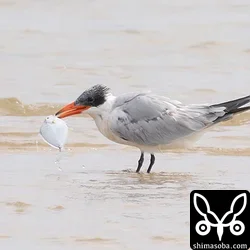
A Caspian Tern was wrestling with a large fish on the coast. The fish was deep-bodied and the tern seemed to have real trouble swallowing it. The thread-like dorsal fin visible in the footage suggests it was a Silvery Moony.
Greater Crested Terns swallow small fish on the wing, but this Monocle Bream was too large, so the bird carried it to the water's edge. Looking closely, I could see it tearing off the obstructive dorsal and pectoral fins with its bill.
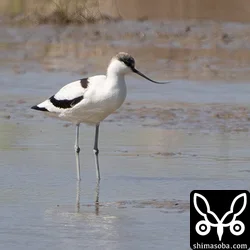
Overwintering in the paddies: Pied Avocet, Black-winged Stilt, Marsh Sandpiper, Common Greenshank, Common Redshank, Green Sandpiper, Common Snipe, Little Ringed Plover, and Northern Lapwing. Dozens of Common Snipe are staying, but Swinhoe's Snipe have not been found…
Pied Avocet, first-winter.
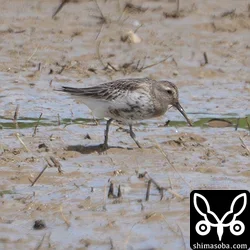
Confirmed the first Dunlin of the season. In the paddies there were Long-toed Stint, Red-necked Stint, Wood Sandpiper, Common Greenshank, Marsh Sandpiper and Black-winged Stilt, among others. On the coast there were also good numbers of Pacific Golden Plover, Ruddy Turnstone, Grey-tailed Tattler and Greater Sand Plover. Whiskered Tern could be seen in flocks of a few birds up to around twenty at various points across the island.
First Dunlin of the season. It was a juvenile.
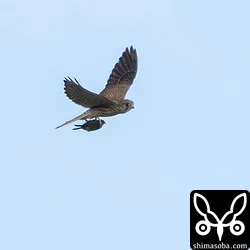
Confirmed the first Common Kestrel and Eurasian Teal of the season. Autumn is deepening steadily. The Javan Pond Heron has been staying on for an extended period — there were briefly two in the same paddy, but on this day only one.
Could this be a second breeding attempt for Greater Painted-snipe? Parent birds with small chicks are turning up in paddies here and there.
Marsh Sandpiper, Common Greenshank, Common Redshank, Wood Sandpiper, Long-toed Stint, Red-necked Stint, Green Sandpiper, Black-winged Stilt and three snipe species are all still present, numbers fluctuating.
A juvenile male Common Kestrel with a captured Eastern Yellow Wagtail.
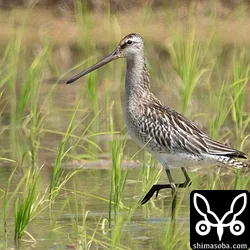
A juvenile Asian Dowitcher has arrived. It is moving around the paddies together with Common Greenshank and Black-winged Stilt.
Broad-billed Sandpipers are turning up in paddies across the area — four birds in three locations. All juveniles, naturally. I'd love to see an adult one of these days….
Multiple Ruffs have also arrived. Temminck's Stint numbers are slowly building too.
The first juvenile Eurasian Whimbrel of the season was also confirmed. The paddies are getting livelier with each passing week of autumn.
Long-billed Dowitcher, juvenile. It startled every time a farmer's light truck passed.
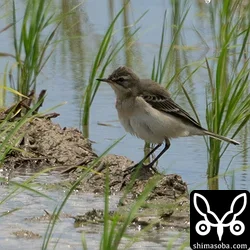
White-browed Eastern Yellow Wagtails are increasing — flocks of up to around 20. I also confirmed the season's first juvenile Black-winged Stilt. Red-necked Stints, Long-toed Stints, and Wood Sandpipers continue to turn over and build in numbers. A Greater Painted-snipe is incubating.
Eastern Yellow Wagtail, 1st-winter.
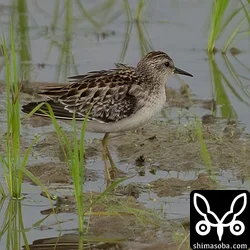
Long-toed Stints are building up in both adults and juveniles. Red-necked Stints so far are adults only — juveniles have yet to arrive. Marsh Sandpipers, adults and juveniles alike, are passing through steadily.
Long-toed Stint, juvenile. Numbers are steadily increasing.
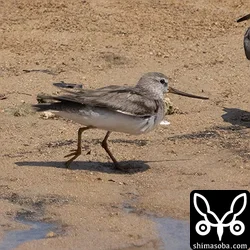
I recorded my first Terek Sandpiper and Sanderling of the season.
There were 3 Terek Sandpipers and 4 Sanderlings, along with Greater Sand Plovers, Siberian Sand Plovers, Grey-tailed Tattlers, Ruddy Turnstones, Red-necked Stints, Pacific Golden Plovers, and Kentish Plovers. Coastal birds are going to keep building from here on.
Juvenile Terek Sandpiper.
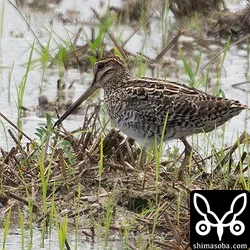
With Typhoon No. 6 moving away from Ishigaki Island, I did a patrol of the rice paddies. Pin-tailed Snipe, Swinhoe's Snipe, and Red-necked Phalarope had all arrived for the first time this season.
I recorded my first juvenile Wood Sandpiper and Long-toed Stint of the season. Common Greenshank and Little Ringed Plover numbers were also up.
Cinnamon Bitterns breed on the island, and I am encountering recently fledged juveniles more and more often.
First Pin-tailed Snipe adult of the season.