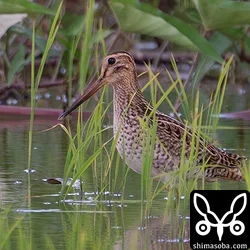
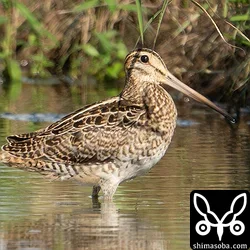
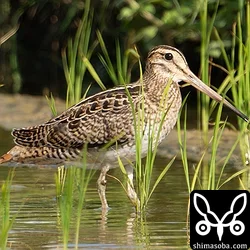
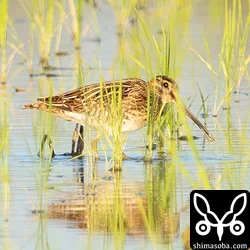
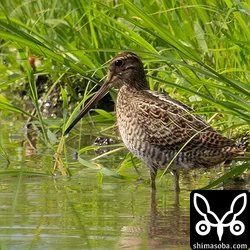
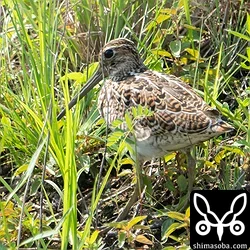
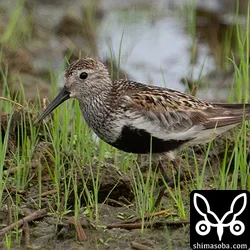
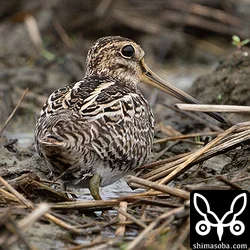
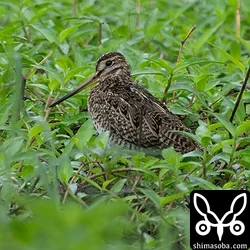
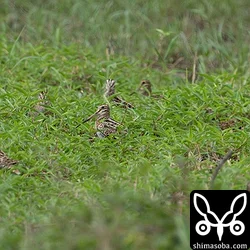
The second wave of snipe is peaking. That said, most birds are Swinhoe's Snipe and Pin-tailed Snipe — the Common Snipe peak is still ahead. The busier paddies hold around 30 snipe per field, mostly Swinhoe's Snipe. Next most numerous are Pin-tailed Snipe; Common Snipe seem to number only two or three.
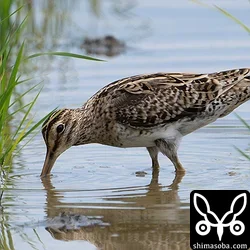
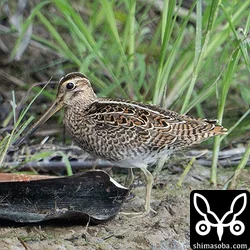
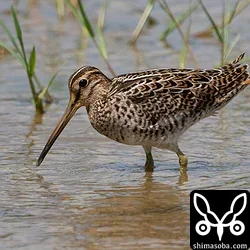
Swinhoe's Snipe, adult.
The second wave of Pin-tailed Snipe — which has been on the low side this season — appears to have arrived. It feels slightly earlier than usual, so it may simply be that migration has been running late. Worth watching how things develop.
Since late August I have been visiting the same paddy field day after day to identify individual snipe, keep continuous records, and sort out tricky birds. Some individuals stay for a long time; others disappear within a day. Pin-tailed Snipe, Swinhoe's Snipe and Common Snipe alike tend to stick to almost exactly the same spot once they settle in.
New birds have joined the resident Pin-tailed Snipe, and the snipe scene in the paddies is a little livelier.
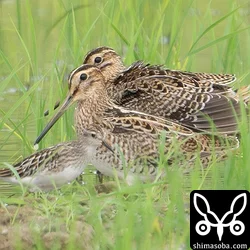
Pin-tailed Snipe (rear) and Swinhoe's Snipe. Both juveniles.
Almost every evening I am picking up snipe in the same paddy field. Some individuals have been staying a long time, and I can still find new arrivals. Swinhoe's Snipe continues to make up the majority, but Pin-tailed Snipe were there too. A few new Common Snipe had also come in.
A Pin-tailed Snipe juvenile appeared right in front of me.
On this day, a large flock of Barn Swallows moved into the paddy field where I have been watching snipe every day — prime viewing conditions.
When Barn Swallows spot snipe feeding in the paddies they sometimes dive-bomb them for no apparent reason. The snipe then raise their tail feathers in alarm, which actually makes them much easier to observe.
The bird in the foreground is a Pin-tailed Snipe juvenile.
The large Swinhoe's Snipe I found yesterday — I caught up with it again. I also managed to photograph the tail feathers. I had been hoping for something a little more irregular, but it was unmistakably Swinhoe's Snipe, which was reassuring. ^^
A Swinhoe's Snipe with an impressive build.
Among a flock of around 20 Swinhoe's Snipe, one individual stood out conspicuously. It was large-bodied with a long bill, reminiscent of a Latham's Snipe. At this time of year a bird in near-juvenile plumage cannot realistically be Latham's Snipe, so Swinhoe's Snipe it must be. The tertial pattern also does not fit Latham's Snipe.
A Swinhoe's Snipe juvenile that stood out quite a bit among the flock.
We held the 3rd Ishigaki Island Snipe Camp, which has earned quite a following. The participant came from Aichi Prefecture. As it happens, every participant from the 1st through the 3rd camps has been from Aichi. ^^;
This time an unavoidable work commitment cut things short, so we only had about three hours of snipe watching — but we spent that time poring over roughly 20 snipe in paddy fields in a single area with intense focus.
Individual numbers this season have been as high as usual, but Pin-tailed Snipe were frustratingly scarce. On the other hand, we got to observe some very interesting Swinhoe's Snipe, so as snipe camps go it was a great success. ^^
Swinhoe's Snipe, juvenile.
I went out to scout for the 3rd Ishigaki Island Snipe Camp. That said, these are rice paddies I check every day, so I already have a fair idea of who's around.
First records for the season: juvenile Broad-billed Sandpiper, Red-necked Stint, and Dunlin. All three are season firsts as juveniles.
Swinhoe's Snipe, juvenile. A dark individual — or rather, one with a strong brownish tone. Every now and then you get a Swinhoe's Snipe like this.
There was a Pin-tailed Snipe in the finest condition I've seen this season. Among the Swinhoe's Snipe, one individual had notably narrow outer tail feathers — an interesting bird.
The juvenile Broad-billed Sandpiper is a first for the season.
Pin-tailed Snipe, juvenile. A very beautiful bird — I wanted to see it in full, but it was extremely wary and didn't move at all.
First record of a juvenile Common Greenshank this season. The remaining juvenile species still coming through include Red-necked Stint, Long-toed Stint, Dunlin, and Broad-billed Sandpiper.
Snipe are moving through steadily too. There are 20 or more in one area alone. The group seems to have settled into a regular cast, and things will probably stay that way until the second wave arrives.
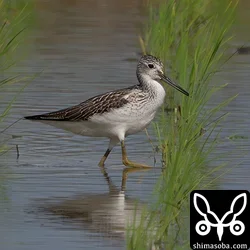
Common Greenshank, juvenile. Still in full juvenile plumage.
First Pin-tailed Snipe and Swinhoe's Snipe of the season confirmed. The Pin-tailed Snipe consisted of two adults and one juvenile; the Swinhoe's Snipe were five juveniles. I expect numbers to increase steadily from here.
The 3rd Ishigaki Island Snipe Camp will be held on 30 August.
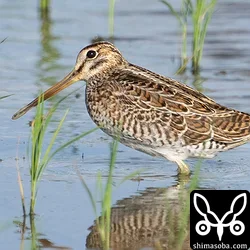
Pin-tailed Snipe, adult.
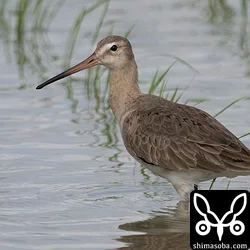
First records this season of Black-tailed Godwit, Sharp-tailed Sandpiper and Striated Heron. Unless the weather turns rough, large waders like the Black-tailed Godwit don't come down to Ishigaki. Striated Heron is scarce on the island, so finding one felt like a bonus.
The Black-tailed Godwit is still very much in winter plumage.
We held the long-awaited 2nd Ishigaki Snipe Camp. Following on from the first session last autumn, two fellow enthusiasts joined us — one from off-island, one local. ^^
As described in the bonus post, a male Citrine Wagtail in gorgeous summer plumage also put in an appearance, making for a very enjoyable camp.
In spring, Pin-tailed Snipe and Swinhoe's Snipe numbers are lower, but there's a good chance of meeting the regulars — Ruddy Kingfisher, Common Hoopoe, Chinese Blackbird and other migrants — as well as waders and plovers coming into summer plumage, and the possibility of an unexpected rarity. I plan to keep running the camp twice a year, spring and autumn, so please do join us.
A typical Pin-tailed Snipe on Ishigaki Island in spring.
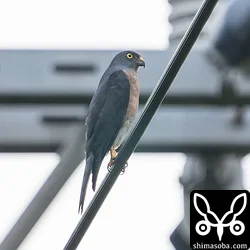
A pre-camp scout for the 2nd Ishigaki Snipe Camp. Up until the day before I'd found nothing but Common Snipe and was getting anxious, but on the eve of the camp a good number of Swinhoe's Snipe and Pin-tailed Snipe arrived. The birds were at just the right distance — not too close, not too far — perfect for relaxed observation. Looking forward to tomorrow.
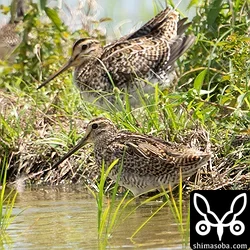
Five Swinhoe's Snipes and one Pin-tailed Snipe.
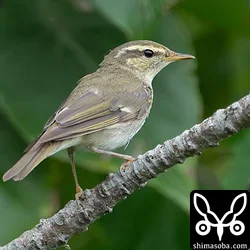
Arctic Warbler numbers are lower than in the bumper year two years ago, but a reasonable number are still wintering here. Lately I've also been hearing Kamchatka Leaf Warbler calls — possibly birds already on the move.
For snipe, all three species have shown up earlier than usual: Pin-tailed Snipe, Swinhoe's Snipe and Common Snipe together at the same time.
An overwintering Lesser Whitethroat appeared right in front of me. I've confirmed the ID by call, but I also think I can make out the classic Lesser Whitethroat feature of P10 being shorter than the primary coverts. ^^;