A daily record.
Featuring photos of wild birds and nature, mainly from Okinawa Main Island and Ishigaki Island

Asian Koel singing outside my house (with video)

June 19, 2026
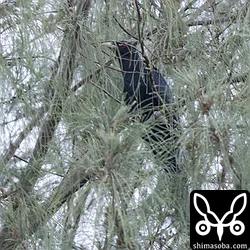
A male Asian Koel was calling in front of my house, so I went looking for it and found it singing near the top of a she-oak. A crow came by nearby, which made for a handy size comparison. ^^

A male Large Hawk-Cuckoo calling near the top of a casuarina tree. You can hear them calling all over Ishigaki Island, so use this kind of image to guide your search.
200 Roseate Terns arrive (with video)

June 13, 2026

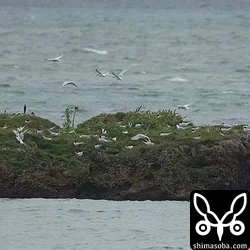
After rough weather, around 200 Roseate Terns arrived. They took over the rocky reef where Black-naped Terns breed every year, and there was some skirmishing between them.

Lots of Roseate Terns on the rocky reef where Black-naped Terns always form their breeding colony.

Pheasant-tailed Jacana — one week in (with video)

June 2, 2026

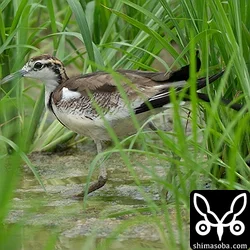
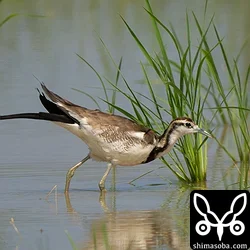
The Pheasant-tailed Jacana has now been here a week. It is less wary than when it was first found, making observation easier. A Crested Serpent Eagle was nearby, but the jacana showed no sign of concern.

Over the week it stayed, it gradually lost its wariness of people and was relaxed about foraging in the open.

Pheasant-tailed Jacana appears

May 30, 2026

The first Pheasant-tailed Jacana of the season has arrived. It moves through the rice plants and is hard to spot, but it has been coming out regularly to flooded patches. This individual is quite wary.

Black-naped Terns have also moved closer to the coast. Colony formation has begun.

A Pheasant-tailed Jacana in the paddy fields. When I lost sight of it, it was very hard to find again, hidden among the rice plants.

Chinese Pond Heron, Cinnamon Bittern, Ruddy Kingfisher and others

May 19, 2026

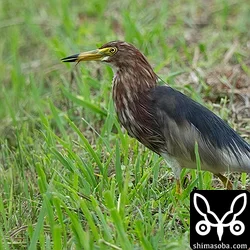
A few Chinese Pond Herons are staying. Plumage varies widely, from individuals still mostly in winter dress to those that have almost fully switched to breeding plumage. A Cinnamon Bittern was nearby as well — it is probably breeding in the vicinity.

White-winged Terns were still present but numbers seemed to have dropped. Black-tailed Godwit, Sharp-tailed Sandpiper, Common Redshank, and Common Greenshank are also staying.

A Chinese Pond Heron almost fully into breeding plumage. This individual was a bit wary.

Northern Boobook starts breeding, six White-winged Terns arrive, Eastern Yellow Wagtail appears

May 11, 2026

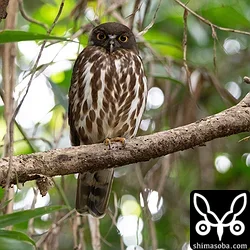
The Ryukyu Northern Boobook has begun breeding. The nest site changes almost every year because the nest trees rot and fall, yet breeding still succeeds and typically two or three chicks fledge.

A flock of six White-winged Terns appeared over the paddies. The weather had been a little rough, so they seemed to have taken shelter on the island. All were in summer plumage — a beautiful sight.

A Eastern Yellow Wagtail also turned up nearby. It has been a very long time since the last one. By the following day it was gone.

The sandpipers have largely moved on, which makes things feel rather quiet, but at least one Pin-tailed Snipe managed to hang on.

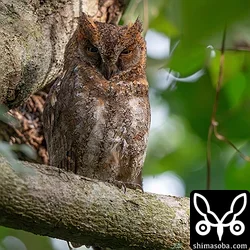
A male Japanese Scops Owl. I've had a long acquaintance with this individual.

Waders at sea and in the paddies

May 7, 2026

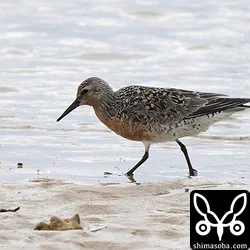
Made a circuit of the estuary for the first time in a while. Three Red Knots, Great Knot, Bar-tailed Godwit, Far Eastern Curlew, Terek Sandpiper, Grey-tailed Tattler, and Greater Sand Plover were all observed. A Pied Avocet had turned up in the paddies.

A Red Knot transitioning into breeding plumage. Three appearing at the same time is unusual.

The sixth Black Drongo of the season and a Northern Boobook starting to breed

May 7, 2026

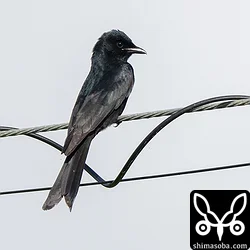
The sixth Black Drongo of the season appeared. Like yesterday's bird, every individual this season has been strangely unafraid of people.

The Northern Boobook that breeds here every year has also arrived. The nest tree looks rather fragile, and I worry it might not survive a typhoon.

A Black Drongo with zero wariness. It was catching flying insects.

Five Black Drongos appear

May 6, 2026

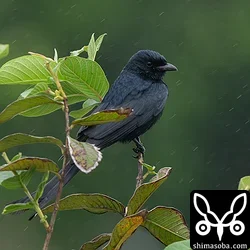
Five Black Drongos turned up at three different locations. They are a fixture of Golden Week on Ishigaki Island — whenever the weather turns rough, several are sure to be seen.

A Black Drongo perched in a guava tree. It was completely unafraid.

Shorebirds in the Paddies

April 29, 2026

Temperatures rose and the paddy birds became a little more active — I had good views of bathing behavior and similar scenes.

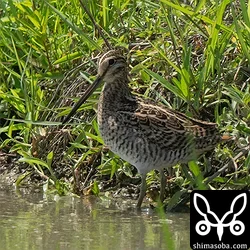
A distant Pin-tailed Snipe.

Pin-tailed Snipe, Swinhoe's Snipe, and Common Snipe

April 28, 2026

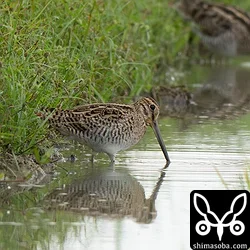
Pin-tailed Snipe, Swinhoe's Snipe, and Common Snipe are all staying in the paddies of Ishigaki Island. Spring snipe identification gets harder than autumn — which is actually quite enjoyable. ^^

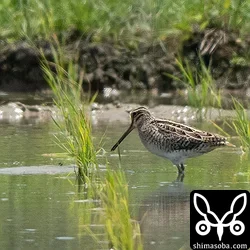
Pin-tailed Snipe spotted on a distant paddy bank. The backlight makes observation tough… ^^;

Ryukyu Scops Owl Begins Incubating

April 28, 2026

The Ryukyu Scops Owl I have been watching continuously for many years appears to have begun incubating again safely this season. The chicks should fledge around late June.

A male Ryukyu Scops Owl keeping watch.

Two Snipe Species

April 26, 2026

Snipe watching again today. The weather was poor and I came across a good number of snipe. Among them, I focused on photographing Pin-tailed Snipe in particular.

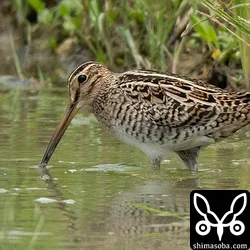
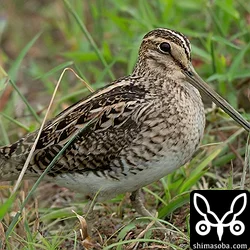
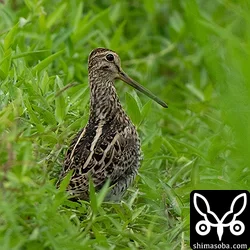
I was able to observe a Pin-tailed Snipe at close range. Though too close is its own problem.

Pin-tailed Snipe and Swinhoe's Snipe (video included)

April 22, 2026

Both Pin-tailed Snipe and Swinhoe's Snipe are scarce on Ishigaki Island in spring, but even so I was able to observe several individuals on this day.

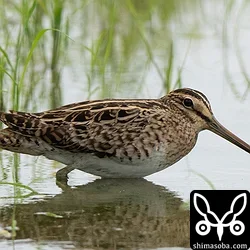
A Swinhoe's Snipe that went into alert posture because I got too close.

6th Ishigaki Snipe Camp — Side Notes

April 20, 2026

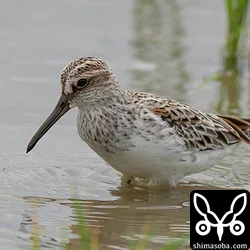
6th Ishigaki Island Snipe Camp side notes: a Broad-billed Sandpiper showed at close range, and the paddies also produced a flock of Sharp-tailed Sandpipers, Long-toed Stints in summer plumage, freshly arrived Eurasian Whimbrels, breeding Greater Painted-snipes, and Cinnamon Bitterns in beautiful nuptial plumage.

While traveling between sites, we encountered Ruddy Kingfishers, a Crested Serpent Eagle, Red-throated Pipits, and a large flock of Eastern Yellow Wagtails.

When I first spotted it the Broad-billed Sandpiper was at the far end of the rice paddy, but it gradually worked its way closer.

6th Ishigaki Island Snipe Camp Held!!

April 20, 2026

We held the 6th Ishigaki Island Snipe Camp. This time one woman and one man joined us. Day one was tough going, but on day two we managed reasonable views of both Pin-tailed Snipe and Swinhoe's Snipe.

Spring snipe are harder to identify than autumn birds, and some individuals were left for later determination.

For the main species seen other than snipe, please see the side notes.

Past camps from the 1st onward are also available at past Ishigaki Island Snipe Camps.

Pin-tailed Snipe. The scapulars and other feathers are changing into breeding plumage.

Scouting for the Ishigaki Snipe Camp

April 18, 2026

Ahead of the 6th Ishigaki Island Snipe Camp, I went to scout the paddies around the island. Pin-tailed Snipe, Swinhoe's Snipe, and Common Snipe were all confirmed — a relief. Now there is nothing left to do but hope they stay for a few more days.

First Pin-tailed Snipe of the season!!

Blue-and-white Flycatcher After a Long While

April 16, 2026

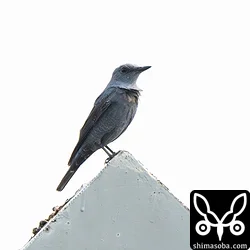
I had a work trip to Yonaguni Island, so I did some birdwatching in my free time. I got bird information from someone staying long-term on Yonaguni, but it seems I arrived right in the gap between waves — the birds typical of Yonaguni had already moved through. I did manage to see a Blue Rock Thrush that had been present for about three weeks. ^^

An adult male Blue Rock Thrush. It has been staying for quite a long time — about three weeks at this point.

Ruddy Kingfisher Nest Building (video included)

April 14, 2026

The Ruddy Kingfishers on Ishigaki Island are in the early stages of breeding, and pairs can be observed nest building here and there. Seeing the two birds perched side by side is something that only happens at this time of year. Courtship feeding, with the male passing food to the female, can also be observed.

A pair of Ruddy Kingfishers perched together. They are in the middle of nest building.