Following last week's visit when I was able to see a Willow Warbler, I was on Yonaguni-jima again for work. I made sure to fit in some birding between assignments. ^^
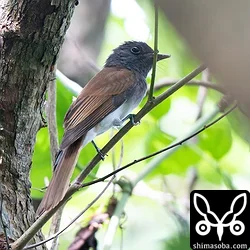
Nothing as noteworthy as last time, but it was striking to find small groups of Black Paradise Flycatchers all over the place. I was of course hoping for Indian Paradise Flycatcher too, but unfortunately didn't come across any likely candidates…
Discovered a flock of Japanese Paradise Flycatchers beside the park car park.
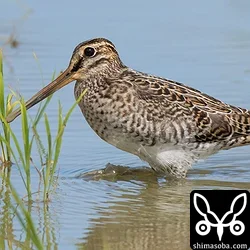
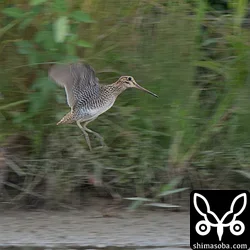
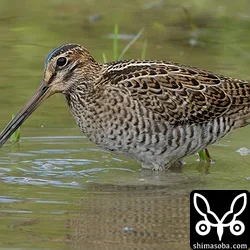
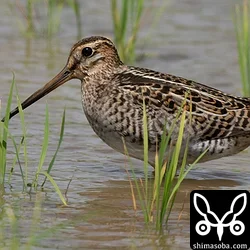
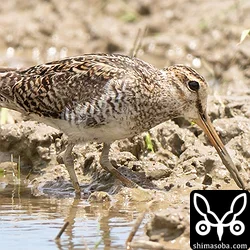
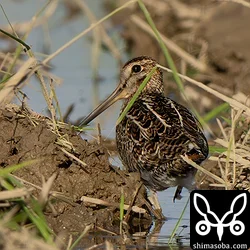
By mid-September the Pin-tailed Snipe numbers are falling and Swinhoe's Snipe are coming to dominate. After this, a second wave of Pin-tailed Snipe is expected.
Juvenile Red-necked Stints have started arriving. Long-toed Stint, Common Greenshank, Dunlin, and Superb Lyrebird are also present.
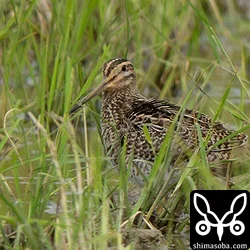
The only Pin-tailed Snipe of the day was at the far end of the paddy field — a long way off….
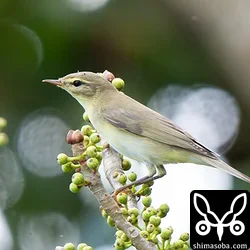
Birding in the gaps between work assignments on Yonaguni Island. As I cruised the forest road with a sense that autumn migration was well and truly getting under way, I spotted a fig tree that birds were gathering in. While watching a flock of Warbling White-eyes, a yellow warbler flew into my field of view. I got it in the binoculars — it was a Willow Warbler!! It was moving from branch to branch, apparently picking off small insects.
I also had first records for the trip of Chinese Sparrowhawk, Oriental Dollarbird, Dark-sided Flycatcher, Asian Brown Flycatcher, Grey-streaked Flycatcher, Garganey, Common Snipe, and White-shouldered Starling. Yonaguni Island delivers, as always. ^^
Arctic Warbler makes an appearance. It stands out clearly — obviously different from the other Japanese leaf warblers.
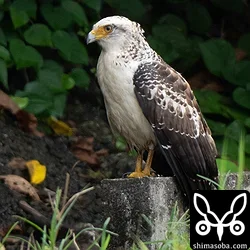
As the young birds begin to move away from their parents, juvenile Crested Serpent Eagles are becoming easier to observe. Multiple juveniles have been confirmed across Ishigaki Island. There were no typhoons this season so breeding success looks good — I'm looking forward to seeing how many individuals are counted.
Of the recent Greater Painted-snipe brood, one chick died in the nest, but the surviving chick is doing well with the parent. There are plenty of predators — cats, crows, and Black-winged Kites — so let's hope it makes it through safely.
Crested Serpent Eagle, juvenile. When it spotted something in a roadside ditch it would swoop down — practising its hunting on its own.
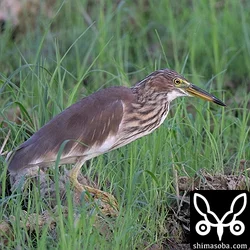
One month after the first Javan Pond Heron, the Chinese Pond Heron has finally arrived. In recent years a pattern has continued in which Chinese Pond Herons arrive after the Javan Pond Herons. There are also more years now when Javan Pond Herons outnumber Chinese Pond Herons.
The Eastern Yellow Wagtails first confirmed last month are increasing steadily in number. The white-supercilium form appears to predominate. Every flock is a mix of juveniles and adults.
The first Chinese Pond Heron of the season. It was eating a tadpole.
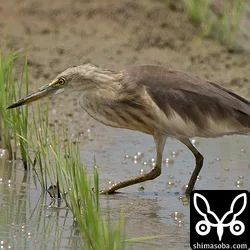
The Javan Pond Heron that arrived in July has been staying long-term and numbers have been building.
In the same rice field, Greater Painted-snipe and Common Moorhen are incubating eggs. They appear to breed multiple times a year. White-breasted Waterhens are at all sorts of different breeding stages simultaneously — newly hatched chicks alongside large, well-grown ones. They too may be raising several broods a year.
Three Javan Pond Herons are staying in the same rice field. They have also been recorded in other areas, and there seem to be a fair number on the island. On the Okinawa main island, arrivals have been confirmed in the north, central, and south. Their range appears to be expanding steadily eastward in recent years.
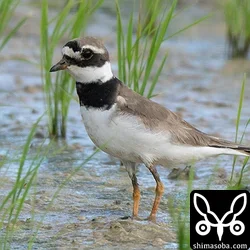
A Common Ringed Plover — a rare bird on Ishigaki Island — has turned up. It's only the second time I've seen one on the island. It was associating with a flock of Little Ringed Plovers. A juvenile Curlew Sandpiper, the first of the season, also arrived. I had noted it a few days earlier, but today I managed to get photographs.
The rice fields have a true migration-season feel, with Common Greenshank, Marsh Sandpiper, Wood Sandpiper, Long-toed Stint, Black-winged Stilt, and Red-necked Stint all coming and going.
The Kentish Plover was in transition from breeding to non-breeding plumage.
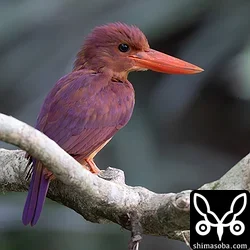
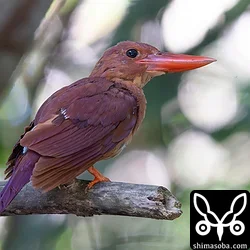
The Ruddy Kingfishers on Ishigaki Island are now rarely heard calling. Moult into winter plumage is under way and every individual looks rather ragged. Most will have moved south by the end of September, and finding a Ruddy Kingfisher is becoming increasingly difficult.
Common Emerald Doves are being seen more often along roadsides, coming to feed on fallen fruits and seeds of Macaranga and related trees.
A Ruddy Kingfisher from the neighbourhood. Moult is well advanced and the plumage looks ragged. September has arrived and departure is not far off. I went out to photograph it while it still looks lively, before it disappears.
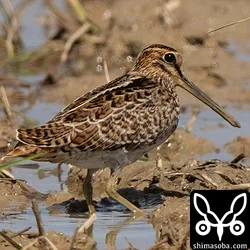
Juvenile Pin-tailed Snipes have finally arrived. Swinhoe's Snipe are also increasing in both adults and juveniles. For some reason, Pin-tailed Snipe are being recorded in unusually high numbers in the central part of the island this season as well. Most appear to be juveniles.
Juvenile Pin-tailed Snipe.
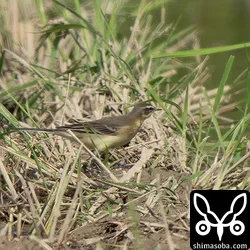
I recorded the first Eastern Yellow Wagtail of the season. It is a juvenile, but appears to be of the subspecies tschutschensis with the white supercilium. The Javan Pond Heron, with zero wariness of humans, continues its long stay.
The Greater Painted-snipe may be on a second breeding attempt — the male was collecting dead leaves and building a nest. When a snipe came close, he threatened it.
A juvenile Eastern Yellow Wagtail (superciliated form), the first confirmed record of the season.
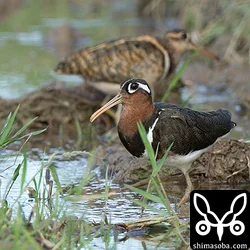
While watching snipe, a female Greater Painted-snipe appeared. She started flapping her wings and then a male emerged from the undergrowth. After that the two moved around together, bathing and going about their business. A second breeding attempt perhaps? The Javan Pond Heron is still on its extended stay.
A pair of Greater Painted-snipe moving around together.
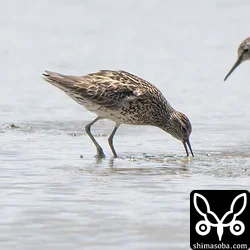
I recorded my first Sharp-tailed Sandpiper of the season — about three birds arrived together. The autumn shorebird passage is now getting properly underway, with Wood Sandpiper, Common Redshank, Long-toed Stint, Red-necked Stint, Black-winged Stilt, Common Greenshank, and Little Ringed Plover passing through the paddies day by day.
While watching the waders, a sudden tension ran through the paddy. Looking up, a juvenile Black-winged Kite appeared to hunt. It plunged into the grass and came out gripping a White-breasted Waterhen chick. The prey seemed heavy and the bird was struggling to carry it off.
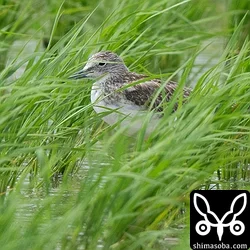
The first Pectoral Sandpiper of the season turned out to be an adult.