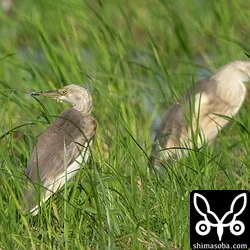
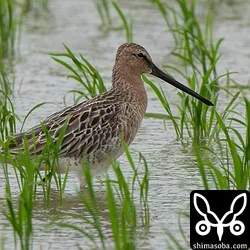
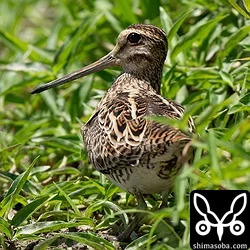
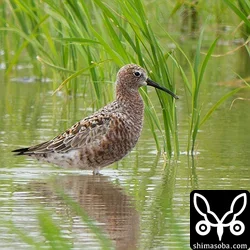
A daily record.
Featuring photos of wild birds and nature, mainly from Okinawa Main Island and Ishigaki Island

Migrant waders increasing

Aug. 19, 2026

Migrant waders are building up and the paddies on Ishigaki are getting lively.

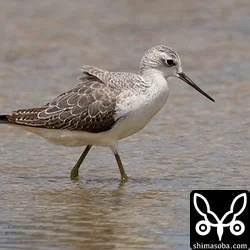
Juveniles now make up more than half of the Long-toed Stints present, and I confirmed the first juvenile Wood Sandpiper of the season. I had already found juvenile Common Redshank about two weeks ago, but this was my first time photographing one this season.

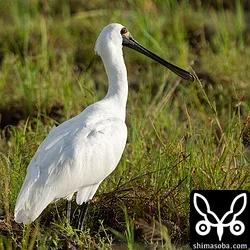
Common Greenshank, Marsh Sandpiper, Black-winged Stilt, Pacific Golden Plover, and Black-faced Spoonbill have also been showing up one after another.

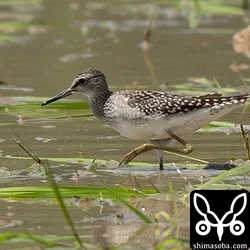
First juvenile Wood Sandpiper of the season. Only one individual confirmed, but numbers will keep climbing from here.

Pin-tailed Snipe appear!! Wader migration in full swing

Aug. 11, 2026

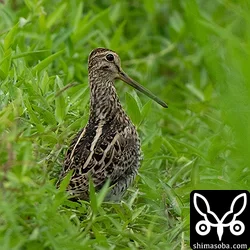
I found three Pin-tailed Snipe — the first of the season!! The three were together, so they may well have come through last night.

Besides snipe, the paddies now hold Common Redshank, Common Greenshank, Marsh Sandpiper, Black-winged Stilt, Long-toed Stint, Wood Sandpiper, and Whiskered Tern. Migration is well and truly under way.

For moult notation, from this season I will be adopting the WRP System (Wolfe–Ryder–Pyle System).

Finally got confirmation. Pin-tailed Snipe, adult. DCA (Definitive Alternate plumage).

Scouting for the Ishigaki Snipe Camp

April 18, 2026

Ahead of the 6th Ishigaki Island Snipe Camp, I went to scout the paddies around the island. Pin-tailed Snipe, Swinhoe's Snipe, and Common Snipe were all confirmed — a relief. Now there is nothing left to do but hope they stay for a few more days.

First Pin-tailed Snipe of the season!!

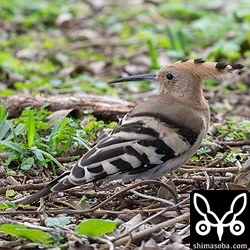
Common Hoopoe!! (video)

Feb. 12, 2026

The second Common Hoopoe of the season has arrived. The Common Hoopoe is one of the birds that herald spring on Ishigaki Island, though it feels as if the arrival date gets a little earlier every year.

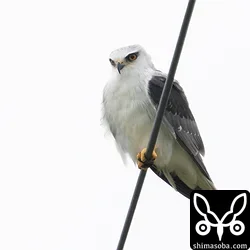
With the warmer weather, Crested Serpent Eagle and Black-winged Kite on Ishigaki Island have been observed carrying nesting material and displaying — confirmed breeding behaviour. Wintering waders and ducks are still present.

A Eurasian Hoopoe that turned up a little early. There are good years every few years, but I have a feeling this season will see a large influx of Eurasian Hoopoes on Ishigaki Island.

Short-eared Owls Wintering

Jan. 16, 2026

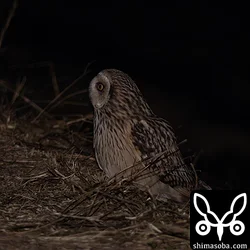
Short-eared Owls have been wintering here again this season, as they did from around the end of last year. Surprisingly large numbers have turned up. A Long-eared Owl was also reported, but only for a single day — unfortunately I was not able to see it myself.

Out in the paddies during the day there are also wintering waders and plovers. Past mid-January I get the sense that they are slowly starting to move. I expect the main movement to begin around late February.

There was a Short-eared Owl staring intently at a thicket where mice were lurking. It seemed there was another one in the same area.

Pin-tailed Snipe Still Present

Nov. 22, 2025

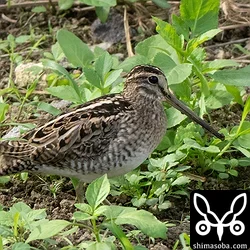
The Pin-tailed Snipe I found the other day was still there, wintering alongside several Common Snipe.

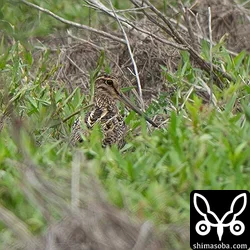
It spent most of the day in the grass.

Black-headed Bunting, Forest Wagtail, Arctic Warbler, White-shouldered Starling and others

Nov. 3, 2025

A Black-headed Bunting turned up after a long absence. It was very likely the same individual I briefly glimpsed in the same paddy field about a week ago. It was mixed in with a flock of several hundred Eurasian Tree Sparrows.

A Forest Wagtail appeared on the usual forest road — the sixth individual this season. Arriving this late in the year, there is a good chance it will winter here. Last year one wintered at the same spot. Once they settle into wintering mode, though, they tend to stay deep inside the forest and become harder to observe.

Arctic Warblers have been showing up since early October. Birds fresh in from migration are often in small flocks, but now they have spread across the island and each is holding a small territory. Many individuals will stay through to spring. Come April, they form flocks again in preparation for the northward journey, and some begin to sing.

Brambling have also appeared. They joined up with Eurasian Tree Sparrow flocks and were feeding on second-crop rice grain in the paddies.

White-shouldered Starlings — a few birds — were mixed into a flock of several tens of White-cheeked Starlings, along with around 20 Common Starlings. The wintering White-shouldered Starling population on the island is sizeable in its own right, and flocks of several tens are regularly seen in parks and the like.

At this time of year, snipe are mostly Common Snipe, but among a flock of ten-odd I found just two Swinhoe's Snipe. I expect them to disappear once the second-crop rice harvest gets under way. Other waders lingering in the paddies include Common Redshank, Common Greenshank, Marsh Sandpiper, Black-winged Stilt, Wood Sandpiper, Green Sandpiper, Common Sandpiper, and Long-toed Stint.

Ducks are increasing too — I recorded my first Mallard of the season on Ishigaki. Mallard used to be quite scarce on Ishigaki and Okinawa, but the numbers being seen seem to grow a little more each year.

A Black-headed Bunting standing out prominently among a flock of Eurasian Tree Sparrows. It was constantly harassing them….
Pin-tailed Snipe Numbers Crash; Grey-faced Buzzard Migration Winding Down?

Oct. 16, 2025

Pin-tailed Snipe have dropped sharply and the fields are now full of Common Snipe. A few Swinhoe's Snipe are still hanging on. Last year the final Pin-tailed Snipe of the autumn migration was recorded on 18 October. I wonder how long they'll be around this season. I don't think the 2024 birds will overwinter, but Pin-tailed Snipe and Swinhoe's Snipe were confirmed in February. I know it's getting ahead of myself, but I'd love to find overwintering birds in 2026.

I went back to check on the Grey-faced Buzzards again today after yesterday's visit, but things were quiet — it felt like the main push had already moved through the day before… ^^; At this time of year my daily snipe rounds make it hard to get out and watch the Chinese Sparrowhawk and Grey-faced Buzzard migration properly…

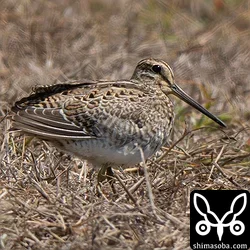
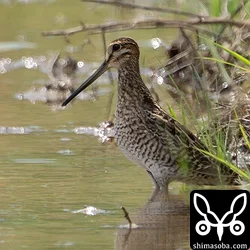
A juvenile Pin-tailed Snipe. This might turn out to be my last Pin-tailed Snipe of the season.

Whiskered Tern, Pin-tailed Snipe, Swinhoe's Snipe

Sept. 25, 2025

A group of around ten Whiskered Terns — adults and juveniles — arrived. Among the snipe, Common Snipe numbers are up while Pin-tailed Snipe have decreased.

Long-toed Stint, Wood Sandpiper, Common Greenshank, and Marsh Sandpiper are also present in good numbers.

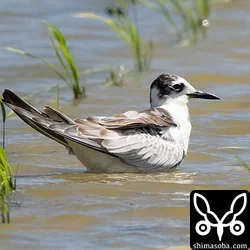
White-winged Tern juvenile. Perhaps due to the lack of typhoons, no large flocks have appeared this season.

Common Ringed Plover appears!!

Sept. 4, 2025

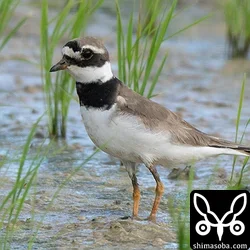
A Common Ringed Plover — a rare bird on Ishigaki Island — has turned up. It's only the second time I've seen one on the island. It was associating with a flock of Little Ringed Plovers. A juvenile Curlew Sandpiper, the first of the season, also arrived. I had noted it a few days earlier, but today I managed to get photographs.

The rice fields have a true migration-season feel, with Common Greenshank, Marsh Sandpiper, Wood Sandpiper, Long-toed Stint, Black-winged Stilt, and Red-necked Stint all coming and going.

The Kentish Plover was in transition from breeding to non-breeding plumage.

Javan Pond Heron numbers up, juvenile waders arriving

Aug. 11, 2025

Javan Pond Heron have increased, with 4 birds confirmed at 3 sites. They seem to be turning up steadily on Okinawa Island too, and have become a fixture of this time of year. I recorded the first juveniles of the season for Black-winged Stilt, Long-toed Stint, Wood Sandpiper, and Marsh Sandpiper. Both the variety and numbers of juveniles are growing day by day.

Two Javan Pond Herons. Not particularly wary — easy to observe.

Asian Dowitcher, Pectoral Sandpiper, Little Stint, Broad-billed Sandpiper, Curlew Sandpiper and More (video)

April 29, 2025

With shorebirds on the increase, I spent the entire day searching for waders. The result: starting with Asian Dowitcher, I recorded Pectoral Sandpiper, Little Stint, Broad-billed Sandpiper, Curlew Sandpiper, Pin-tailed Snipe, Greater Sand Plover, and more — 21 species of waders in total. Seeing this many species in a single day is one of the great pleasures of this time of year. ^^

A Bar-tailed Godwit in summer plumage that suddenly dropped in alongside Black-winged Stilts and Black-tailed Godwits near the end of a shorebird search. Looking sharp in that summer plumage.

4th Ishigaki Snipe Camp!

April 15, 2025

We held the 4th Ishigaki Island Snipe Camp again this year. Two participants came down from Hokkaido. That said, snipe numbers were already low during the pre-camp scouting the day before, and I had a bad feeling about it. Sure enough — poor results. It ended up being the worst outing yet: one Pin-tailed Snipe, a few Swinhoe's Snipe, and a few Common Snipe.

On the plus side, we managed to see around 50 species including Collared Kingfisher, Ryukyu Kingfisher, Crested Serpent Eagle, and various resident and migratory birds, which everyone was happy about, so I'll call it good. Years like this happen.

The only Pin-tailed Snipe of the day. A beautiful individual — I knew what it was the moment it came into the binoculars.

Migrants Grounded by Bad Weather

April 4, 2025

Two consecutive days of bad weather brought large numbers of shorebirds and plovers — apparently mid-migration — dropping in to localized spots. The biggest group was Black-winged Stilts, over 400 birds, followed by Wood Sandpipers at 200+. There were too many to keep counting, so I stopped midway. ^^;

Pied Avocet, Black-tailed Godwit, Marsh Sandpiper, Curlew Sandpiper, Sharp-tailed Sandpiper, and Garganey also arrived, making the paddies extremely lively — though two days later everything was back to normal. ^^;

Along the coast, Greater Sand Plover numbers increased, and a small number of Grey Plovers also came through.

Two Curlew Sandpipers confirmed.

Black-winged Kite, Siberian Peregrine, juvenile Crested Serpent Eagle and more

Dec. 14, 2024

The juvenile Black-winged Kite seems to have finally become independent recently. Black-winged Kites on Ishigaki breed multiple times a year, so the population keeps growing. The Peregrine Falcon pair that wintered here last year has returned to the same spot again this year. An Upland Buzzard is also in the same area, keeping the Eurasian Coots and herons on edge. A nearby juvenile Crested Serpent Eagle looked startled as the two Peregrines chased it around.

The two Tundra Swans are still present. Around ten Northern Lapwings — all juveniles — have arrived. The rice paddies are busy with Marsh Sandpipers, Common Greenshanks, Common Redshanks, Wood Sandpipers, Northern Shovelers and Eurasian Teals. The first Tufted Duck of the season was also confirmed.

A Black-winged Kite juvenile with zero wariness. Given the location and timing, it may be the individual that was being fed in mid-air by a parent bird previously.

Black-faced Spoonbill, Garganey, Northern Lapwing and Others

Nov. 6, 2024

Two Black-faced Spoonbills are roaming and staying around the island. As it gradually starts to feel like autumn, Garganey, Eurasian Teal, Northern Shoveler, Eurasian Wigeon and Northern Pintail are also increasing.

Adult Black-faced Spoonbill.

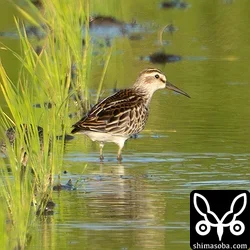
Two Broad-billed Sandpipers, Marsh Sandpiper, Red-necked Stint

Sept. 5, 2024

I have been watching snipe every day, but in between I also had two Broad-billed Sandpipers. Marsh Sandpiper, Common Greenshank, Red-necked Stint, Dunlin, Black-winged Stilt, Long-toed Stint, and Wood Sandpiper are also still present.

Two Broad-billed Sandpipers. Both were juveniles.

Marsh Sandpiper, Common Greenshank, Common Redshank, and Others

Aug. 23, 2024

First record of a juvenile Marsh Sandpiper this season. Common Greenshank, Common Redshank, Black-winged Stilt, Wood Sandpiper, Long-toed Stint, and Red-necked Stint all appear to be passing through Ishigaki in a steady stream, with the cast turning over continuously.

The first Marsh Sandpiper juvenile of the season. Already in first-winter plumage.

Guiding two young birders who live on the island

Aug. 1, 2024

Took two apprentice birders who live on the island out for about four hours of birdwatching. We came across juvenile Greater Sand Plover and Common Redshank — first juveniles of the season for both species. Together with Kentish Plover and Little Ringed Plover, that brings the juvenile wader tally to four species for the season.

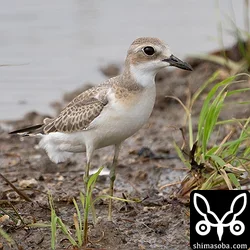
A juvenile Greater Sand Plover. It was found in a rice paddy — possibly due to the influence of the typhoon.