A daily record.
Featuring photos of wild birds and nature, mainly from Okinawa Main Island and Ishigaki Island

Snipe hunting in the usual paddies

Aug. 16, 2026

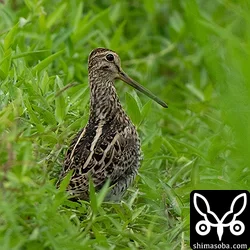
With the 7th Ishigaki Island Snipe Camp a week away, I spent concentrated time looking for snipe in the usual paddies. Juveniles had not yet arrived, but both Pin-tailed Snipe and Swinhoe's Snipe adults are present.

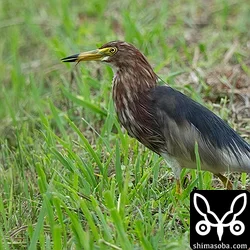
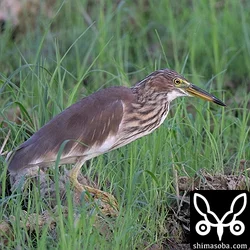
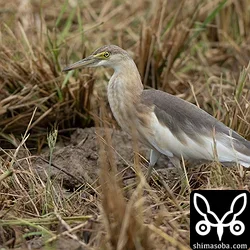
Javan Pond Heron and Chinese Pond Heron are also staying on. Grey Herons are slowly increasing.

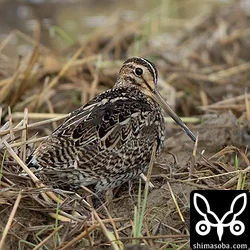
A Pin-tailed Snipe at relatively close range.

Javan Pond Heron, Chinese Pond Heron, Cinnamon Bittern and more (video)

Aug. 14, 2026

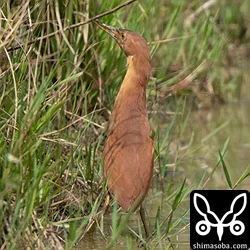
Two Javan Pond Herons and one Chinese Pond Heron are currently present. Encounters with Cinnamon Bittern and Purple Heron — both adults and juveniles — are becoming more frequent.

Snipe numbers are also growing steadily. On this day I found several individuals each of Pin-tailed Snipe and Swinhoe's Snipe.

Javan Pond Heron in winter plumage. Two birds have been present for the past few days.

Chinese Pond Heron, Cinnamon Bittern, Ruddy Kingfisher and others

May 19, 2026

A few Chinese Pond Herons are staying. Plumage varies widely, from individuals still mostly in winter dress to those that have almost fully switched to breeding plumage. A Cinnamon Bittern was nearby as well — it is probably breeding in the vicinity.

White-winged Terns were still present but numbers seemed to have dropped. Black-tailed Godwit, Sharp-tailed Sandpiper, Common Redshank, and Common Greenshank are also staying.

A Chinese Pond Heron almost fully into breeding plumage. This individual was a bit wary.

Scouting for the Ishigaki Snipe Camp

April 18, 2026

Ahead of the 6th Ishigaki Island Snipe Camp, I went to scout the paddies around the island. Pin-tailed Snipe, Swinhoe's Snipe, and Common Snipe were all confirmed — a relief. Now there is nothing left to do but hope they stay for a few more days.

First Pin-tailed Snipe of the season!!

Hen Harrier, Black-faced Spoonbill, Chinese Pond Heron, White Wagtail and Others

Dec. 3, 2025

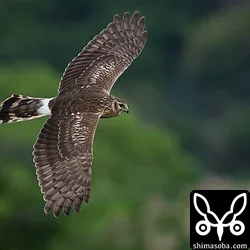
A Hen Harrier was hunting right in front of me. I could not tell what it was after, but startled Common Pheasants kept flushing repeatedly and the harrier did not seem to catch anything… ^^; My daughter, who was watching with me, was thrilled — when the Hen Harrier banked sharply she could actually hear the wind cutting through its wings. ^^

In the channels there were wintering Black-faced Spoonbills, in the paddies several Chinese Pond Herons, and we had Saunders's Gulls and Black-headed Gulls flying together — all in all a fun day of birdwatching for the kids.

A Hen Harrier quartering the rice paddies in search of prey.

Red-throated Pipit, Arctic Warbler, and Grey-faced Buzzard Migration

Oct. 15, 2025

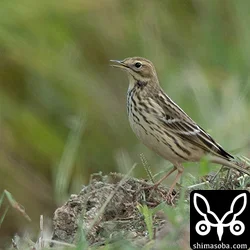
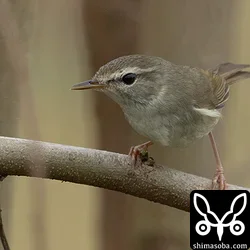
I photographed Red-throated Pipit and Arctic Warbler for the first time this season. I had already confirmed both by sight and call a few days ago.

On this day, more than 8,500 Grey-faced Buzzards were counted — a record — but by the time I arrived during a break from work the peak had already passed and I ended up counting only around 200…

A small flock of about ten Red-throated Pipits arrived. One or two Buff-bellied Pipits appeared to be mixed in, but I couldn't get a photo.

First Chinese Pond Heron of the season, Eastern Yellow Wagtails increasing

Sept. 5, 2025

One month after the first Javan Pond Heron, the Chinese Pond Heron has finally arrived. In recent years a pattern has continued in which Chinese Pond Herons arrive after the Javan Pond Herons. There are also more years now when Javan Pond Herons outnumber Chinese Pond Herons.

The Eastern Yellow Wagtails first confirmed last month are increasing steadily in number. The white-supercilium form appears to predominate. Every flock is a mix of juveniles and adults.

The first Chinese Pond Heron of the season. It was eating a tadpole.

Black Drongo, Ruddy Kingfisher, Common Redshank (video)

May 8, 2025

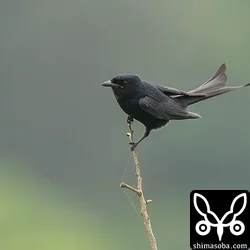
The Black Drongo arrived again this season to coincide with Golden Week. On Ishigaki Island it usually turns up around this time in spring. It perched on branch tips and caught dragonflies and horseflies in the air.

I also observed Ruddy Kingfisher, Crested Serpent Eagle, and Chinese Pond Heron, among others.

A Black Drongo perched at the tip of a thin branch, waiting for prey.

Busy Times: Lingering Winter Birds, Passing Migrants, and Breeding Residents

April 21, 2025

Ishigaki Island is lively with a mix of winter visitors that have not yet headed north, passage migrants stopping over, and resident birds active as breeding season gets underway.

Most conspicuous lately are Cinnamon Bitterns in full breeding season — I am encountering them in rice paddies all over the place. Tufted Duck and Eurasian Coot are among those that should have gone north but are still here; most have departed, but a few individuals appear to remain. I have also recorded snipe on passage.

A male Ryukyu Minivet— I often see it flying about actively.

Migrants Grounded by Bad Weather

April 4, 2025

Two consecutive days of bad weather brought large numbers of shorebirds and plovers — apparently mid-migration — dropping in to localized spots. The biggest group was Black-winged Stilts, over 400 birds, followed by Wood Sandpipers at 200+. There were too many to keep counting, so I stopped midway. ^^;

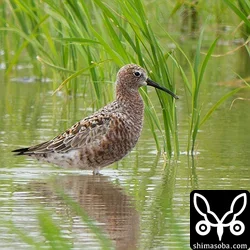
Pied Avocet, Black-tailed Godwit, Marsh Sandpiper, Curlew Sandpiper, Sharp-tailed Sandpiper, and Garganey also arrived, making the paddies extremely lively — though two days later everything was back to normal. ^^;

Along the coast, Greater Sand Plover numbers increased, and a small number of Grey Plovers also came through.

Two Curlew Sandpipers confirmed.

Common Hoopoe (video included)

March 22, 2025

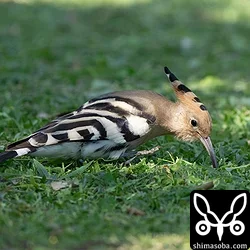
This season seems to be a bumper year for Common Hoopoe on Ishigaki. Reports of sightings are coming in from all over. On this one day alone, a dozen or more individuals were recorded. I myself photographed two while travelling for work.

It looks like snipe migration has finally begun. The birds feel clearly different from the overwintering ones, and there is a real sense of spring passage. ^^

A Eurasian Hoopoe foraging without any sign of concern as a lawnmower carrying a worker roared and trundled around nearby.

Wintering Japanese Bush Warbler, Chinese Pond Heron, Spring Temminck's Stints

March 15, 2025

Among the wintering warblers, Manchurian Bush Warblers can no longer be found, while more and more Japanese Bush Warblers are beginning to practise their song.

The Chinese Pond Heron that has been here since last autumn is still in its winter plumage as before. In the same paddy, a few Temminck's Stints arrived on spring passage. Common Snipe from the overwintering population were scattered, apparently disrupted by rice-planting and other farm work.

A Japanese Bush Warbler showing off its call notes and singing practice.

Resident Birds Active, Spring Migration Beginning

March 10, 2025

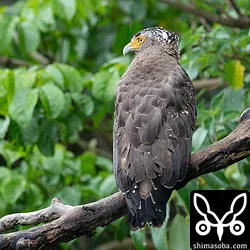
In early March on Ishigaki, Crested Serpent Eagle activity is surging with breeding season. On fine days it is possible to watch display flights. Malayan Night Herons are also moving into breeding condition and gradually taking on their nuptial colours.

Bramblings, Garganey, Wood Sandpipers, and Common Greenshanks heading north on their return migration have also arrived.

A Crested Serpent Eagle calmly lying in wait for prey in its usual territory.

White-shouldered Starling, Red Collared Dove, Chinese Pond Heron, and others

Feb. 3, 2025

A quick stop at a rice paddy near the town centre turned up White-shouldered Starling, Red Collared Dove, Chinese Pond Heron, Red-throated Pipit, Eurasian Skylark, and Eastern Yellow Wagtail. Being able to fit in some birdwatching even in a short spare moment is one of the great things about Ishigaki Island. ^^

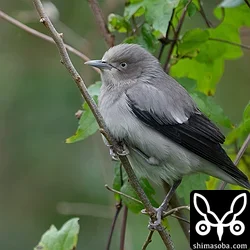
A female Daurian Starling appeared right in front of me.

Malayan Night Heron, Chinese Pond Heron, Crested Serpent Eagle Juvenile

Jan. 10, 2025

While I was eating my packed lunch in the park, a juvenile Malayan Night Heron wandered up to me. It had not been fed by people — it just happened to approach. Even so, the lack of wariness in a juvenile Malayan Night Heron is worrying.

About three Chinese Pond Herons were wintering in the paddies. They seem to be foraging in a variety of habitats — dropping into drainage channels and disappearing into the grass.

I caught up for the first time in a while with "Hayate," the juvenile Crested Serpent Eagle released in November last year. It had moved more than 10 km south in a straight line from the release point. The area is close to town and has heavy traffic, so I worry it may be hit by a vehicle.

A juvenile Malayan Night Heron. Born last year, it is in the process of molting into adult plumage.

Last Look at the Collared Kingfisher for 2024

Dec. 29, 2024

Before heading home to Nagoya I went for one last look at the Collared Kingfisher for 2024. Temperatures have dropped and crabs — its main prey — seem to be less available; its ranging area has expanded considerably.

The Common Hoopoe was still present too, but my camera was already packed in the carry-on bag, so no photos this time.

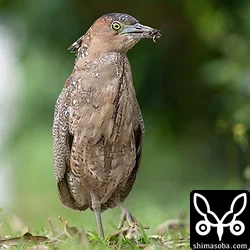
There was also a strangely pale Chinese Pond Heron. Looking closely, the median coverts on the left wing are white. Three Chinese Pond Herons are wintering in the same area.

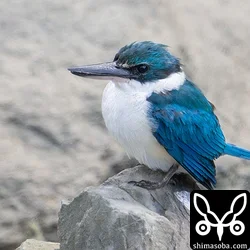
The last Collared Kingfisher of the year. This happy blue bird drew many birdwatchers to Ishigaki Island. Moult appears to have begun slightly, with fresh bright feathers coming in on the head. I hope it stays until the plumage is fully renewed.

Collared Kingfisher, Chinese Pond Heron, Malayan Night Heron and more (video)

Nov. 30, 2024

It has been over a month since the Collared Kingfisher appeared on Ishigaki. Its daily routine has become predictable, so the encounter rate is staying at nearly 100%. It has become more wary, though, so the key is to observe without letting the Collared Kingfisher notice you.

The Tundra Swan that was on Iriomote has moved over to Ishigaki. Conversely, the Oriental Stork that was on Ishigaki has crossed over to Iriomote.

In the woodland, a Narcissus Flycatcher was found. Arctic Warblers, Japanese Bush Warblers and Manchurian Bush Warblers are also wintering.

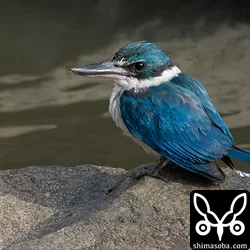
The long-staying Collared Kingfisher. When the sun hits it, it flashes brilliantly and the contrast intensifies.

Collared Kingfisher's long stay — Caspian Tern, Red Collared Dove, Chinese Pond Heron

Nov. 24, 2024

The Collared Kingfisher on Ishigaki has been staying a long time. Its daily routine is settled, and it really feels like it will see the new year in. Caspian Terns and Black-headed Gulls are also visiting the beach where the Collared Kingfisher is found.

In nearby rice paddies, the first Taiga Bean Geese of the season were confirmed — a flock of six. Chinese Pond Herons, Red Collared Doves and Common Starlings are also present. It is all right on the doorstep, so there is plenty to enjoy there during the times when the Collared Kingfisher is not showing.

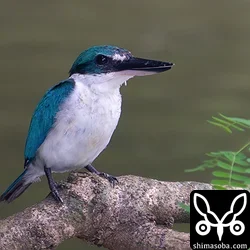
A Collared Kingfisher resting at its high-tide roost. Shot from behind cover because of the close distance.

Northern Boobook fledging, Ruddy Kingfisher, Cinnamon Bittern, Chinese Pond Heron, Black-naped Tern chick-rearing and more

July 14, 2024

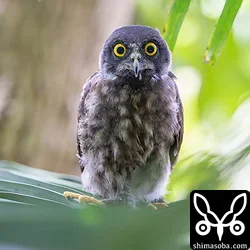
The Northern Boobooks have fledged. Pair formation was later than usual this year, so fledging was delayed too. I wonder whether one of the pair has changed.

Ruddy Kingfisher fledging is finished everywhere now, and the adults are catching their breath. The fledglings are still within their parents' territories but are catching prey on their own.

Cinnamon Bittern chick-rearing is also over, and juveniles are appearing in rice paddies here and there. Juvenile Purple Herons that have become independent are also starting to show up in the paddies. Chinese Pond Herons and Black-faced Spoonbills are arriving on autumn passage.

Waders are beginning to move through little by little. As autumn migration gets into full swing, numbers and species will keep increasing.

Terns are in the thick of chick-rearing. Black-naped Tern chicks that are roughly one to two weeks post-hatch are starting to be seen.

The last fledgling of the season for the Brown Hawk-Owl. There were still some remaining in the nest.
Lesser Whistling Duck, Chinese Pond Heron, and Grey-headed Lapwing

May 20, 2024

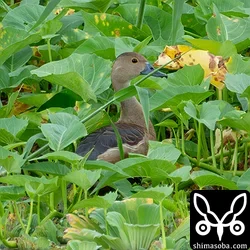
The Lesser Whistling Duck, visible every day. On this day it was particularly wary — both in the morning and in the evening, only the top of its head and neck were visible above the vegetation…

Chinese Pond Heron had also arrived, along with Grey-headed Lapwing, a scarce visitor to Okinawa and the Yaeyamas.

A Ryukyu Duck, just its face showing.