Pin-tailed Snipe Still Present
Nov. 22, 2025
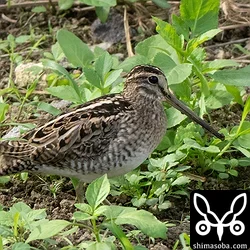
The Pin-tailed Snipe I found the other day was still there, wintering alongside several Common Snipe.
It spent most of the day in the grass.
The Pin-tailed Snipe I found the other day was still there, wintering alongside several Common Snipe.
It spent most of the day in the grass.
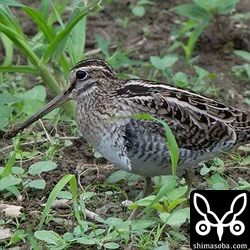
This breaks the latest date record for Pin-tailed Snipe on Ishigaki Island by a full month!!
I found it among a small flock of Common Snipe. It was not a typical Pin-tailed Snipe individual, and at first I wavered between that and Swinhoe's Snipe, but after watching for a while I became certain it was Pin-tailed. I stuck it out for about an hour and managed to get photos of the tail feathers as documentary evidence.
It is an exceptionally Swinhoe's-like individual, which makes it all the more interesting. This is definitely a Pin-tailed Snipe I won't forget in a hurry. ^^
The previous late record for Pin-tailed Snipe on Ishigaki was an adult on 18 October, so this is a substantial update to the record. ^^
Incidentally, the earliest record is a juvenile in late February. That individual may well have been wintering, though.
Pin-tailed Snipe, first-winter plumage.
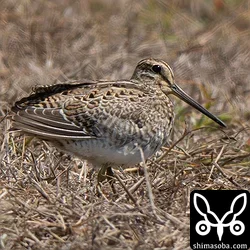
Pin-tailed Snipe have dropped sharply and the fields are now full of Common Snipe. A few Swinhoe's Snipe are still hanging on. Last year the final Pin-tailed Snipe of the autumn migration was recorded on 18 October. I wonder how long they'll be around this season. I don't think the 2024 birds will overwinter, but Pin-tailed Snipe and Swinhoe's Snipe were confirmed in February. I know it's getting ahead of myself, but I'd love to find overwintering birds in 2026.
I went back to check on the Grey-faced Buzzards again today after yesterday's visit, but things were quiet — it felt like the main push had already moved through the day before… ^^; At this time of year my daily snipe rounds make it hard to get out and watch the Chinese Sparrowhawk and Grey-faced Buzzard migration properly…
A juvenile Pin-tailed Snipe. This might turn out to be my last Pin-tailed Snipe of the season.
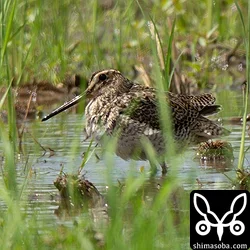
We held the Ishigaki-jima Snipe Camp again this season — five years running, thanks to everyone who has taken part. This time there was one participant. We met at 9 a.m. and spent the day watching snipe until around 4 p.m.
Because we held it about a month later than usual, Pin-tailed Snipe numbers were low — only 2 individuals out of several dozen snipe seen. Swinhoe's Snipe were the most numerous and are at peak, so almost all were juveniles. Common Snipe juveniles are now arriving to join the adults, and numbers should peak soon.
Please also have a look at past Ishigaki-jima Snipe Camps. The next one is planned for spring next year. Come and sharpen your skills at separating Pin-tailed Snipe from Swinhoe's Snipe. ^^
First Grey-tailed Tattler juvenile of the season, Great Knot, and Temminck's Stint juvenile were all seen. Common Greenshank juveniles are increasing. While watching the snipe, a Ruddy-breasted Crake appeared — the first in a while.
A Pin-tailed Snipe finally squeezed out after scanning through dozens of snipe.
While watching a group of around ten Swinhoe's Snipes, a snipe appeared in the grass. It was a typical Pin-tailed Snipe juvenile, so I followed it with binoculars hoping to get a look at the tail feathers — and it bathed rather sooner than I expected. ^^
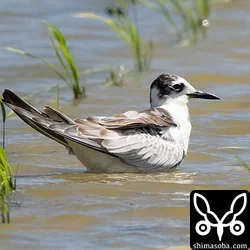
A group of around ten Whiskered Terns — adults and juveniles — arrived. Among the snipe, Common Snipe numbers are up while Pin-tailed Snipe have decreased.
Long-toed Stint, Wood Sandpiper, Common Greenshank, and Marsh Sandpiper are also present in good numbers.
White-winged Tern juvenile. Perhaps due to the lack of typhoons, no large flocks have appeared this season.
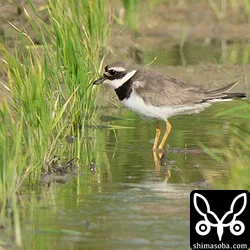
The Common Ringed Plover that appeared in early September was still present — three weeks into its stay. It seems to be moving widely around the island, between the rice paddies and the coast. The Javan Pond Heron is also on an extended visit.
The first Pacific Golden Plover juvenile of the season has also arrived. When these appear, the wader migration is in its final stages.
Pin-tailed Snipe and Swinhoe's Snipe numbers fluctuate daily as residents mix with birds moving through.
A Kentish Plover still present.
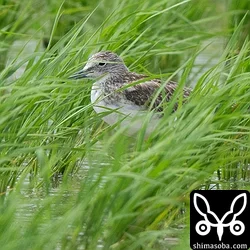
The first Common Greenshank and Ruff juvenile of the season arrived. Also still present: Pin-tailed Snipe, Swinhoe's Snipe, Common Snipe, Black-winged Stilt, Long-toed Stint, Red-necked Stint, and Marsh Sandpiper.
The first Common Greenshank of the season.
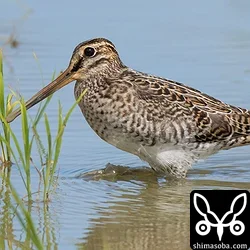
The day before, I had found only one Pin-tailed Snipe on my usual paddy rounds, but numbers were up today. It doesn't feel like a second wave — more likely they were simply hiding in the grass and I missed them.
Pin-tailed Snipe juvenile.
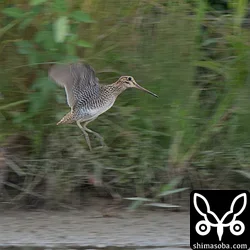
By mid-September the Pin-tailed Snipe numbers are falling and Swinhoe's Snipe are coming to dominate. After this, a second wave of Pin-tailed Snipe is expected.
Juvenile Red-necked Stints have started arriving. Long-toed Stint, Common Greenshank, Dunlin, and Superb Lyrebird are also present.
The only Pin-tailed Snipe of the day was at the far end of the paddy field — a long way off….
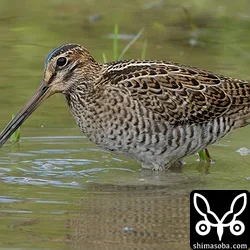
For the past few days the Pin-tailed Snipe and Swinhoe's Snipe flocks have been showing well. Should be enjoyable until the rice-field work starts up again. ^^
Pin-tailed Snipe, juvenile.
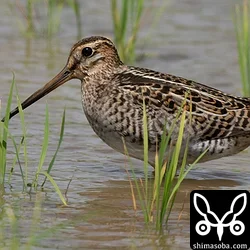
Every spare moment goes to snipe watching. Pin-tailed Snipe numbers are down and Swinhoe's Snipe now make up the majority.
Pin-tailed Snipe, juvenile.
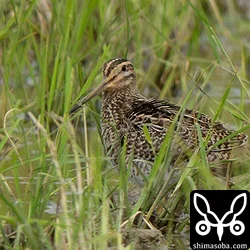
The snipe migration on Ishigaki Island is at its peak. Pin-tailed Snipe and Swinhoe's Snipe are both present in the rice fields, though the balance between the two seems to vary by area.
Swinhoe's Snipe, juvenile.
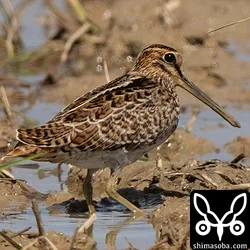
Juvenile Pin-tailed Snipes have finally arrived. Swinhoe's Snipe are also increasing in both adults and juveniles. For some reason, Pin-tailed Snipe are being recorded in unusually high numbers in the central part of the island this season as well. Most appear to be juveniles.
Juvenile Pin-tailed Snipe.
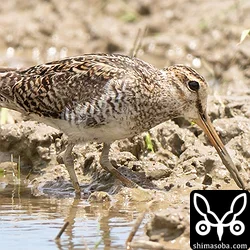
No change among the Pin-tailed Snipe and Swinhoe's Snipe, but a second Curlew Sandpiper of the season had arrived. The other waders are the usual crowd, numbers fluctuating as they linger on.
Pin-tailed Snipe, adult.
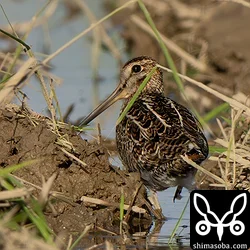
Pin-tailed Snipe and Swinhoe's Snipe are both gradually increasing. This year both species arrived at the same time. For now, Swinhoe's Snipe outnumber Pin-tailed Snipe.
Pin-tailed Snipe, adult.
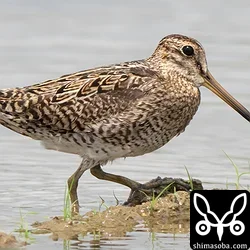
Pin-tailed Snipe and Swinhoe's Snipe have finally arrived on Ishigaki Island. Juveniles should start coming in from here, and numbers are expected to keep climbing toward the peak in late August to early September. Something to look forward to.
The 5th Ishigaki Island Snipe Camp currently has one person signed up. There is room for one or two more, so if you feel like enduring the ordeal, please get in touch. ^^ You are also welcome to browse the past Ishigaki Island Snipe Camp reports.
Found an adult Pin-tailed Snipe among three snipe. We pulled the car up close, waited until their wariness eased, then began watching.
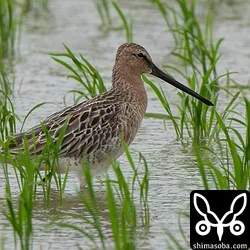
With shorebirds on the increase, I spent the entire day searching for waders. The result: starting with Asian Dowitcher, I recorded Pectoral Sandpiper, Little Stint, Broad-billed Sandpiper, Curlew Sandpiper, Pin-tailed Snipe, Greater Sand Plover, and more — 21 species of waders in total. Seeing this many species in a single day is one of the great pleasures of this time of year. ^^
A Bar-tailed Godwit in summer plumage that suddenly dropped in alongside Black-winged Stilts and Black-tailed Godwits near the end of a shorebird search. Looking sharp in that summer plumage.
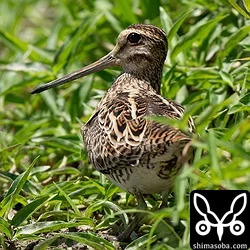
We held the 4th Ishigaki Island Snipe Camp again this year. Two participants came down from Hokkaido. That said, snipe numbers were already low during the pre-camp scouting the day before, and I had a bad feeling about it. Sure enough — poor results. It ended up being the worst outing yet: one Pin-tailed Snipe, a few Swinhoe's Snipe, and a few Common Snipe.
On the plus side, we managed to see around 50 species including Collared Kingfisher, Ryukyu Kingfisher, Crested Serpent Eagle, and various resident and migratory birds, which everyone was happy about, so I'll call it good. Years like this happen.
The only Pin-tailed Snipe of the day. A beautiful individual — I knew what it was the moment it came into the binoculars.
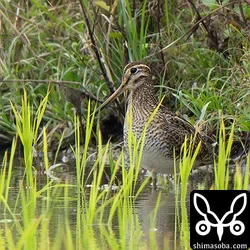
I confirmed the first Pin-tailed Snipe of the season. Common Snipe and Swinhoe's Snipe numbers are low, and I have a bad feeling about how the snipe season is starting.
Scanning the paddy bunds with binoculars, I spotted a Pin-tailed Snipe!!
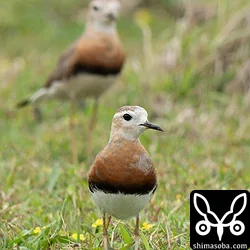
I did some birdwatching during free time on a work trip to Yonaguni Island.
The timing was good — in a short while I was able to see Oriental Plover, Black Redstart, Citrine Wagtail, Common Hoopoe, Pin-tailed Snipe, and Swinhoe's Snipe. It was all thanks to the senior birders staying on the island!!
Seven Large Sand Plovers arrived early in the morning at the go-to spot on Yonaguni Island. I got the message while I was at work, so I was fidgeting.