A daily record.
Featuring photos of wild birds and nature, mainly from Okinawa Main Island and Ishigaki Island

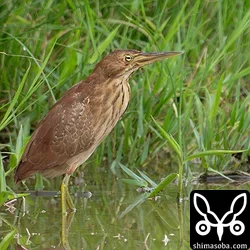
Javan Pond Heron, Chinese Pond Heron, Cinnamon Bittern and more (video)

Aug. 14, 2026
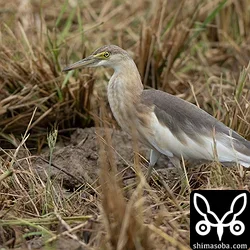
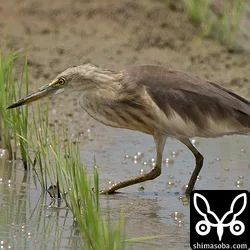
Two Javan Pond Herons and one Chinese Pond Heron are currently present. Encounters with Cinnamon Bittern and Purple Heron — both adults and juveniles — are becoming more frequent.

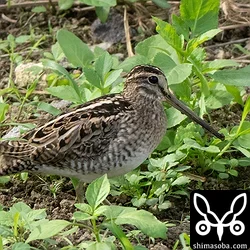
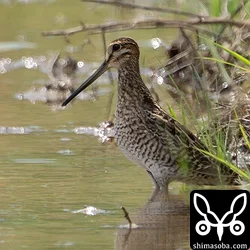
Snipe numbers are also growing steadily. On this day I found several individuals each of Pin-tailed Snipe and Swinhoe's Snipe.

Javan Pond Heron in winter plumage. Two birds have been present for the past few days.
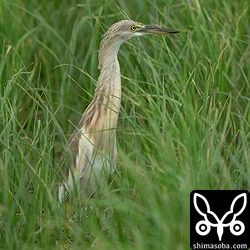
Javan Pond Heron, Cinnamon Bittern, Pin-tailed Snipe and more

Aug. 13, 2026

Three Javan Pond Herons turned up. While I was watching one, two more burst out chasing each other from among the rice in a nearby paddy. As happens every year, once Javan Pond Herons have been around for a while on Ishigaki in autumn, Chinese Pond Herons follow. Two Javan Pond Herons are also currently staying on Okinawa main island.

Encounters with Cinnamon Bittern — adults and juveniles alike — are becoming more frequent. It is the season when numbers peak after the breeding period ends. Purple Heron adults and juveniles are also showing up regularly.

Pin-tailed Snipe seem to be increasing gradually. I confirmed the first juvenile Black-winged Stilt of the season.

最初に見つけたジャワアカガシラサギ。あまり警戒心のない個体でした。

Chinese Pond Heron, Cinnamon Bittern, Ruddy Kingfisher and others

May 19, 2026

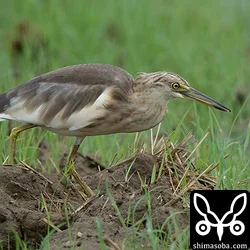
A few Chinese Pond Herons are staying. Plumage varies widely, from individuals still mostly in winter dress to those that have almost fully switched to breeding plumage. A Cinnamon Bittern was nearby as well — it is probably breeding in the vicinity.

White-winged Terns were still present but numbers seemed to have dropped. Black-tailed Godwit, Sharp-tailed Sandpiper, Common Redshank, and Common Greenshank are also staying.

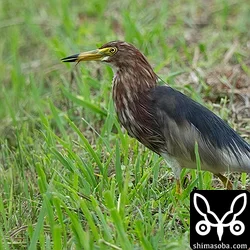
A Chinese Pond Heron almost fully into breeding plumage. This individual was a bit wary.

6th Ishigaki Snipe Camp — Side Notes

April 20, 2026

6th Ishigaki Island Snipe Camp side notes: a Broad-billed Sandpiper showed at close range, and the paddies also produced a flock of Sharp-tailed Sandpipers, Long-toed Stints in summer plumage, freshly arrived Eurasian Whimbrels, breeding Greater Painted-snipes, and Cinnamon Bitterns in beautiful nuptial plumage.

While traveling between sites, we encountered Ruddy Kingfishers, a Crested Serpent Eagle, Red-throated Pipits, and a large flock of Eastern Yellow Wagtails.

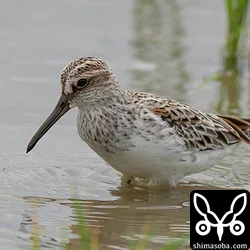
When I first spotted it the Broad-billed Sandpiper was at the far end of the rice paddy, but it gradually worked its way closer.

Scouting for the Ishigaki Snipe Camp

April 18, 2026

Ahead of the 6th Ishigaki Island Snipe Camp, I went to scout the paddies around the island. Pin-tailed Snipe, Swinhoe's Snipe, and Common Snipe were all confirmed — a relief. Now there is nothing left to do but hope they stay for a few more days.

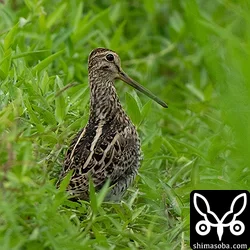
First Pin-tailed Snipe of the season!!

Third Common Hoopoe of the season found (video)

Feb. 21, 2026

The third Common Hoopoe of the season has arrived, following last week's bird. This individual showed no wariness at all — when a car passed nearby it flew off only a short distance. Reports of arrivals have also come in from other islands, and it looks like this is a good year for Common Hoopoe.

Temperatures are rising and spring migration is beginning. A mixed flock of Taiwan Wagtail, White Wagtail, and White Wagtail arrived in the rice paddies.

Among the waders, wintering birds — Common Snipe, Common Redshank, and Wood Sandpiper — have been joined by northbound migrants, making things a little livelier.

Resident birds — Crested Serpent Eagle, Purple Heron, and Cinnamon Bittern — were all active in the run-up to the breeding season.

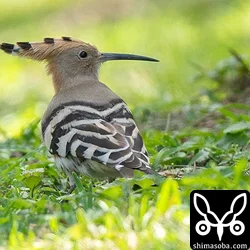
Discovered what is the third Eurasian Hoopoe of the season on Ishigaki Island.

Short-eared Owls Wintering

Jan. 16, 2026

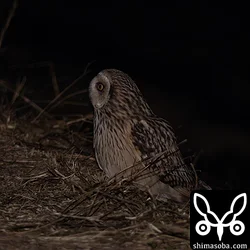
Short-eared Owls have been wintering here again this season, as they did from around the end of last year. Surprisingly large numbers have turned up. A Long-eared Owl was also reported, but only for a single day — unfortunately I was not able to see it myself.

Out in the paddies during the day there are also wintering waders and plovers. Past mid-January I get the sense that they are slowly starting to move. I expect the main movement to begin around late February.

There was a Short-eared Owl staring intently at a thicket where mice were lurking. It seemed there was another one in the same area.

Pin-tailed Snipe Still Present

Nov. 22, 2025

The Pin-tailed Snipe I found the other day was still there, wintering alongside several Common Snipe.

It spent most of the day in the grass.

Javan Pond Heron, Cinnamon Bittern, White-breasted Waterhen nesting and more (video)

Sept. 3, 2025

The Javan Pond Heron that arrived in July has been staying long-term and numbers have been building.

In the same rice field, Greater Painted-snipe and Common Moorhen are incubating eggs. They appear to breed multiple times a year. White-breasted Waterhens are at all sorts of different breeding stages simultaneously — newly hatched chicks alongside large, well-grown ones. They too may be raising several broods a year.

Three Javan Pond Herons are staying in the same rice field. They have also been recorded in other areas, and there seem to be a fair number on the island. On the Okinawa main island, arrivals have been confirmed in the north, central, and south. Their range appears to be expanding steadily eastward in recent years.

Javan Pond Heron Arrives

July 25, 2025

The Javan Pond Heron has arrived. Over the past ten years or so it has become a regular sight on Ishigaki Island and Okinawa Island. In recent years the pattern has become standard: Javan Pond Herons arrive first, followed by Chinese Pond Herons.

A Javan Pond Heron appearing alone. It was catching tadpoles and insects in the rice paddies.

Common Emerald Dove, Northern Boobook, Malayan Night Heron, Cinnamon Bittern, Purple Heron, and More

July 19, 2025

Common Emerald Doves are approaching the end of the breeding season, and encounters are becoming more frequent. Northern Boobooks, Ryukyu Scops Owls, and Ruddy Kingfishers are fledging one after another.

I recorded my first Cinnamon Bittern and Purple Heron of the season, along with a juvenile Little Egret.

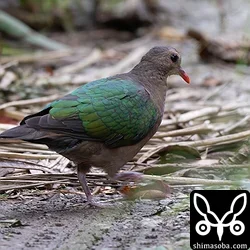
A Emerald Dove near home. A few juvenile feathers remain. Perhaps a second-calendar-year female.

Chinese Egret, Black-faced Spoonbill, Cinnamon Bittern

April 29, 2025

A second Chinese Egret for the season flew in to the river mouth. Three Black-faced Spoonbills are also staying nearby. I counted five Cinnamon Bitterns, which are active at the start of their breeding season. In the rice paddies there were Eurasian Teal and Northern Shoveler that had been left behind by the northward migration.

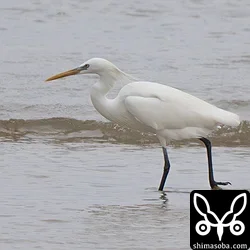
The second Chinese Egret of the season. It was showing its familiar behaviour of chasing fish at the water's edge.

Busy Times: Lingering Winter Birds, Passing Migrants, and Breeding Residents

April 21, 2025

Ishigaki Island is lively with a mix of winter visitors that have not yet headed north, passage migrants stopping over, and resident birds active as breeding season gets underway.

Most conspicuous lately are Cinnamon Bitterns in full breeding season — I am encountering them in rice paddies all over the place. Tufted Duck and Eurasian Coot are among those that should have gone north but are still here; most have departed, but a few individuals appear to remain. I have also recorded snipe on passage.

A male Ryukyu Minivet— I often see it flying about actively.

Chinese Blackbird Arrives

March 13, 2025

The Chinese Blackbird, harbinger of spring on Ishigaki, has arrived. I heard its call nearby as well, so it seems multiple birds are staying. Brown-headed Thrush, Pale Thrush, and Dusky Thrush migration also appears to be approaching its peak — small flocks can be found in patches of grassland in coastal settlements and similar spots.

I heard a Hooded Crane was staying in the north of the island, so I went to have a look. It seemed to favour a field prepared for sugarcane planting, with a pineapple plantation as a backdrop.

Cinnamon Bittern and Purple Heron are also full of vitality with the feel of spring in the air.

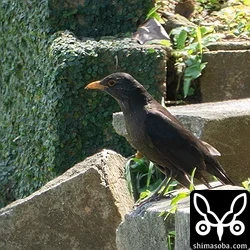
A Common Blackbird turned up in a good patch of habitat. Looks like it may stay a while.

Snipe Numbers Dropping

Sept. 19, 2024

The snipe that built up from late August are thinning out now. At peak times there were nearly 40 in a single paddy field; now there are just a handful. I managed to find one Pin-tailed Snipe. Common Snipe hadn't increased much, but I'd expect the majority to be Common Snipe once October comes.

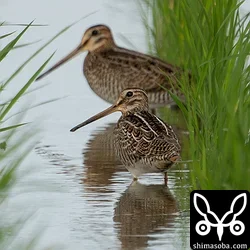
Pin-tailed Snipe, juvenile. Swinhoe's Snipe, juvenile, in the background.

First Eastern Yellow Wagtail of the Season

Aug. 25, 2024

I recorded the first Eastern Yellow Wagtail of the season — the macronyx type. Apparently there were many in the north of the island, so they should be moving down to the south by tomorrow.

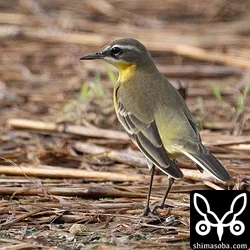
Western Yellow Wagtail (supercilium white), adult. Already in winter plumage.

Red Collared Dove, Common Myna, Crested Serpent Eagle, Whiskered Tern

Aug. 22, 2024

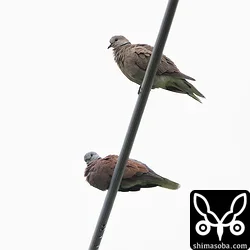
Red Collared Doves turned up at two locations, four birds in total. Grey Wagtail is also a first for the season. From here on, migrants with a distinctly autumnal feel will keep arriving on Ishigaki one after another.

Painted Snipe were at two locations — two males and two females. In this paddy it was one male and two females.

Broad-billed Sandpiper, Curlew Sandpiper, Grey Plover, Cinnamon Bittern, and Others

Aug. 19, 2024

Ishigaki had a rough day under the influence of a tropical depression. When the rain eased I did the rounds of the paddies and found the first Broad-billed Sandpiper of the season had arrived — encountered in a puddle in a sugarcane field. Out on the grassland I also picked up first records of Curlew Sandpiper and Grey Plover. Bad weather does have a way of pushing birds into unexpected places.

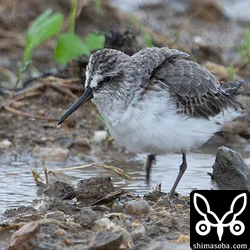
Found a Broad-billed Sandpiper in a puddle in a sugarcane field. Was able to observe it right in front of me.

Cinnamon Bittern, Malayan Night Heron, Purple Heron

Aug. 14, 2024

Cinnamon Bittern, Malayan Night Heron, and Purple Heron — all of which breed on Ishigaki Island — can be seen as juveniles here and there. The Grey Heron, a winter visitor, was recorded for the first time this season.

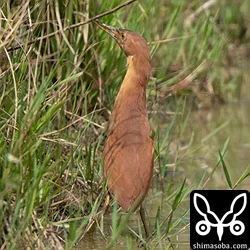
Juvenile Ryukyu Least Bittern.