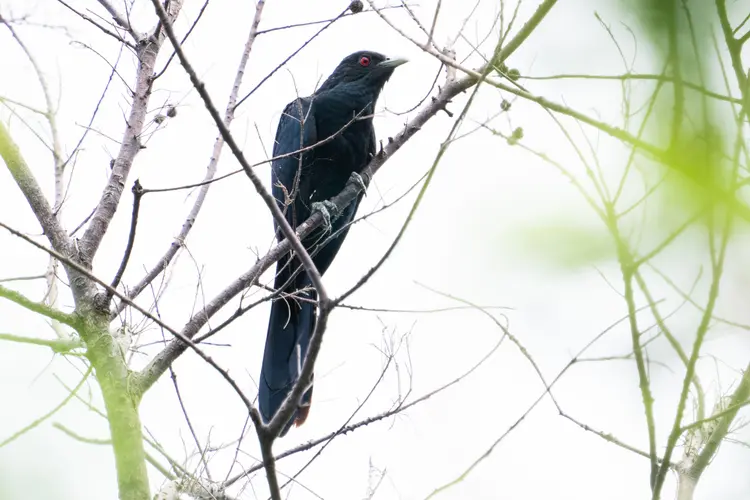
We've opened accommodation for birdwatchers!!
Our fully private rental guesthouse "Omoto526" opened in March 2026.
Guests receive up-to-date information on local birds and birding spots around the island.
You can book via direct reservation, Airbnb, or Booking.com.
We've launched a birding guide service!!
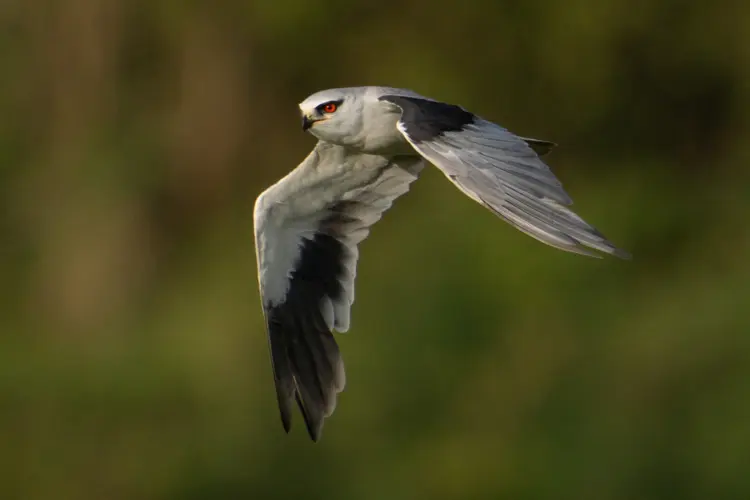
From Ruddy Kingfisher and Crested Serpent Eagle to Black-winged Kite, Emerald Dove, and the notoriously tricky snipe — we cater to everyone from beginners to seasoned veterans and specialists.
Prices are open and very reasonable, but I've been watching birds on Ishigaki for over 20 years, going out every day to rice paddies, forest roads and coastlines.
I'm the only guide on Ishigaki Island who can identify Swinhoe's Snipe, (Pin-tailed) Snipe, and Common Snipe in the field. Snipe enthusiasts are very welcome.
For those who want a guide focused primarily on photography, I'd also recommend the spotter listed below. That said, I spent 20 years as a newspaper photographer and reporter, so I can certainly advise on technique as well.
Tours are limited to three people so that everyone gets a window seat. Guests staying at Omoto526 can book a private tour from just one person. Prices are, frankly, embarrassingly low compared to other guides.
For those who don't want to waste time and fuel
Let me introduce a spotter — a guide who puts photography first. If you want to spend proper time photographing Ruddy Kingfisher, Crested Serpent Eagle in flight, or the much-talked-about Black-winged Kite on Ishigaki, it's worth getting in touch.
Spotter Ishigaki Island Nature Guide Service
The nature of the Yaeyama Islands
The Yaeyama Islands consist of ten inhabited islands — including Ishigaki, Iriomote, Taketomi and Yonaguni — plus surrounding uninhabited islands. Ishigaki and Iriomote, together with the Sekisei Lagoon (coral reef waters) that spreads between them and the raised-coral islands scattered within it, belong to Iriomote-Ishigaki National Park. This park was formerly known as Iriomote National Park until Ishigaki Island was incorporated on 1 August 2007, at which point it was renamed to its current form.
As a result, Nagura Amparu — registered as a Ramsar wetland in 2005 — and the mangroves at the mouth of the Miyara River, the largest mangrove area in Japan, also came under the national park. Many plant and animal species on Ishigaki carry the name Ishigaki, including Ishigaki Bulbul, Ishigaki Tit, Ishigaki cicada (Ishigaki-nii-nii), and Ishigaki violet. A species some people mix up: the Ishigaki rockfish (Ishigakidai) has no connection to Ishigaki Island — in the Yaeyama region it is called garasa-miibai.
Our neighbouring island to the west, Iriomote — often called the Amazon of the Orient — also has species named after it, led by the well-known Iriomote cat, and including Iriomote firefly, Iriomote violet, and Iriomote lesser horseshoe bat.
Unlike Iriomote, where 90 percent of the island is covered in forest, Ishigaki has seen its forest area reduced by long-standing land improvement and development.
Birdwatching in the Yaeyamas
Among the Yaeyama Islands, Ishigaki is by far the easiest place to watch birds. Iriomote is certainly more appealing in terms of pristine natural habitat, but when it comes to birdwatching specifically, Ishigaki wins out because roads extend into the interior, making it much easier to get around.
I've been to Iriomote for birdwatching a number of times myself. Paddies, farmland and grassland birds are straightforward enough, but Ruddy Kingfisher, Japanese Paradise Flycatcher and Emerald Dove proved quite difficult. Ryukyu Scops Owl, on the other hand, could be found on roadside trees after dark — several at a time — and easy to photograph.
Taketomi and Kohama islands are also surprisingly interesting spots, though on a first visit they can look like dry, barren islands with nothing to see. Yonaguni is a good destination for rare-bird hunters. I'm not especially into rarities myself so I can't give detailed information, but the spring migration period is apparently the most productive.
Birdwatching on Ishigaki is done essentially from inside your car. The moment you step out, the birds flush. These are not the habituated birds you find in urban parks — please keep that in mind. Particular care is needed in April and May, which is the early part of the breeding season.
Birding spots on Ishigaki Island
(※ For which birds can be seen by season, please see the Bird Calendar — highly recommended)
Crested Serpent Eagle (year-round, but hard to find during the breeding season, May–August)
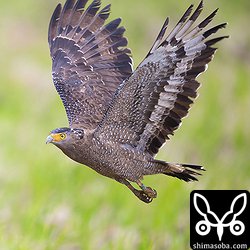
The main spots are the rice paddies around the Nagura district and the sugarcane fields and grasslands of the Sakieda Peninsula. It is generally hard to find during the breeding season, but after typhoons birds come out to the paddies — a good opportunity.
Many individuals show less wariness than you might expect from a raptor, making observation and photography fairly easy. During the winter sugarcane-cutting season and the autumn rice harvest you can watch them hunt at close range.
The beautiful white juveniles begin appearing from late August. Iriomote Island holds larger numbers.
Ruddy Kingfisher (April–September)
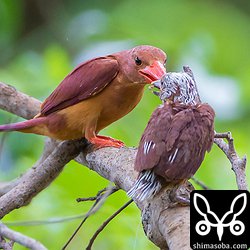
May is the easiest month; once the breeding season is underway they become slightly harder to locate. By the end of the breeding season most individuals look rather worn.
Banna Park and Takada Forest Road are the main spots. Banna Park is the most accessible for photography — please do not drive onto the grass. It makes things uncomfortable for local birders...^^;
Eurasian Hoopoe (January to end of March)
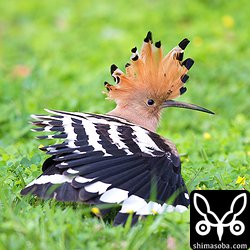
Numbers passing through vary from year to year. Recent good years include spring 2012 and the migration from late 2014 into spring 2015.
They are most often seen on the northern Ishigaki east coast, the Sakieda Peninsula loop road, and the Kabira Ishizaki Peninsula. Spring passage is overwhelmingly larger than autumn.
Eurasian Blackbird (January to end of March)
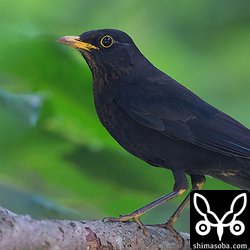
Eurasian Blackbird appears at much the same time of year and in much the same places as Eurasian Hoopoe. They seem to arrive almost always as single birds.
Ryukyu Scops Owl (year-round, but easier to see from May onwards)
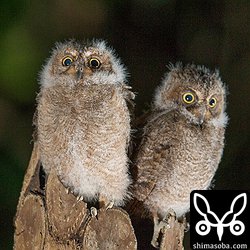
Often found hunting insects in dark patches near streetlights at night. Please take great care with photography during the early part of the breeding season. On Iriomote it turns up around village streetlights.
Brown Hawk-Owl (year-round, but easier to see from May onwards)
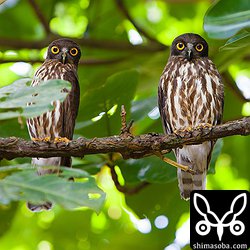
Often found hunting insects in dark patches near streetlights at night. Most individuals are warier than Ryukyu Scops Owl.
Please take great care with photography during the early part of the breeding season.
On Iriomote it also turns up around rice paddies. Numbers there appear to be higher than on Ishigaki.
Herons (year-round)
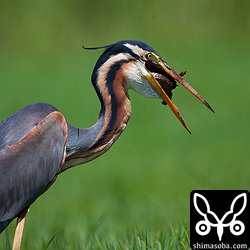
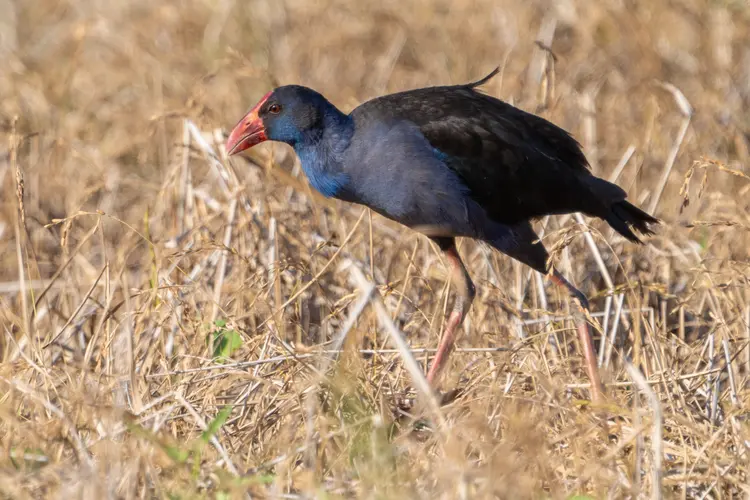
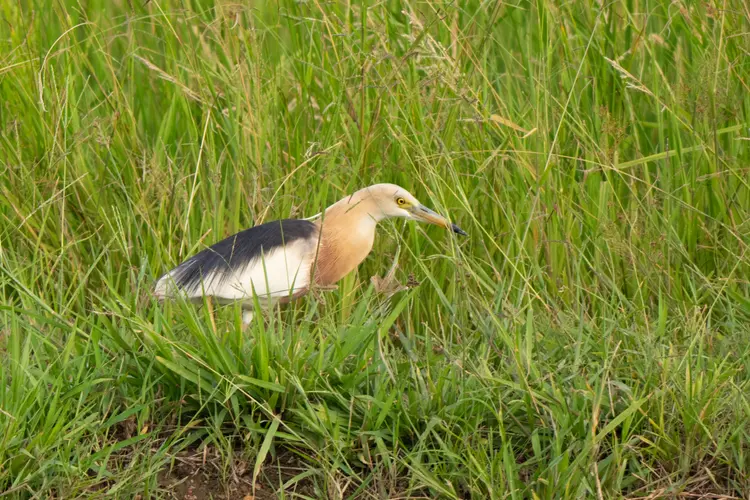
Chinese Pond Heron and Chinese Egret appear in small numbers during migration. Look at the paddies of Urata-bara and Hirata-bara, Ohama Beach, and the mouth of the Arakawa River. Purple Heron favours grasslands and sugarcane fields during cutting. Pacific Reef Heron is found along the waterline at Nagura Bay and Ohama Beach. In the Yaeyamas, Pacific Reef Heron occurs in both white and dark morphs in roughly equal numbers, with white perhaps slightly more common.
Terns (June–September)
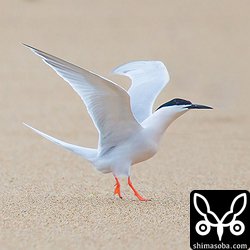
Black-naped Tern, Roseate Tern, Great Crested Tern and Lesser Crested Tern come in summer to the mouth of the Arakawa River, Ohama Beach, the Tomisaki coast, and the prawn farm at Kabira. Whiskered Tern arrives from around late August and flies over grasslands and paddies in groups of a few to sometimes several dozen, catching prey such as grasshoppers.
Waders (September–April)
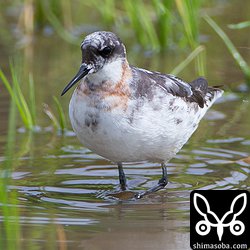
Ohama Beach, Urata-bara, Hirata-bara and Shiromizu are good spots during the spring (April) and autumn (late August) migration periods. Some autumn migrants remain to overwinter.
Greater Painted-snipe is a resident and the main spot is Hirata-bara.
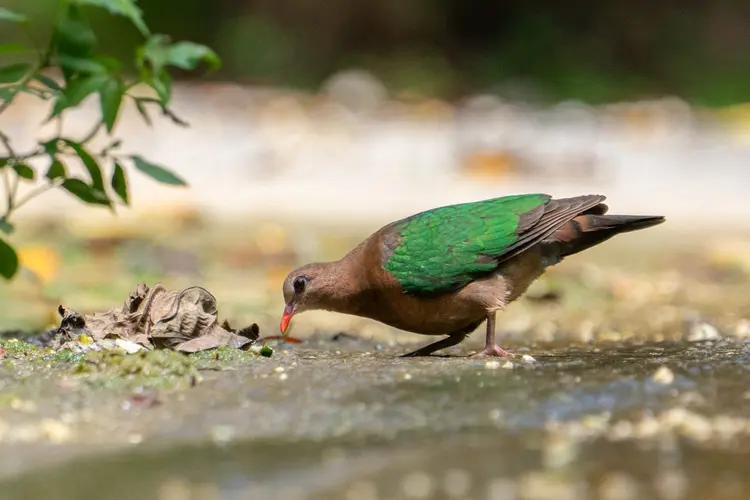
Emerald Dove (year-round, but especially easy to see from May onwards, particularly after typhoons)
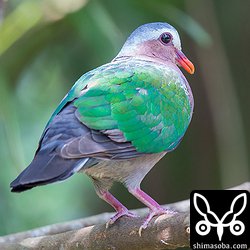
Banna Park and Takada Forest Road, morning or evening. The Takeshima Farm no longer exists.
Japanese Paradise Flycatcher (April–August)
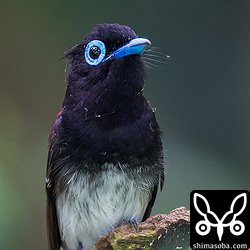
Banna Park and Maezedake Forest Road, but it is hard to find. Miyako Island is a better bet.
Ryukyu Flycatcher (year-round, but easier to see from May onwards)
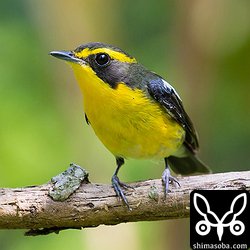
Banna Park and Takada Forest Road. The call is heard frequently, but it tends to stay inside dense scrub, making photography difficult.
Raptor migration (Chinese Sparrowhawk from late September, Grey-faced Buzzard from early October)
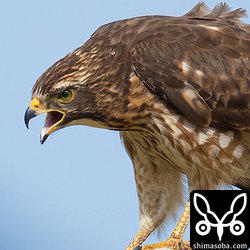
The migratory bird observation deck at Banna Park. Chinese Sparrowhawk passes through from around 7 a.m. until before noon; Grey-faced Buzzard from around 3 p.m. until before sunset.
Other species passing through include Japanese Hobby, Northern Goshawk, Osprey, Japanese Sparrowhawk and Oriental Honey Buzzard.
Ashy Minivet (year-round, but easier to see from May onwards)
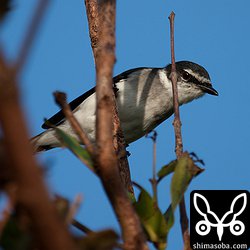
Banna Park and Takada Forest Road. The distinctive call makes them easy to locate. They move quickly, so keep binoculars and camera ready to hand.